
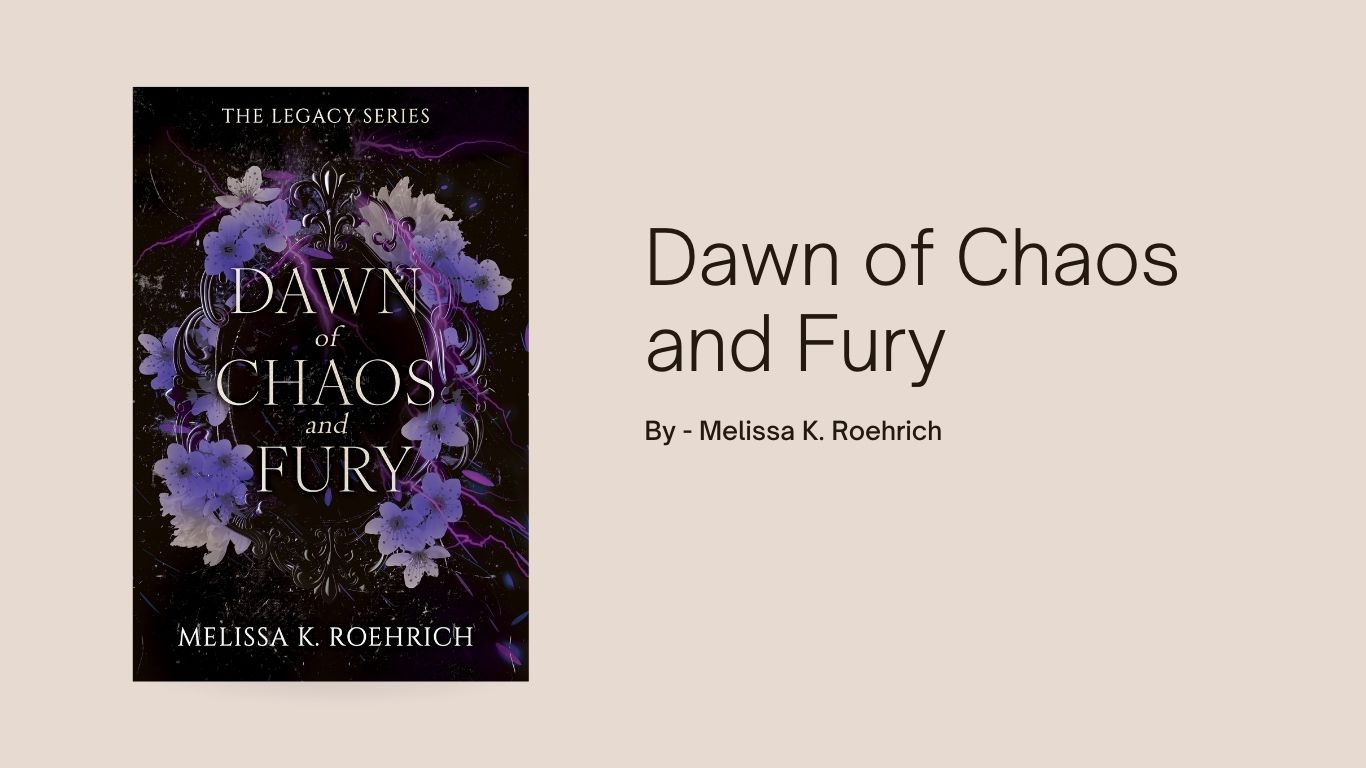
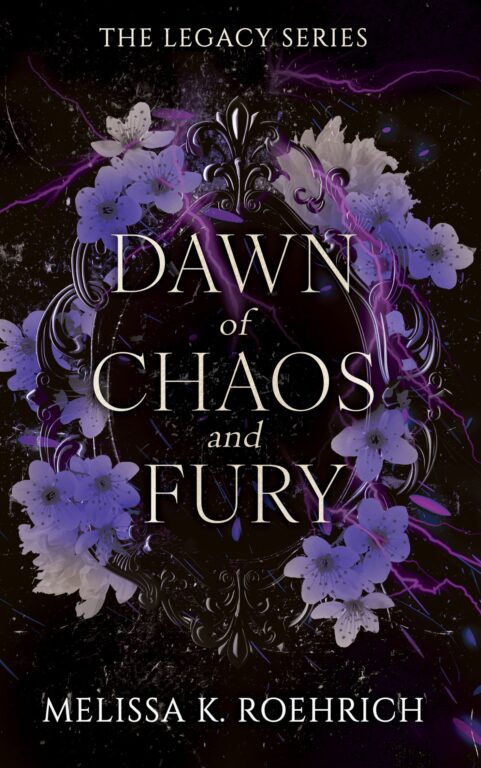
Dawn of Chaos and Fury by Melissa K. Roehrich marks the final installment in the Legacy series, and it arrives with the weight of expectation that only a long-running fantasy saga can carry. This is not a gentle conclusion designed to please everyone. Instead, Roehrich delivers a finale that leans heavily into emotional fallout, moral ambiguity, and the consequences of long-simmering choices. The novel blends dark fantasy, romance, and political conflict, closing the series in a way that feels deliberate, intense, and unapologetically messy.
Readers who have journeyed with these characters from the beginning will recognize the author’s signature style immediately: passionate relationships, flawed protagonists, and a world where power always comes at a cost. This final book does not aim to comfort — it aims to confront.
Plot Overview
The midnight-a-story-of-hope-justice-and-freedom-by-brittany-k-barnett/”>story picks up in the aftermath of devastating betrayals that have fractured alliances and left the world on the brink of collapse. Tessalyn Ausra, at the heart of the conflict, must navigate a reality reshaped by deception, loss, and revelation. Separated from those she once trusted, she is forced to reckon with both her growing power and the emotional scars left behind by past choices.
As tensions escalate, familiar characters such as Luka, Theon, Xan, and others are pulled into a final confrontation that will determine not only the fate of their world, but who they become in the process. Secrets that have lingered since earlier books finally surface, reshaping relationships and forcing characters to choose between vengeance, survival, and redemption.
Rather than relying on a single sweeping battle, the plot unfolds through layered confrontations — political, emotional, and physical — each pushing the narrative closer to its inevitable conclusion.
Character Arcs and Emotional Weight
One of the strongest elements of Dawn of Chaos and Fury is its commitment to character-driven storytelling. Roehrich allows her characters to be damaged, contradictory, and deeply human. Growth is not portrayed as neat or linear; instead, it emerges through pain, loss, and hard-earned self-awareness.
Tessa’s journey, in particular, is shaped by reckoning rather than triumph. She is powerful, but that power does not shield her from grief or regret. Other characters are given moments to shine — and to fail — in ways that feel consistent with their established personalities. Longtime readers will appreciate that no one escapes unscathed, emotionally or otherwise.
The relationships, romantic and otherwise, remain volatile and intense. Love is portrayed as both a source of strength and a weapon capable of causing irreparable harm.
Pacing and Narrative Density
While emotionally rich, the novel is undeniably dense. Multiple points of view, complex political stakes, and layered emotional conflicts create a heavy reading experience. Some sections move quickly, driven by urgency and confrontation, while others linger on internal struggle and reflection.
For readers who enjoy immersive, detail-heavy fantasy, this will feel satisfying. However, those expecting a fast-paced, action-only finale may find certain portions slow or emotionally exhausting. The book asks for patience, rewarding readers with payoff that is more emotional than explosive.
Themes of Power, Betrayal, and Consequence
At its core, Dawn of Chaos and Fury explores the cost of power and the weight of choice. Characters are forced to confront the reality that good intentions do not erase harmful outcomes. Betrayal is not treated as a single act, but as a ripple that reshapes trust, loyalty, and identity.
The novel also interrogates redemption — not as something easily granted, but as something uncertain and deeply contested. Some characters seek forgiveness; others reject it entirely. Roehrich resists the temptation to offer simple moral resolutions, instead allowing ambiguity to linger long after the final page.
Standout Moments Without Spoilers
Several scenes stand out for their emotional intensity rather than spectacle. Quiet confrontations reveal more than battles ever could, and moments of realization carry as much weight as moments of violence. The author excels at building tension through dialogue and internal conflict, making even stillness feel charged.
The final act of the novel focuses less on winning and more on reckoning — with the past, with oneself, and with the future that remains after everything else has burned.
Reader Experience and Expectations
Reactions to Dawn of Chaos and Fury tend to hinge on expectations. Readers deeply invested in the characters and themes of the series often find the ending satisfying, if emotionally draining. Those hoping for clean resolutions, traditional heroism, or universally happy outcomes may find the conclusion challenging.
The book is firmly aimed at readers who appreciate dark fantasy romance, moral complexity, and emotionally intense storytelling. Content warnings remain relevant, as the novel continues to explore mature and potentially triggering themes.
Final Thoughts
Dawn of Chaos and Fury is a bold, uncompromising finale that stays true to the spirit of the Legacy series. It does not attempt to soften its edges or dilute its themes for broader appeal. Instead, Melissa K. Roehrich delivers an ending rooted in consequence, emotion, and hard-earned truth.
For readers willing to embrace its intensity and ambiguity, this book offers a conclusion that feels honest — not perfect, but purposeful. It is a finale that understands endings are rarely about victory, and more often about what survives the chaos.