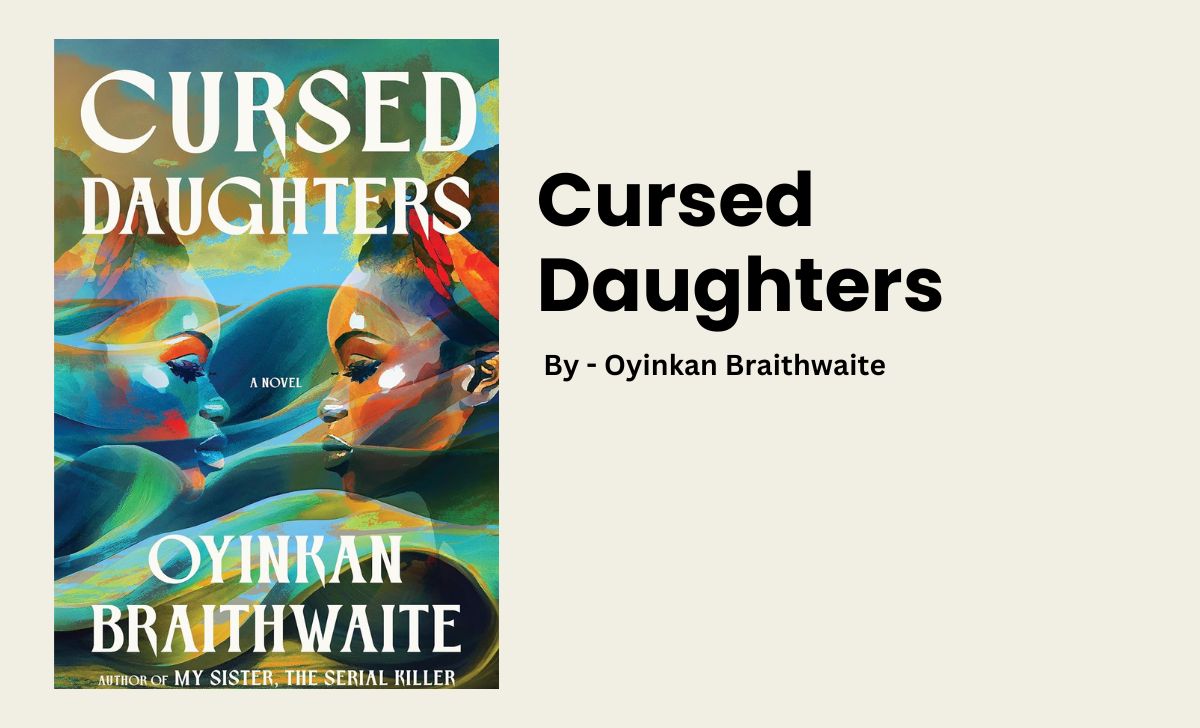
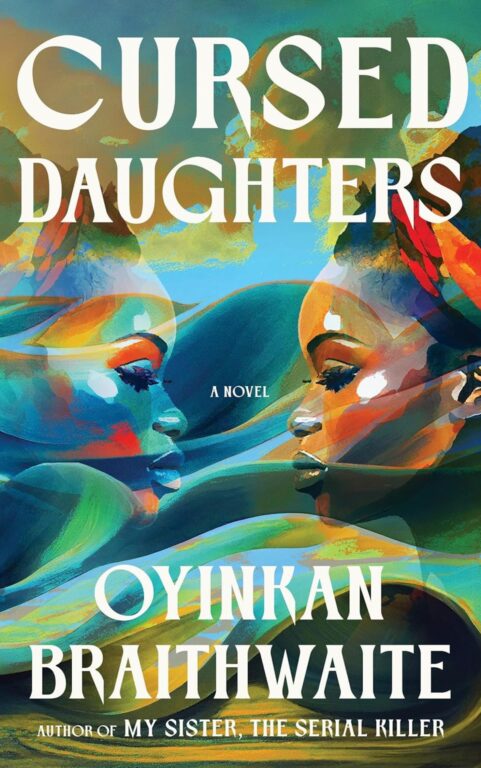
Oyinkan Braithwaite’s Cursed Daughters arrives with the hum of expectation that follows any sophomore novel after a breakout debut. Instead of repeating herself, Braithwaite sets her gaze on a haunted inheritance: the Falodun women of Lagos, long convinced that a centuries-old imprecation condemns them to heartbreak. The result is a story that blends superstition, sharp humor, and a lucid understanding of how families pass down both love and harm. It’s a novel about what we inherit, what we refuse, and what it costs to step off a path laid for us before we were born.
Plot: The Day One Life Ends, Another Begins
The novel opens with a catastrophe that becomes a hinge for everything that follows. Monife Falodun, a young woman whose relationship with a charismatic man has turned corrosive, drowns in the year 2000. That same day, her cousin Ebun gives birth to Eniiyi. In the family’s telling, this is no coincidence—Eniiyi is whispered to be Monife returned, a living reminder of love gone wrong and a curse that will not loosen its grip.
Braithwaite structures the book in three interlocking strands: Monife in the late 1990s, whose relationship spirals toward tragedy; Ebun in the years after, trying to mother a child under the weight of communal superstition and her own private resentments; and Eniiyi, whose adolescence and early adulthood are punctured by strange sensations, déjà vu, and the bitter knowledge that any man who enters her orbit may leave in ruin. Across these timelines, a family home functions like a fourth narrator—its corridors humming with gossip, prayer, and the quiet housekeeping tasks that stitch women to one another whether they want the thread or not.
Characters: Three Women, Three Kinds of Courage
Monife is the novel’s ache. She isn’t sainted in retrospect; Braithwaite allows her jealousy, naiveté, and hope to sit beside her intelligence and stubbornness. As she falls for Kalu, a man whose tenderness cannot mask his unreliability, the reader watches a trap assemble itself from small compromises and unheeded warnings.
Ebun becomes the book’s stern conscience. She knows the family legends too well, yet she’s trapped in the contradiction of protecting her daughter while teaching her to doubt the world’s promises. Her chapters—at once practical and wounded—interrogate what “maternal instinct” looks like when it’s welded to fear.
Eniiyi is the spark. She’s funny, skeptical, and maddeningly brave, testing the story other people have written for her. Whether she is truly Monife returned matters less than the fact that everyone treats her as if she is. Eniiyi’s coming-of-age is not just about first love; it is about refusing the script of an entire community.
Setting and Atmosphere: Lagos as Chorus
Rather than presenting Lagos as a mere backdrop, Braithwaite lets the city move. It’s a place of traffic jams, church revivals, whispered folk wisdom, and night markets where rumor runs as fast as electricity. Sermons and street talk mingle; in one moment a character reaches for a phone, in the next for an amulet. The city’s contrasts—wealth and scarcity, tradition and aspiration—mirror the novel’s own dance between skepticism and belief. The Falodun home gathers these currents like a weather vane, an almost-gothic space that shelters and stifles in equal measure.
Themes: Inheritance, Choice, and the Stories We Live In
Cursed Daughters is animated by a question: when does a curse become less a hex than a habit? Braithwaite shows how trauma hardens into lore, how a grandmother’s grief might become a rule for a granddaughter: don’t trust love, don’t trust men, don’t trust yourself. The novel also probes the social conditions that help such lore thrive—patriarchal expectations that make women shoulder the moral labor of relationships; religious fervor that can comfort or control; and economic realities that turn romance into negotiation.
Yet the book refuses despair. Threaded through the sorrow is humor—sometimes wry, sometimes acid—that keeps the characters human. Braithwaite’s comedy doesn’t undercut the stakes; it exposes the absurdity of fate claiming absolute authority over complicated, breathing people.
Structure and Style: Braithwaite Shifts the Gears
Readers who met Braithwaite through My Sister, the Serial Killer might expect a lean, thriller-like engine. Here, she chooses breadth over speed. The timeline stretches across decades; the chapters rotate perspectives; the tone leans into the uncanny. There are eerie echoes—scenes where Eniiyi feels memory that shouldn’t belong to her; objects that become talismans because the family decides they are. Braithwaite’s sentences remain crisp and sly, but she lets them linger in rooms full of superstition, grief, and the small jokes that keep people going. The shift in register is intentional and largely successful: the novel prizes resonance over shock.
What Works: The Pulse of Complicated Love
The book’s greatest achievement is its portrait of intergenerational intimacy—how women teach each other to survive, and how those lessons sometimes bruise. Monife’s sections break your heart because you see the danger and the devotion at once. Ebun’s chapters sting because her protectiveness can harden into control. Eniiyi’s voice feels like rebellion practiced until it becomes identity.
The romantic plotlines carry both melodrama and truth: breakups that feel like illnesses; reconciliations negotiated through gifts, promises, or silence; the unequal risks women are asked to shoulder. Braithwaite is excellent at rendering the private calculus behind a text message or the way a house grows suddenly hostile after an argument.
Where It Falters: Repetition as a Feature—and Sometimes a Bug
Because the novel’s thesis involves recurrence—patterns replayed across time—some sequences loop familiar beats: warnings, compromises, consequences. That circularity is thematically coherent, but a few middle-section episodes retrace ground the reader already understands. There are also moments when symbolism (water, mirrors, and certain family sayings) presses a bit hard, threatening to tip scene into allegory. Even so, the momentum recovers whenever Braithwaite returns to the prickly, specific choices these women must make in kitchens, bedrooms, and church pews.
The “Curse” Question: Supernatural or Social?
Braithwaite wisely refuses to declare the curse either fully real or purely metaphor. The novel occupies the tremor between the two: Eniiyi’s uncanny sensations are undeniable to her, while the social forces that sabotage the Falodun women—sexism, economic precarity, religious pressure—require no magic to do their damage. The ambiguity lets readers bring their own beliefs to the text, and it preserves the book’s most unsettling idea: whether or not a spell exists, the story of a spell can shape a life.
Verdict: A Bold, Haunting Second Act
Cursed Daughters is a confident pivot—bigger in scope, moodier in atmosphere, and interested in how belief systems write themselves into the body. If you come for a straight-line thriller, you may be surprised by its patience. But the reward is an immersive portrait of three unforgettable women who refuse to be reduced to an old family cautionary tale. The novel lingers—like a song half remembered, like advice you promised you would never repeat.