
- In the universe of the Maya, these brothers symbolized two of the most important celestial forces: Chak Ek’ as Venus, …
- Chak Ek’, the representation of Venus, held a unique place in Mayan cosmology.
- The ancient Maya also realized that five Venus cycles nearly equaled eight solar years.
- As Venus rose in the late rainy season, Chak Ek’ hurled his spear at K’awiil.
- In the mythic imagination of the Maya, the battle between Chak Ek’ (Venus) and K’in Ahaw (the Sun) is eternal.
- Every reappearance of Venus as the Morning Star reignited the struggle—a cosmic duel that mirrored human existence its…
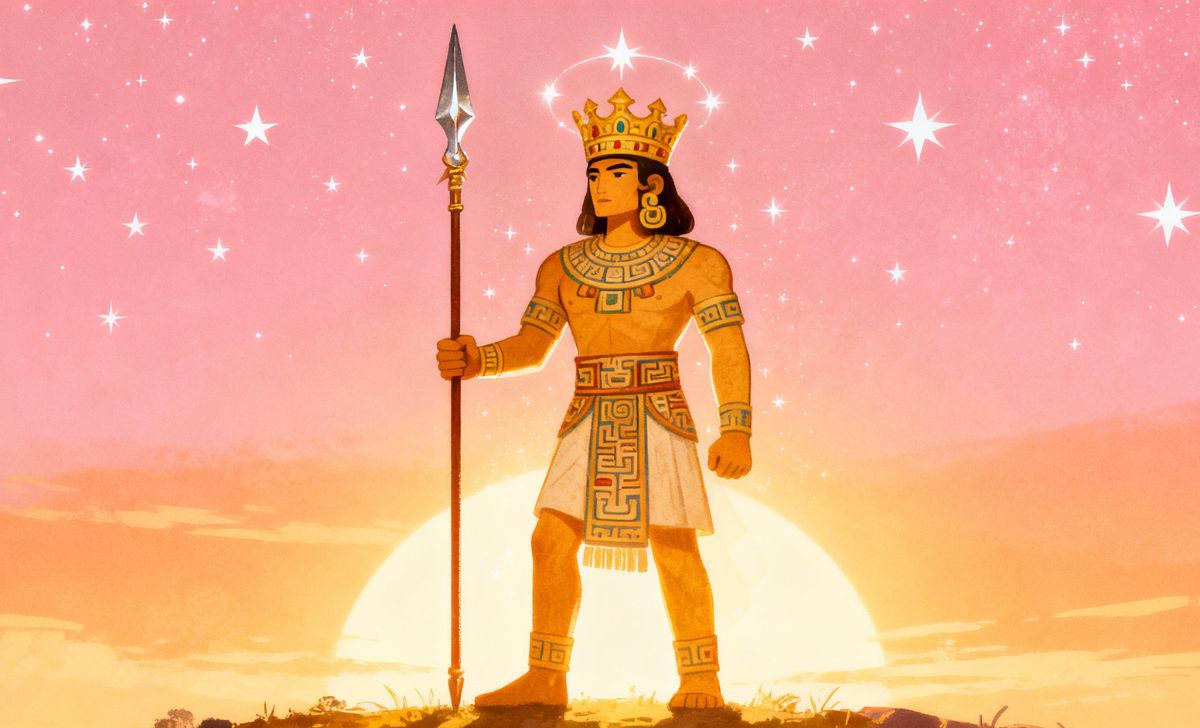
In the vast expanse of Mayan mythology, the celestial bodies were not lifeless objects floating in the heavens—they were divine beings engaged in eternal struggle. The tale of Chak Ek’ and the Celestial Duel, also known as The Maya Story of Venus and the Sun, is a profound cosmic drama that ties astronomy, religion, and the cycles of life into one grand narrative. According to ancient Maya belief, Chak Ek’ rose from the underworld, ascended through the surface of the eastern sea, and reached the heavens. His brother, K’in Ahaw, soon followed. Though Chak Ek’ was the first to rise, K’in Ahaw outshone him in brilliance and glory. Filled with envy, Chak Ek’ descended back into the underworld, his mind consumed by resentment and his heart set on revenge. In the universe of the Maya, these brothers symbolized two of the most important celestial forces: Chak Ek’ as Venus, and K’in Ahaw as the Sun.
Venus: The Dual Nature of Chak Ek’
Chak Ek’, the representation of Venus, held a unique place in Mayan cosmology. Venus was known as both the Morning Star and the Evening Star, appearing alternately before sunrise or after sunset, and sometimes vanishing entirely from the sky. The Maya studied this intricate pattern with great precision, identifying a complete Venus cycle lasting about 584 days—a measurement still astonishingly accurate even today.
Over the course of this 584-day cycle, Venus remains visible in the evening sky for roughly 250 days. It then disappears for eight days before reemerging as the Morning Star, heralding dawn from the eastern horizon. The Maya marked this moment of reappearance with deep spiritual and ritual significance, seeing it as the rebirth of Chak Ek’ from the underworld—now armed with his infamous spearthrower and darts. His reemergence was not peaceful. Each return of the Morning Star symbolized a period of potential chaos, danger, and divine conflict.
The Five Faces of Venus
The ancient Maya also realized that five Venus cycles nearly equaled eight solar years. This correlation was not coincidental in their worldview but evidence of cosmic harmony and repetition. They believed that Chak Ek’ underwent five transformations during these cycles, each with distinct traits and outcomes, repeating endlessly. These five phases embody a series of divine confrontations, marking phases of both cosmic disorder and renewal. Through these repeating cycles, the Maya perceived a rhythm to the universe—one where destruction and creation were forever entwined.
Chak Ek’s First Attack: The Fall of K’awiil
The first of Chak Ek’s assaults upon creation began with a target close to K’in Ahaw’s divine circle: K’awiil, the god of sustenance and lightning. As Venus rose in the late rainy season, Chak Ek’ hurled his spear at K’awiil. The strike brought devastation to the food supply, sparking widespread famine and turmoil in the human world. Without K’awiil’s vital energy, crops weakened, sustenance diminished, and social order faltered.
This period of chaos did not last indefinitely. Just as the Sun returns each dawn, K’awiil was eventually reborn—a mythic echo of the return of fertility and the renewal of the land after seasons of hardship. Yet the memory of that celestial strike lingered in Mayan ritual and timekeeping, serving as a warning that even the gods’ feuds rippled into human reality.

The Spearing of the Jaguar Sun
After 584 days—the completion of one Venus cycle—Chak Ek’ turned his ambition and vengeance back toward his brother, K’in Ahaw. Each night, the Sun journeyed through the underworld in the form of a majestic jaguar. As dawn approached near the end of the dry season, this jaguar Sun ascended toward the horizon—only to be ambushed by Chak Ek’. With a perfectly aimed celestial spear, Venus struck the Sun as it rose.
This moment, representing Venus’s proximity to the Sun just before dawn, was interpreted as the wounding of K’in Ahaw. The consequences were dire. The world was thrown into turmoil once again, plagued by warfare and instability. The skies mirrored human affairs; the cosmic order seemed fragile and uncertain, as if every sunrise could spell crisis.
The Death and Rebirth of the Maize God
In Chak Ek’s third act of aggression, the victim was none other than the Maize God—the very essence of life and sustenance for humankind. During the harvest season, when Earth rejoiced in abundance, Chak Ek’ struck. The Maize God fell, symbolizing the disappearance of fertility and nourishment from the land. Humanity faced starvation as the cornfields turned barren and the connection between heaven and earth was severed.
The Maize God’s death, however, was not permanent. After three months in the underworld, he returned, reborn in the eastern cave known as Seven Water Place—a sacred location symbolizing renewal and new beginnings. His resurrection restored hope and nourishment, reaffirming one of the Maya’s deepest beliefs: that from death arises life, and all existence moves in cycles of transformation.
The Slaying of the Turtle Ak Na’ak
The fourth victim of Chak Ek’s celestial rampage was the turtle Ak Na’ak, a divine being associated with the summer solstice. The rising of Ak Na’ak in the night sky was an auspicious omen, marking the renewal of light, fertility, and balance in the world. Yet Chak Ek’s spear ended this moment of harmony.
With Ak Na’ak’s death, the Sun, the crops, and humanity itself seemed buried within the earth. The universe dipped once more into chaos, with the forces of disorder prevailing over balance. But from the ruins emerged a new age. Hun Ajaw, one of the legendary Hero Twins celebrated for vanquishing the lords of the underworld, restored order once again. Under Hun Ajaw’s guiding presence, a new race of humans was created—crafted not from stone or wood, as in earlier myths, but from maize, the very substance of life.
The Fifth Victim: The Stranger from the West
Even this renewed balance could not endure. Chak Ek’s final victim was a mysterious stranger from the west, struck during the height of the dry season. His death disrupted the fragile equilibrium established by Hun Ajaw. Once again, the gods, the lords, and even the life-giving maize were buried in the underworld. The victory appeared to belong to Chak Ek’, who emerged triumphant for a moment. Yet, as in all Mayan cosmology, every victory carried the seed of defeat. The cosmos was not built upon absolute triumphs but upon endless repetition—death followed by rebirth, chaos succeeded by order.
The Eternal Struggle of Venus and the Sun
In the mythic imagination of the Maya, the battle between Chak Ek’ (Venus) and K’in Ahaw (the Sun) is eternal. Time, to them, was cyclical, not linear. Their conflicts did not conclude but repeated across the sky and the ages. Every reappearance of Venus as the Morning Star reignited the struggle—a cosmic duel that mirrored human existence itself.
Venus’s five faces became markers not just of astronomical precision but of cosmic storytelling. Each appearance and disappearance represented the perpetuation of divine cycles: creation, destruction, chaos, renewal, and rebirth. The Morning Star’s reemergence before dawn was both feared and revered, as it heralded times of turmoil but also the promise of transformation.
Astronomical Precision and Spiritual Vision
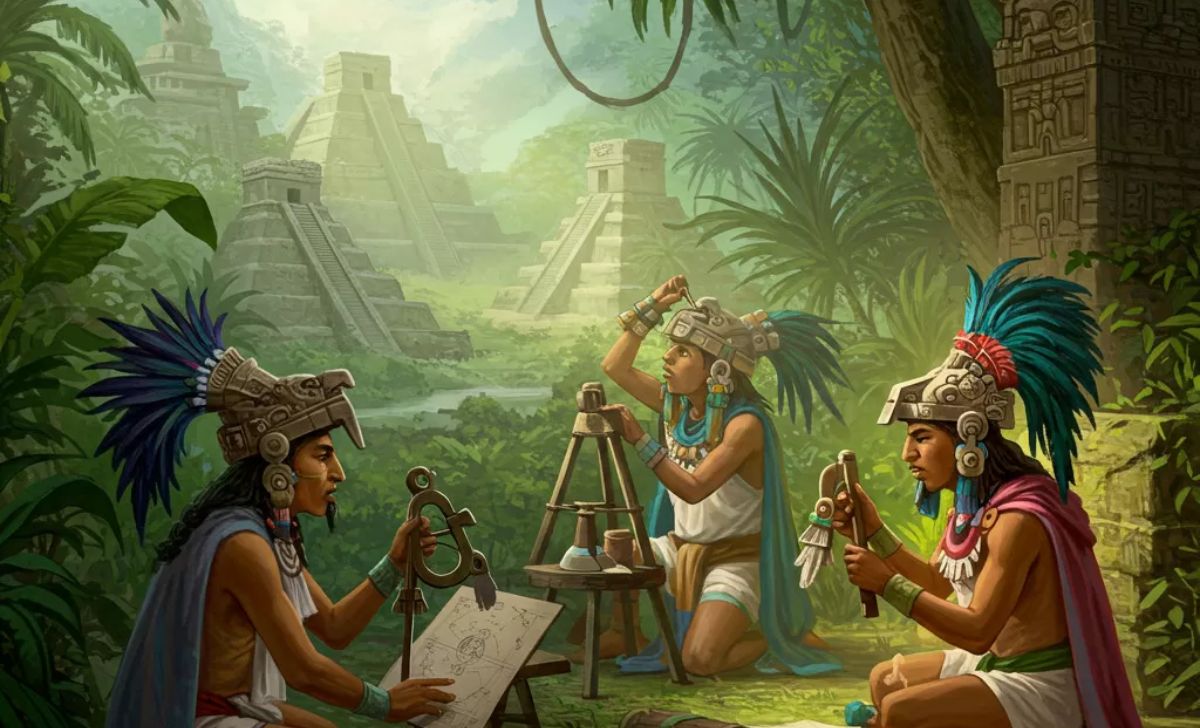
Beyond its mythic poetry, this story reveals the Maya’s extraordinary astronomical understanding. Their calculations of Venus’s movement were not only scientifically astounding but spiritually integrated. The 584-day Venus cycle, synchronized with the Sun’s path and the seasonal calendars, allowed priests and astronomers to predict celestial events with impressive accuracy.
Venus’s appearances played key roles in the timing of rituals, warfare, and agricultural cycles. The Maya believed that celestial harmony reflected earthly balance—any disturbance in the heavens echoed in the world below. By observing Venus, they aligned their societal rhythms with the pulse of the cosmos.
Order, Chaos, and the Human Condition
The myth of Chak Ek’ and K’in Ahaw speaks to a universal human truth: the eternal interplay between order and chaos. The Maya saw their gods as beings mirroring the same emotional and moral complexities as humans—envy, vengeance, pride, and resilience. Through cosmic metaphor, they explained the uncertainties of nature and life—the storms, droughts, eclipses, and changes that shaped their world.
When Chak Ek’ rises as the Morning Star, it signifies not just astronomical change but existential movement—the resurrection of forces that challenge stability. Yet each fall of Venus and each rebirth of the Sun remind humanity that balance, though fragile, can always be restored.
The Legacy of Chak Ek’
Even after centuries, the myth of Chak Ek’ continues to reflect the Maya’s genius—both in their storytelling and scientific acumen. In Venus, they saw not a distant planet but a god whose presence dictated the rhythm of the earth. Their ability to weave myth and mathematics into an inseparable tapestry speaks to one of humanity’s most profound achievements: the merging of observation, imagination, and faith.
The relationship between Chak Ek’ and K’in Ahaw remains one of the greatest celestial allegories in human mythology—a story written across the stars, retold in every sunrise and in each shimmering point of light that precedes it. Their endless duel, mirrored in the cycles of Venus and the Sun, teaches that even in the heart of conflict lies the seed of renewal, and from every descent into darkness, light inevitably rises once again.