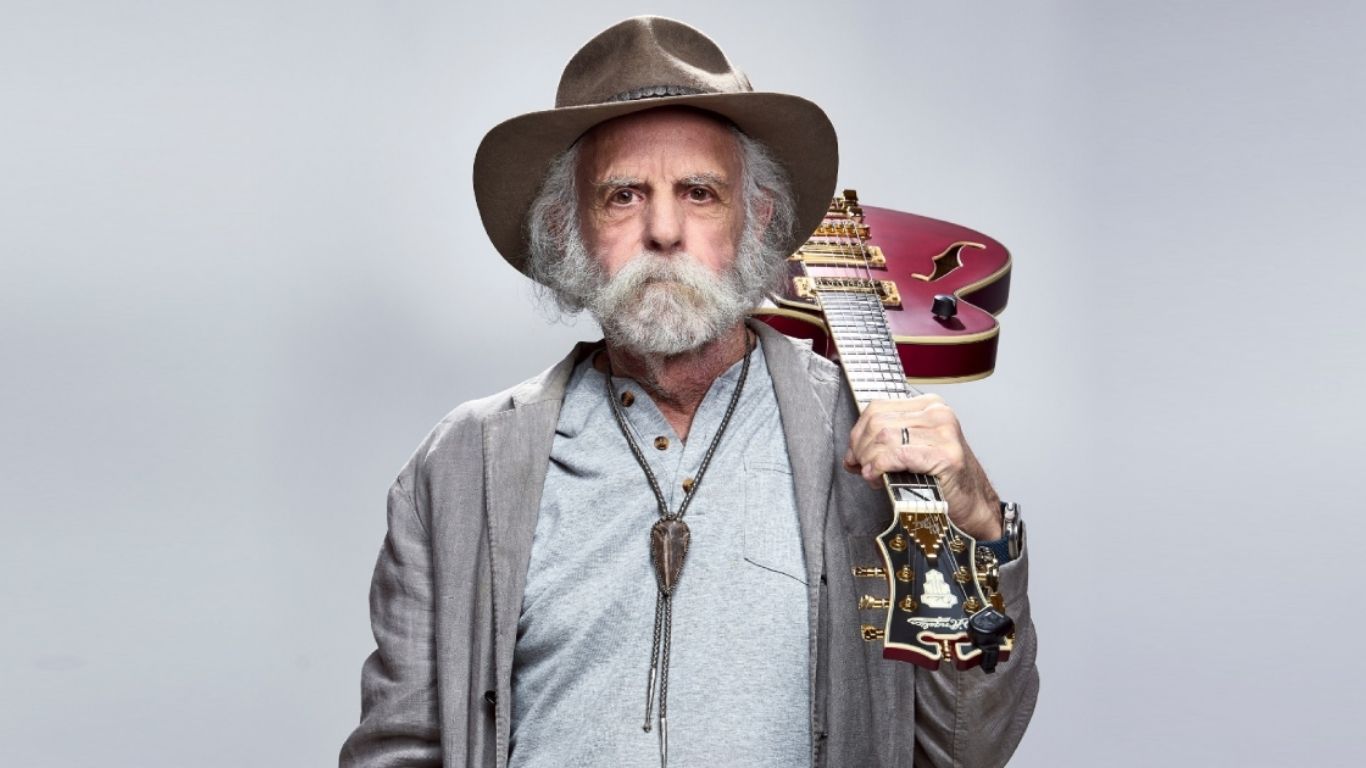
Bob Weir, the enduring rhythm guitarist and co-founder of the Grateful Dead, passed away at 78, leaving behind a legacy that reshaped rock music and built a devoted global family of fans.
His daughter Chloe Weir shared the news on his verified Instagram account, revealing that the musician died peacefully on Friday, surrounded by loved ones. Diagnosed with cancer in July, Weir had bravely fought the disease—even performing at the band’s 60th anniversary reunion shows in San Francisco’s Golden Gate Park that summer—before succumbing to underlying lung issues. “Bobby will forever be a guiding force whose unique artistry reshaped American music,” Chloe wrote. “There is no final curtain here… May we honor him not only in sorrow, but in how bravely we continue with open hearts, steady steps, and the music leading us home.”
Born Robert Hall Parber on October 16, 1947, and adopted into a family in Atherton, California, young Bob picked up the guitar at 13. He dove into folk clubs, strumming bluegrass, and soon crossed paths with Jerry Garcia at the Palo Alto club Tangent. By 1964, the duo had formed Mother McCree’s Uptown Jug Champions, which evolved into the Warlocks and then the Grateful Dead. At just 16—the band’s youngest member and still in high school—Weir joined forces with Garcia, bassist Phil Lesh, Ron “Pigpen” McKernan, and drummer Bill Kreutzmann. Lesh later recounted promising Weir’s mom they’d get him to school on time, even if it meant early San Francisco drop-offs after late gigs.
Weir’s ponytail and athletic build earned him the nickname “Bobby” or “the kid,” but his talent quickly shone. As the Dead’s rhythm guitarist alongside frontman Garcia, he delivered verses on anthems like “Truckin'” and penned or co-wrote staples such as “Sugar Magnolia,” “Playing in the Band,” “Jack Straw,” “Cassidy,” “Black-Throated Wind,” “Mexicali Blues,” “Looks Like Rain,” and “Throwing Stones.” His style was anything but ordinary—inspired by piano greats, he’d weave intricate fills, riffs, and unconventional chords rather than simple strums, blending Chuck Berry riffs, cowboy tunes, R&B, reggae, and more. British critics hailed him as rock’s greatest eccentric rhythm player.
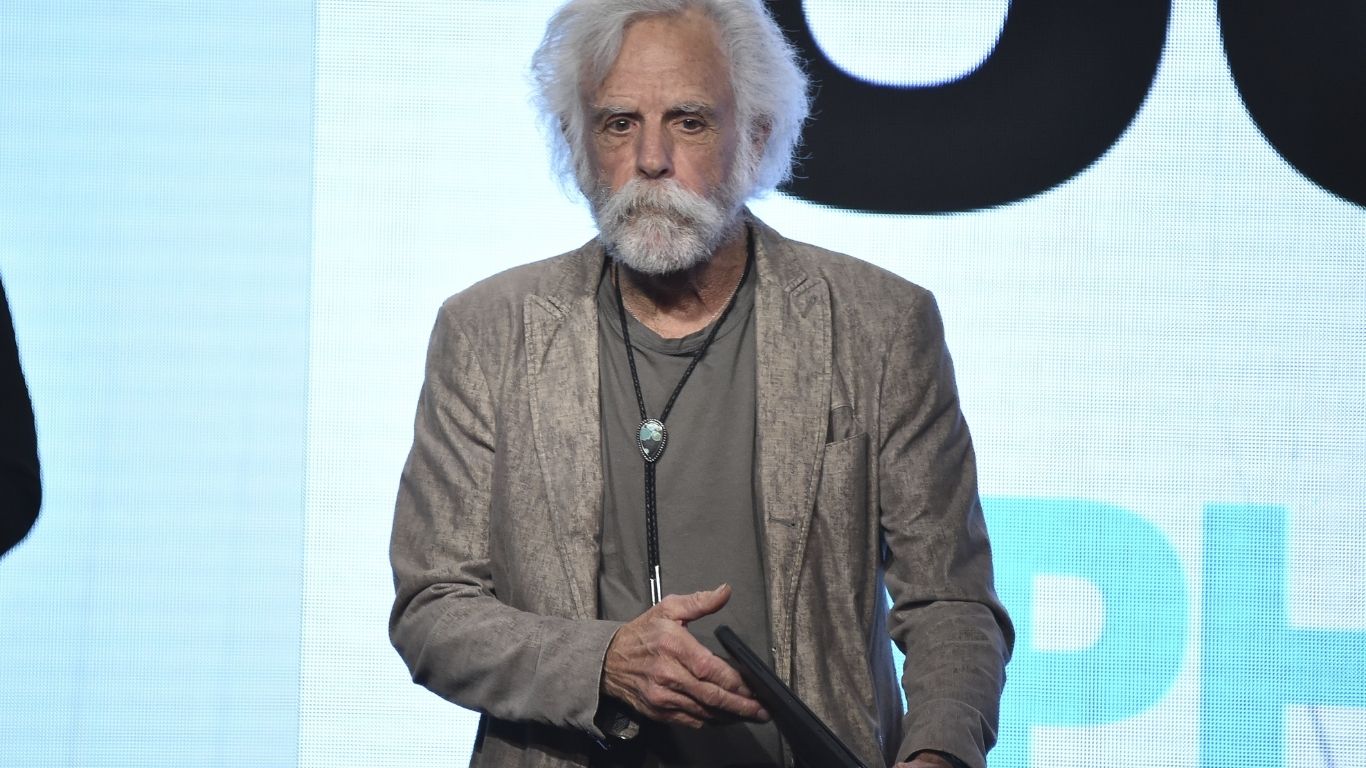
The Dead exploded from San Francisco’s Haight-Ashbury scene in the ’60s and ’70s, hitting cultural highs like Woodstock and their massive 1977 Englishtown, New Jersey show for over 100,000 fans. Their endless touring, ever-shifting setlists, and epic jams created the Deadhead phenomenon—a nomadic tribe of fans chasing the magic. A late-’80s resurgence came with their lone top-10 hit “Touch of Grey,” packing stadiums with old-timers and newcomers alike. Weir’s 1972 solo album Ace felt like a Dead record, packed with band-backed gems.
After Garcia’s 1995 death, Weir kept the spirit alive with RatDog, various Dead reunions, and Dead & Company alongside John Mayer. Mayer once marveled at Weir’s “savant” genius: “He’s invented his own vocabulary… a joyous thing to play along with.” Weir even served as a UN goodwill ambassador in 2017, championing poverty eradication and climate action. He married Natascha Muenter in 1999; they raised daughters Chloe and Monet.
“Looking back, I guess I have lived an unusual life,” Weir once reflected. His music didn’t just fill venues—it built communities, invited wandering souls to belong, and promised that tomorrow always brings something new.