
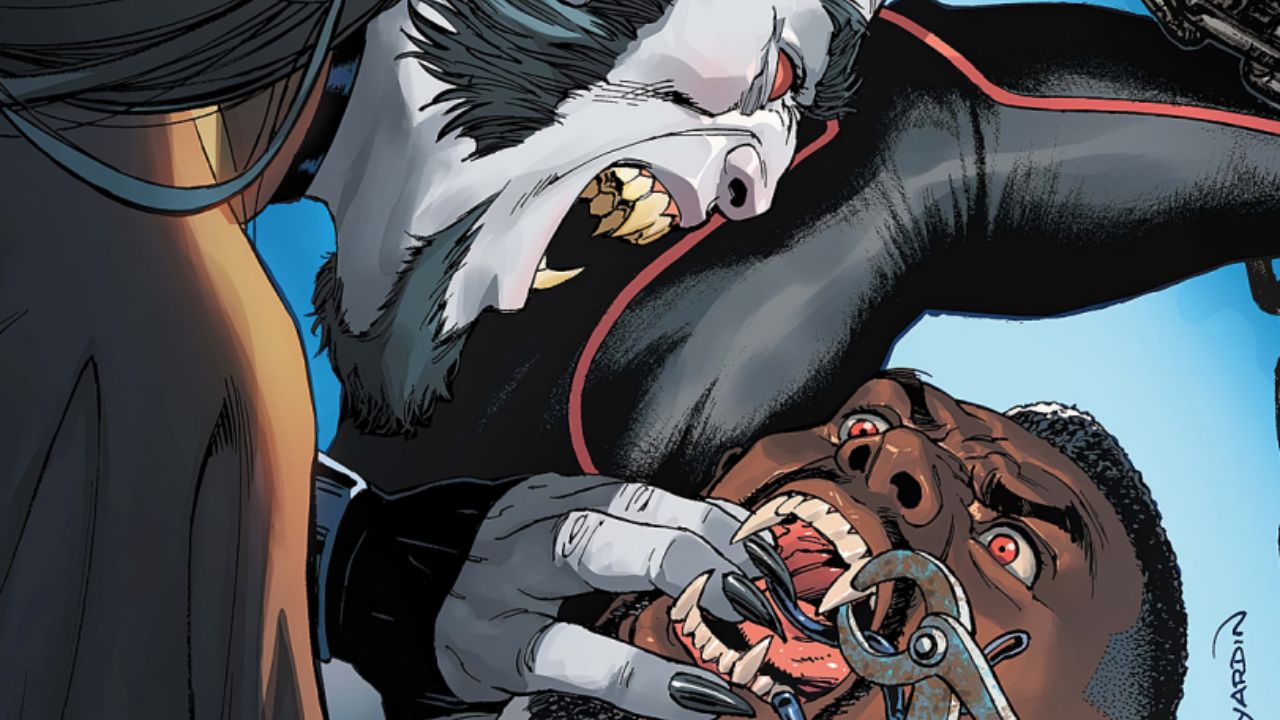
Blade: Red Band #5 wastes no time in dismantling expectations. Instead of resuming with torture or immediate bloodshed, Eric Brooks awakens to something far more disarming—calm. Pontious, the man positioned as a looming antagonist, greets him not as a conqueror but as a philosopher.
Blade, ever wary, probes for the hidden tyranny beneath the surface. Is Pontious another cult architect? A would-be ruler cloaking ambition in mysticism? The answers come swiftly—and surprisingly. Pontious denies any grand design of conquest. According to him, it was Blade who brought war to their doorstep.
What unfolds is less a hostage scenario and more a tense, measured debate. Pontious points to their shared immortality as leverage: they have time. Time to speak. Time to reflect. Time before violence becomes inevitable. His mission is not domination—it is redirection. He wants Blade’s rage aimed at what truly deserves it.
The Tragic Origin of Pontious
To make his case, Pontious offers something unexpected—vulnerability.
He recounts the final sunrise he witnessed as a human, standing beside Longinus during a cataclysmic earthquake that marked the death of a man whose legacy would alter history forever. That moment, he explains, shattered him.
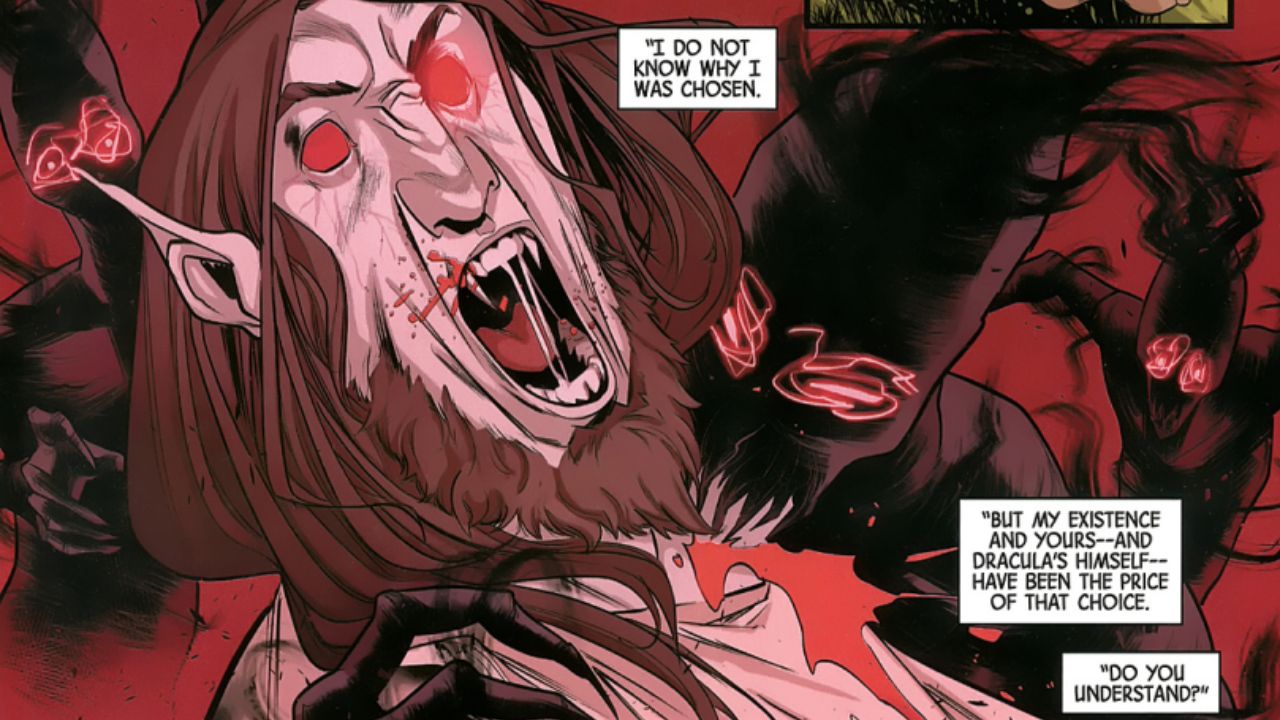
It wasn’t violence alone that changed him—it was the crushing realization of evil as a concept. The weight of it fractured his will. In that moment of spiritual collapse, the ancient forefathers of vampires were drawn to him. He became a monster not out of ambition, but fear.
In a startling gesture of trust, Pontious frees Blade and allows him to retrieve his weapon. No chains. No tricks. Only a pointed reminder: Elena might still be alive if Blade had tempered his rage. Pontious insists he never forced the Daywalker’s hand.
A Sanctuary in the Darkness
Pontious then leads Blade deeper into the shadows—to his so-called “flock.”
What Blade finds is not an army, but survivors. A hidden sanctuary carved out of a war-torn land. These are not zealots thirsting for conquest; they are people who fled brutality and found protection under Pontious’ watch.
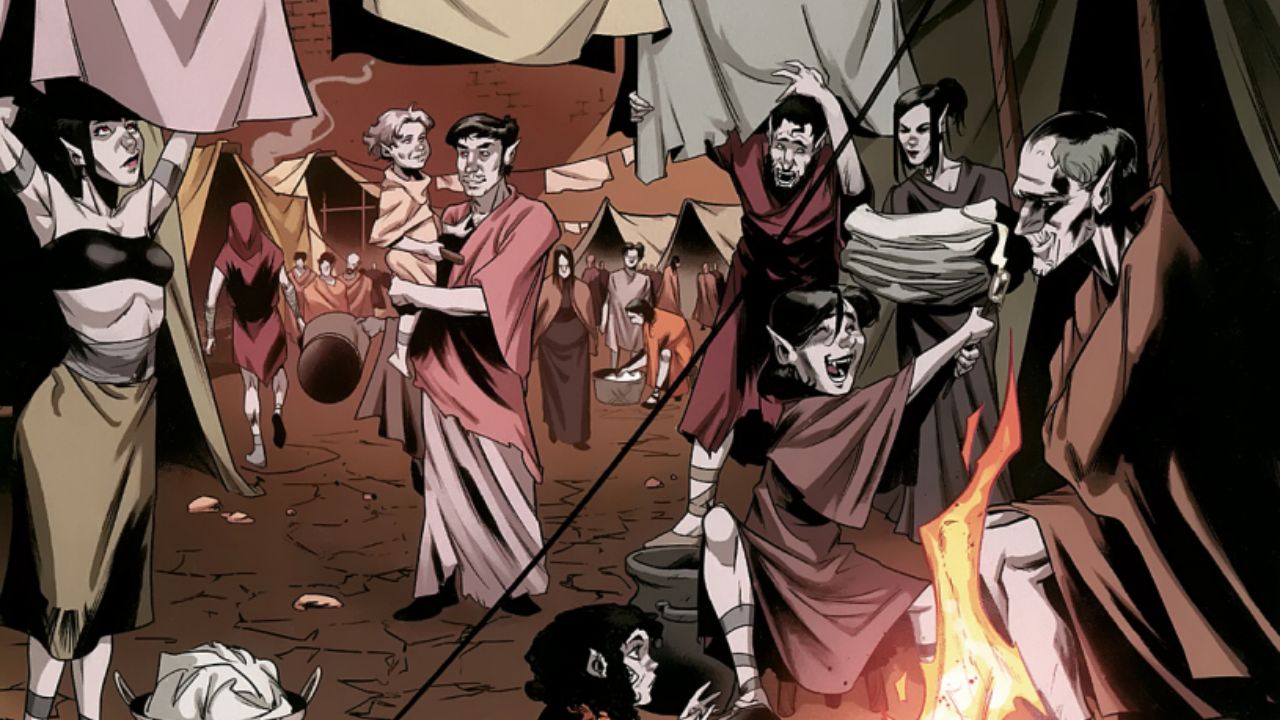
The emotional center of the issue arrives quietly. A child approaches Blade, explaining that soldiers once hurt them—but Pontious healed and sheltered them. When asked his name, the hardened vampire hunter drops the myth and answers simply: Eric.
It is in this fragile moment that another revelation lands. The Spellguard secretly branded Blade with magic during their first encounter, turning him into a living tracking beacon. He was never just hunting Pontious—he was being used.
The Spellguard’s Arrogant Arrival
Peace shatters with the arrival of the Spellguard. Their objective is clear: eliminate Pontious and seize a powerful book of magic.
They dismiss Blade outright, branding him a “half-breed” and ordering him aside. But Eric Brooks doesn’t move. He declares Pontious his responsibility and warns them to retreat—or die.
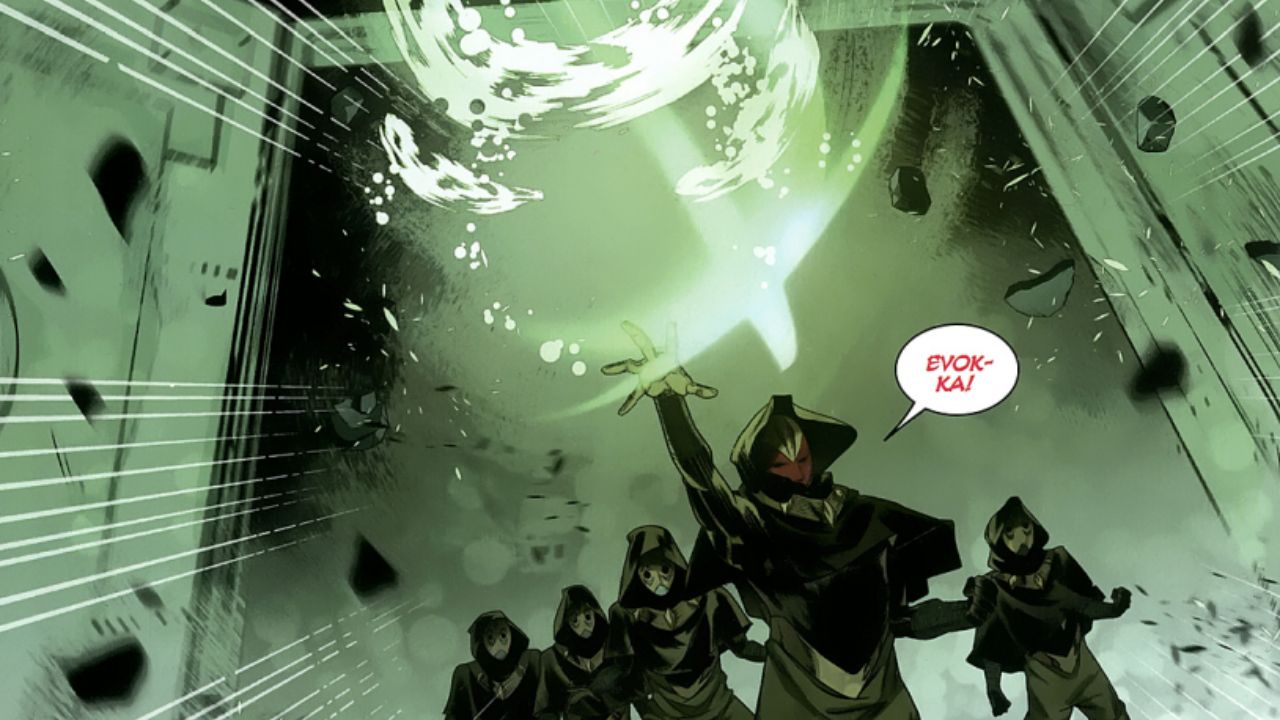
The battle that follows is fierce and personal. The Spellguard taunt him, invoking Varnae and suggesting Blade is nothing but an empty husk. In the chaos, Pontious reminds Blade of something crucial: he is the enemy of evil itself—not merely a hunter driven by blind fury.
The Book and the Burden of Immortality
When the dust settles, the true objective is revealed. The coveted book of magic contains a secret code—one Pontious believes may hold the key to ending their immortal curse and mastering the darkness that birthed them.
In an unexpected act of trust, Pontious hands the tome to Blade, ensuring it remains out of the Spellguard’s reach. Its contents, he says, are already etched into his mind.
Then he asks for the one thing immortals possess in endless supply: time. Time to uncover the primordial evil responsible for their kind. Time to trace the origin of the darkness itself. With that, Pontious and his flock vanish into the shadows.
An Ominous Final Promise
The aftermath offers no neat resolution. The surviving Spellguard agents return to their Master—the High Lord of the Spellguard—reporting failure. Blade has the book. Pontious has disappeared once more.
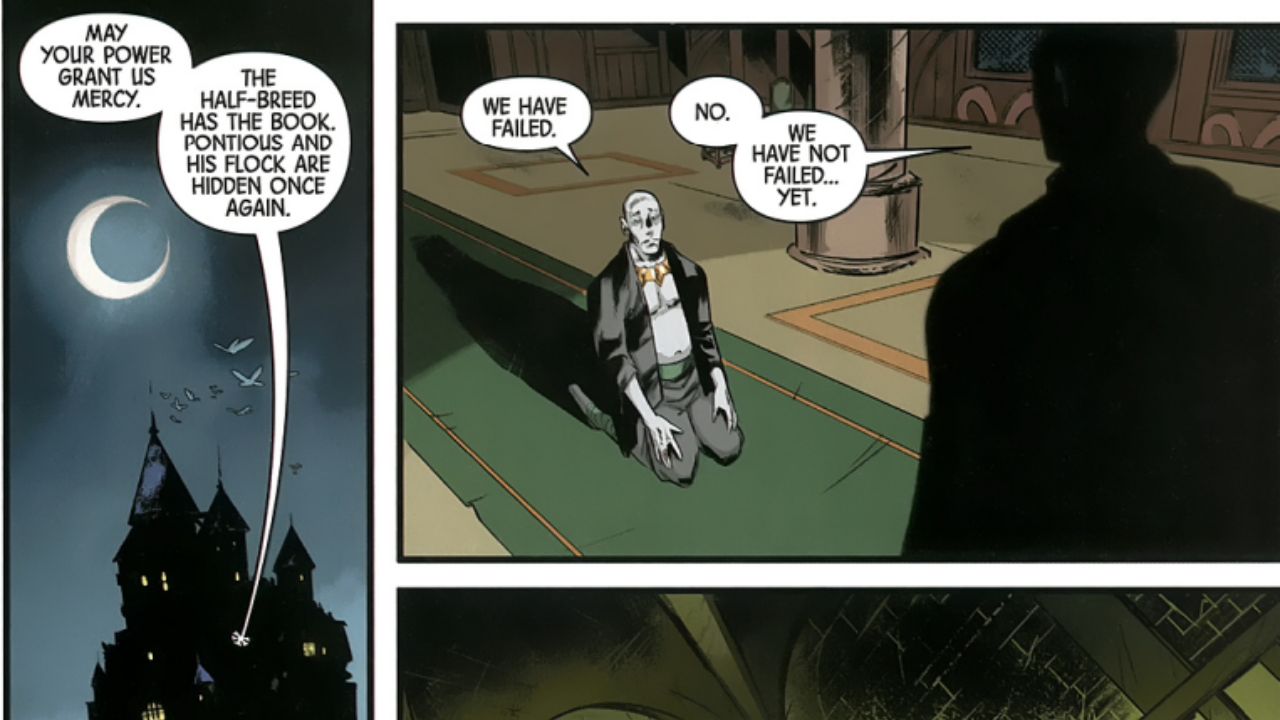
But the High Lord’s response ensures this is not an ending.
“No. We have not failed… yet.”
On the final page of the miniseries, the promise of future conflict lingers like smoke after battle. The monsters and the men remain entangled. And Blade stands at the center of a war that may be far older—and far deeper—than he ever imagined.
Read: Blade: Red Band #4 – The Origin of Pontious, The Bait, and The Offer