
When The Black Phone hit theaters in 2022 and amassed over $160 million globally, a sequel was practically unavoidable. Based on Joe Hill’s chilling short story from 20th Century Ghosts, the first film blended supernatural horror with the psychological terror of abduction and survival. Director Scott Derrickson crafted a haunting yet emotional story about Finney Blake (Mason Thames), a boy kidnapped by the sadistic “Grabber” (Ethan Hawke) who communicates with the killer’s past victims through a disconnected black phone. The movie’s eerie atmosphere, powerful performances, and grounded scares turned it into an instant horror classic — seemingly ending with the Grabber’s defeat and Finney’s freedom. Three years later, Derrickson returns with Black Phone 2, an ambitious sequel that expands the mythology while venturing deeper into the psychological and supernatural territory hinted at before. In this Black Phone 2 Review, we explore how the film, though visually striking and thematically rich, struggles to maintain the emotional precision that made the original so gripping.
From Survival to Haunting
Set four years after Finney’s escape, Black Phone 2 follows Finney and his sister Gwen (Madeleine McGraw) as they attempt to rebuild their lives. Both bear deep emotional scars from their previous ordeal — Finn numbs his trauma with anger and substance use, while Gwen’s psychic abilities, inherited from their late mother, intensify through disturbing prophetic dreams.
Director Scott Derrickson and co-writer C. Robert Cargill reshape the narrative into more of a supernatural mystery than a slasher. Since the Grabber is now dead, his presence lingers beyond the grave, haunting Gwen and Finney through dreams and spectral visions. What began as a battle against a serial killer now transforms into a fight against his ghostly remnant — a presence that blurs the boundary between dream and reality.
The movie’s central concept unfolds at a remote, snowbound Christian youth camp in Colorado, where Gwen, Finney, and Gwen’s boyfriend Ernesto (Miguel Mora) take refuge during a blizzard. The setting — cold, desolate, and isolated — amplifies the film’s atmosphere, turning the frozen wilderness and eerie camp into characters of their own. When Gwen begins receiving spectral phone calls and horrifying visions of drowned children surfacing through icy waters, it becomes clear the Grabber is still reaching out — not through wires, but through dreams.
The Dream World and the Dead
Where the first film derived tension from claustrophobic realism, Black Phone 2 dives into ethereal, dreamlike horror. Gwen’s nightmares function as portals, connecting her to the spirits of the Grabber’s former victims — and to her deceased mother, whose presence reveals tragic details about the Blake family’s history, including the trauma that led to her suicide.
These dream sequences, shot with grainy Super 8 textures and eerie analog sound, create a haunting 1980s aesthetic. The artistic direction leans heavily into that era’s horror atmosphere, evoking A Nightmare on Elm Street through its depiction of a killer who strikes from within the subconscious. Derrickson’s choice to let much of the movie unfold in this surreal “dream dimension” makes for a bold stylistic experiment — simultaneously the film’s strength and its downfall.
The longer viewers spend in the dream world, the thinner the plot becomes. Gwen finds herself repeatedly attacked in her visions, only to wake up wounded in reality. This formulaic loop — dream, injury, panic, repeat — gradually loses its intensity. Finney, once the soul of the story, fades into a secondary role, forced to watch helplessly as his sister assumes the position of protagonist.
Haunted by the Past
Part of what makes Black Phone 2 intriguing is its portrayal of how trauma endures beyond the event itself. Finney’s emotional turmoil contrasts with Gwen’s spiritual distress, as both siblings reckon with inherited pain and supernatural interference. Through their mother’s storyline, the film also suggests that their psychic “gift” — a power that bridges life and death — comes at a terrible cost.
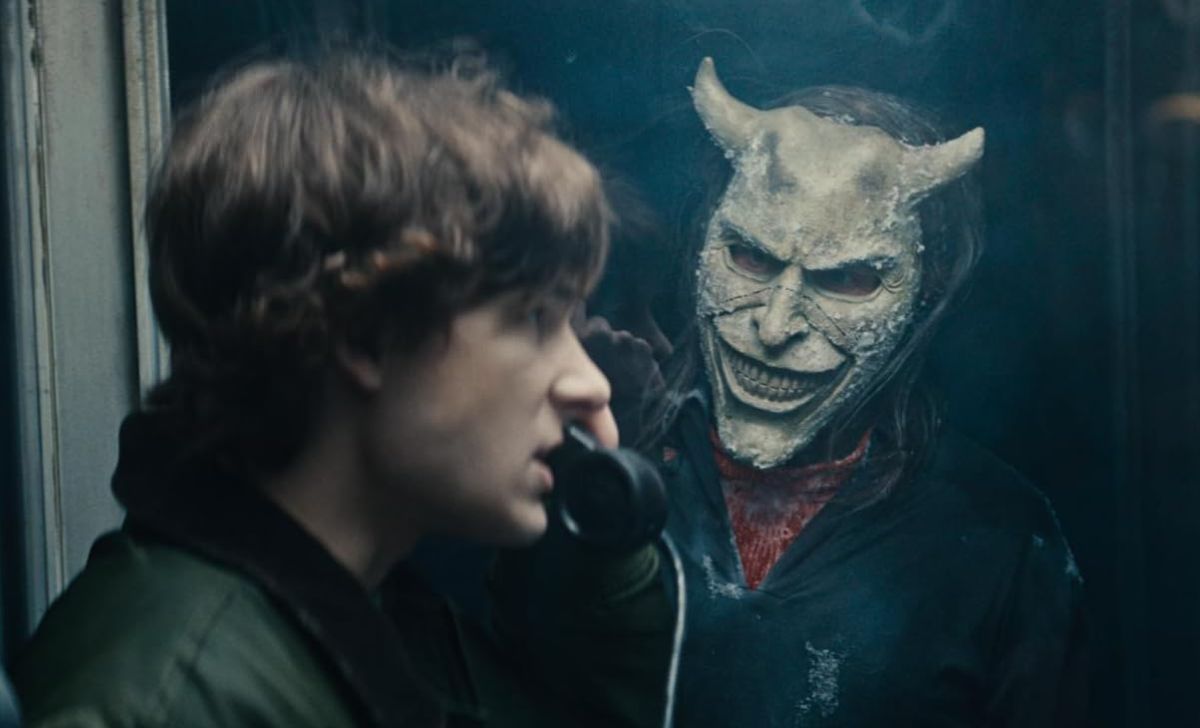
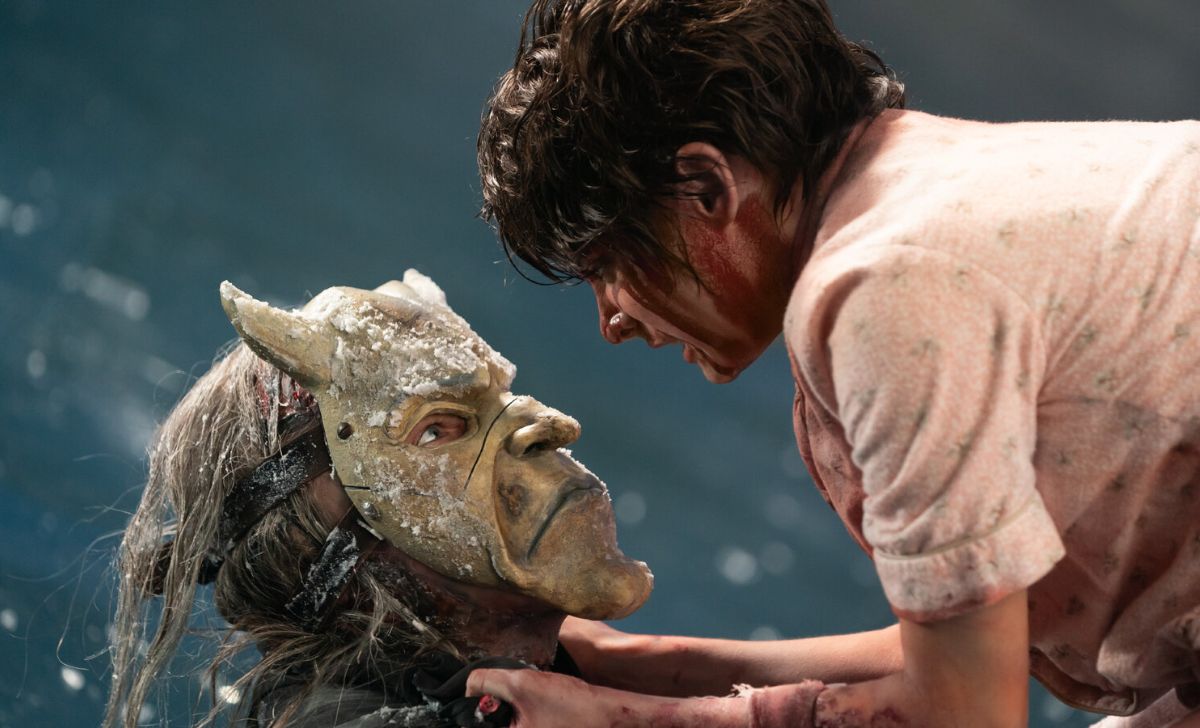
Ethan Hawke’s return as the Grabber, now reimagined as a demonic phantom, is unnerving even with limited screen time. Hidden behind his decaying mask and prosthetic makeup, Hawke channels menace through voice and presence rather than physical violence. His portrayal bridges the slasher roots of the first film with this sequel’s ghostly reinterpretation. The result is a villain who, like Freddy Krueger, transcends mortality to terrorize his victims in their minds.
Style Over Substance
Visually, Black Phone 2 excels. Derrickson’s use of textured lighting, flickering shadows, and vintage set design immerses the audience in its 1982 world. The score, composed by Derrickson’s son Atticus, deepens this mood through ethereal notes and carefully placed period tracks — including Pink Floyd’s The Wall — that anchor the film in a nostalgic yet unsettling soundscape.
However, for all its atmosphere, Black Phone 2 lacks the emotional precision of its predecessor. The story’s dual focus on Gwen’s dreams and Finney’s trauma never strikes a proper balance, leaving both arcs underdeveloped. By the time the movie builds to its chaotic finale — complete with the Grabber gliding across the frozen lake in a distorted pseudo-comedic showdown — the tension gives way to confusion rather than catharsis.
Final Verdict
Black Phone 2 isn’t a disaster; it’s a stylish, occasionally haunting entry that explores the lingering damage of fear and loss. Yet despite moments of brilliance — the snowy camp setting, Hawke’s spectral menace, and Derrickson’s eerie cinematography — the film cannot recapture the tightly woven urgency that made The Black Phone so effective.
It ends up caught between genres: too introspective for a slasher and too formulaic for a true ghost story. What remains is an aesthetically impressive but emotionally inconsistent sequel that keeps audiences intrigued — even if, by the final ring, it leaves them wishing they had let the phone stay off the hook.