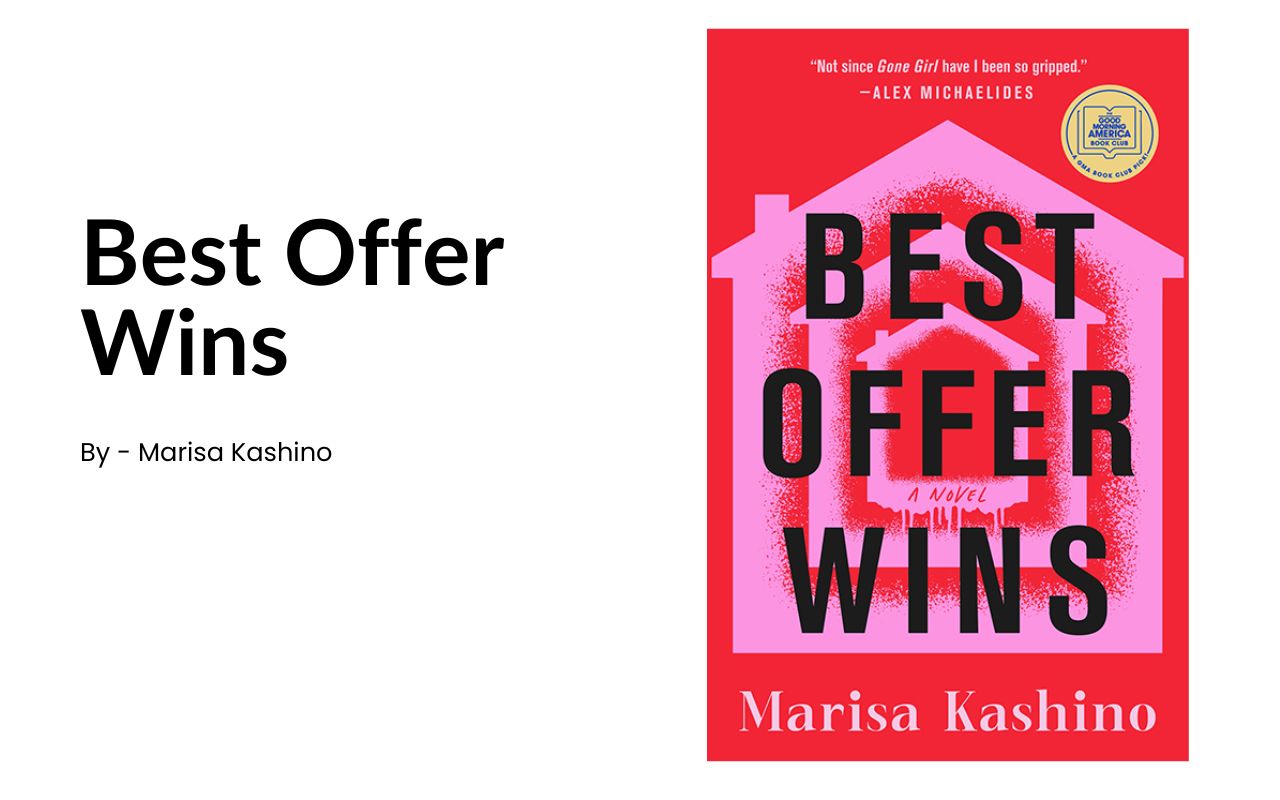
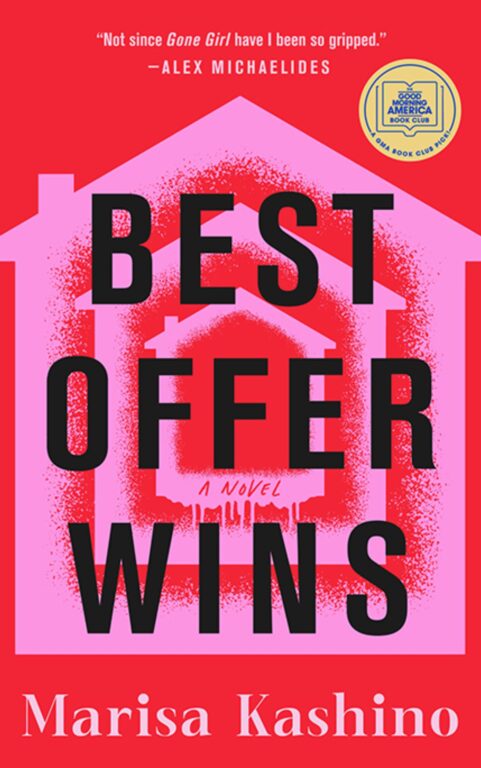
Marisa Kashino’s debut novel Best Offer Wins arrives at a moment when discussions about real estate, class pressure, and social status feel louder than ever. On the surface, the story revolves around buying a house. But beneath that simple premise, the novel explores how ambition, envy, and the desire for a “better life” can push an ordinary person toward increasingly questionable decisions. It is sharp, clever, unsettling, and often very funny — a story that refuses to let the reader sit comfortably.
Plot Summary: When a House Becomes an Obsession
The story follows Margo Miyake, a 37-year-old publicist living in the Washington, D.C. area. Tired of renting and yearning for stability, she and her husband start house hunting. Real estate in the suburbs feels like a battleground — competitive, expensive, and emotionally draining.
Everything changes when Margo discovers a house that seems perfect. But the property attracts multiple interested buyers, and a bidding war begins. At first, Margo tries typical tactics, but soon her desire to win pushes her into ethically messy territory. She starts getting close to the sellers, inserting herself into their lives, and stretching boundaries to make her offer more appealing.
The novel tracks her gradual slide into moral compromise. Each small decision she makes seems harmless at first, but the cumulative effect is alarming. The tension builds as the reader wonders: How far will she go to get this house? And what will it cost her?
What the Book Gets Right: Tone, Pacing, and Writing Style
Kashino has a gift for writing scenes that feel both funny and uncomfortable. Her tone shifts smoothly between humor, tension, and quiet emotional honesty. The pacing is tight, with short scenes that consistently push the story forward.
Her professional background in real estate journalism shows through the details:
• bidding strategies
• social dynamics between buyers and sellers
• the psychological games in competitive housing markets
These elements make the story feel authentic and give the plot a grounded foundation. Even when Margo’s actions become extreme, the setting feels uncannily realistic.
Characters: A Flawed but Fascinating Protagonist
Margo is deliberately complex. She is not heroic, not purely sympathetic, and often behaves in ways that make the reader cringe — yet she remains believable. Kashino explores her motivations with nuance: her longing for stability, her fear of being left behind, and her hope that homeownership will bring her the life she imagines.
The supporting characters — Margo’s husband, other buyers, and the homeowners — act like mirrors. They reflect back aspects of her personality, showing readers what she hides, what she fears, and what she is trying to prove.
This tension between her inner vulnerability and her outward confidence gives the novel emotional weight.
Themes: Class, Pressure, Identity, and Wanting More
Below the plot, the book weaves in themes such as:
• social class pressure
• gender expectations around family and success
• racial identity and belonging
• the idea of “the perfect life” as a performance
The house becomes more than a physical space — it symbolizes adulthood, status, and the validation Margo craves. The story shows how the modern pressure to “have it all” can distort choices and push people to compete harder, even when it harms them.
What makes the novel striking is how relatable these pressures feel. The exaggeration makes the satire effective, but the emotions underneath feel true.
What Might Not Work for Everyone
Because Margo is intentionally flawed, readers who prefer “nice” main characters may struggle with her. The book thrives on discomfort — watching someone justify increasingly risky behavior. It’s not a soft, comforting read.
Some plot moments may also feel exaggerated or stylized, but these choices serve the book’s comedic and satirical edge. It’s not trying to be documentary-real; it’s a reflection of modern anxieties through a slightly distorted lens.
Final Thoughts: Who Should Read This
Best Offer Wins is a smart, sharp, and engaging debut perfect for readers who enjoy:
• contemporary fiction
• dark humor
• morally ambiguous characters
• stories about ambition and identity
• social commentary woven into everyday situations
If you’re interested in how people negotiate their desires — and what they’re willing to risk to get the life they imagine — this novel offers an entertaining yet unsettling ride.