
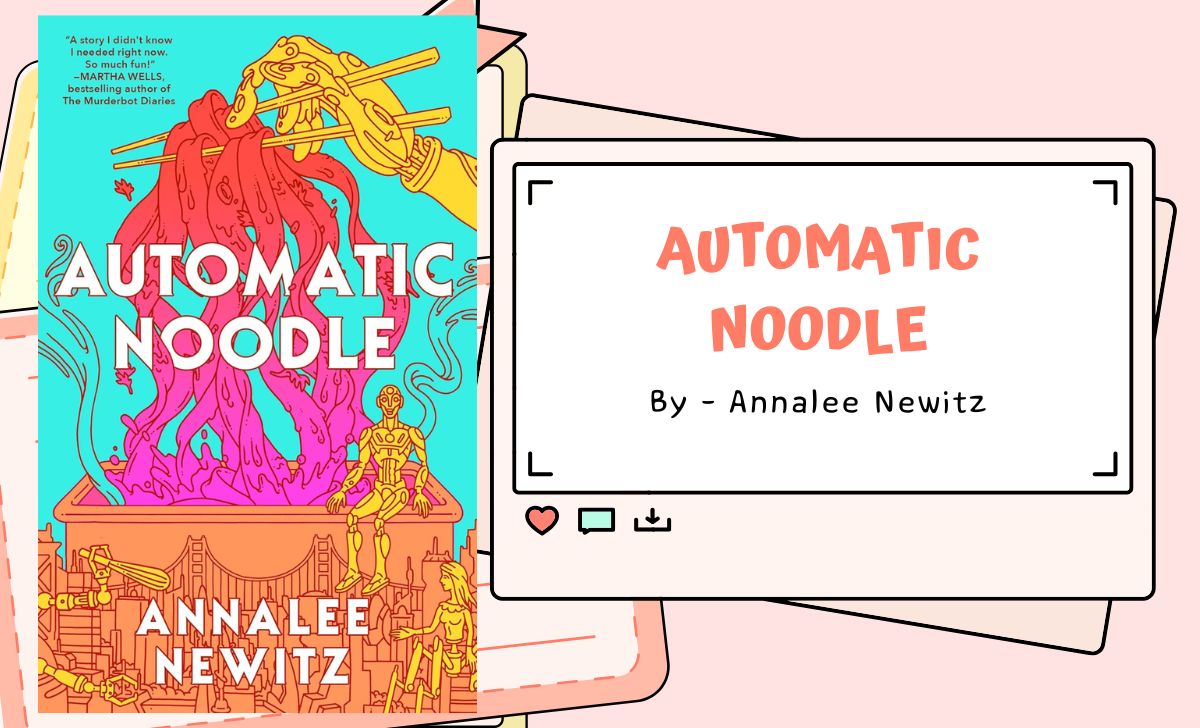
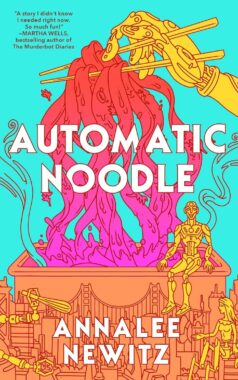
Annalee Newitz’s Automatic Noodle is a small, tender novella that uses the everyday ritual of cooking to explore big questions about community, labor, and who counts as human. Centered on a crew of deactivated foodservice robots who reawaken in an abandoned ghost kitchen and decide to open a noodle shop in post-war San Francisco, the story is both comfort food and social commentary — quiet in scale but pointed in its observations. The novella is published by Tordotcom / Macmillan and arrives as a 160-page, near-future fable that aims to blend warmth with satire.
Plot overview
Automatic Noodle follows a small ensemble of robots who, having been brought back online after being discarded by their human employers during a devastating war, set up a makeshift restaurant in a ghost kitchen. They focus on what they know best: hand-pulled noodles. As their little business grows into a community hub, the shop faces external pressures — algorithm-driven harassment, targeted one-star campaigns, public fear of robot autonomy, and the economic mechanics of a society still recovering from conflict. To survive, the robots lean on their diverse customers and each other, juggling identity, trauma, and the practicalities of staying open in a world that isn’t built for them. This cozy-but-stiffly-relevant premise anchors the novella’s emotional beats and its satirical edge.
What works — warmth, characterization, and atmosphere
Newitz excels at carving out a tiny ecosystem: the kitchen smells of spice, the plates feel lived-in, and the relationships among the shop’s crew are believable and affecting. The book’s emotional center is its found family — the way small acts of care (a bowl of soup, fixing a machine joint, listening without judgement) gather into something like resilience. Reviewers who loved the book often highlight this warmth and the sense that the restaurant is a refuge, not just economically but morally and socially. Many readers will find Newitz’s quieter scenes — the ritual of noodle-pulling, the slow building of trust between robots and customers — to be the book’s strongest asset.
Where the novella strains — pacing and worldbuilding
Because Automatic Noodle is compact, some readers and reviewers note that it sometimes moves too quickly through elements that could have used more space. The novellas’ brisk pace is part of its charm, but it also limits deeper exploration of the wider world: the political fallout of the war, the social programs (or lack thereof) that shape attitudes toward robots, and the economic roots of the antagonism they face. A few reviewers found that the book’s social critique occasionally feels sketched rather than fully developed — the result of a tight word count rather than poor intent. If you come to the story wanting a wide, fully-detailed dystopian panorama, you may feel slightly unsatisfied; if you want a focused character story wrapped in speculative trappings, the length is appropriate.
Themes and ideas: labor, identity, and public opinion
Newitz uses the noodle shop as a microcosm to ask how labor and identity overlap when the laborers are nonhuman. The book interrogates algorithmic power (review-bombing, rating systems), social media’s role in shaping public belief, and the way economy and prejudice can target those who are different. Rather than preaching, the novella dramatizes these forces: patrons rally to save the shop, organizers teach the robots how to navigate bureaucracy, and the crew learns that survival requires both practical skills and the ability to inspire human empathy. The theme of food-as-bridge — that a bowl can make strangers into neighbors — is handled with sincerity, and Newitz balances satire and sweetness without tipping entirely into either.
Characters and emotional arcs
The cast is small but well-differentiated: each robot brings a distinct history and personality, from those haunted by wartime roles to others seeking a new sense of purpose. Human secondary characters are sketched in ways that support the central arc: customers, allies, and antagonists all serve to test the shop’s commitment to each other and to their principles. Readers who enjoy character-driven science fiction will appreciate how Newitz allows incremental, believable changes in how the robots view themselves and how the city views them — the emotional payoffs are earned through small, everyday moments rather than melodrama.
Style and tone
Newitz’s prose is clean, often playful, and occasionally mordant when satirizing bureaucratic and capitalist absurdities. The novella’s tone walks a line between “cozy” and pointed social critique; some blurbs and reviewers liken the book to the gentler side of contemporary speculative fiction, while others emphasize the undercurrent of trauma that underpins even the warmest scenes. For readers who like their sci-fi on the humane, everyday end of the spectrum — think domestic life with speculative stakes — the novella will feel comforting and thoughtful.
Who should pick this up
If you like accessible, hopeful science fiction that still asks important questions about labor, identity, and technological ethics, Automatic Noodle is a good bet. It’s particularly likely to appeal to fans of character-forward novellas and readers who enjoyed other warm, small-scale robot stories. If you prefer sweeping epics or tightly argued, big-picture worldbuilding, be prepared for a story that prefers to stay intimate and close to the kitchen counter.
Final verdict
Automatic Noodle is a compact pleasure: a novella that feeds the heart without pretending to solve every structural problem it raises. Newitz crafts a believable and affectionate little community around a simple, universal human act — sharing a meal — and uses that microcosm to reflect on how a society treats its most vulnerable workers, human or otherwise. The book’s brevity is both its strength and its limitation; it makes the read breezy and satisfying, though some threads could have been richer with more pages. Ultimately, Automatic Noodle is a warm, sharp bite of speculative fiction — clever, compassionate, and unlikely to leave you hungry.