

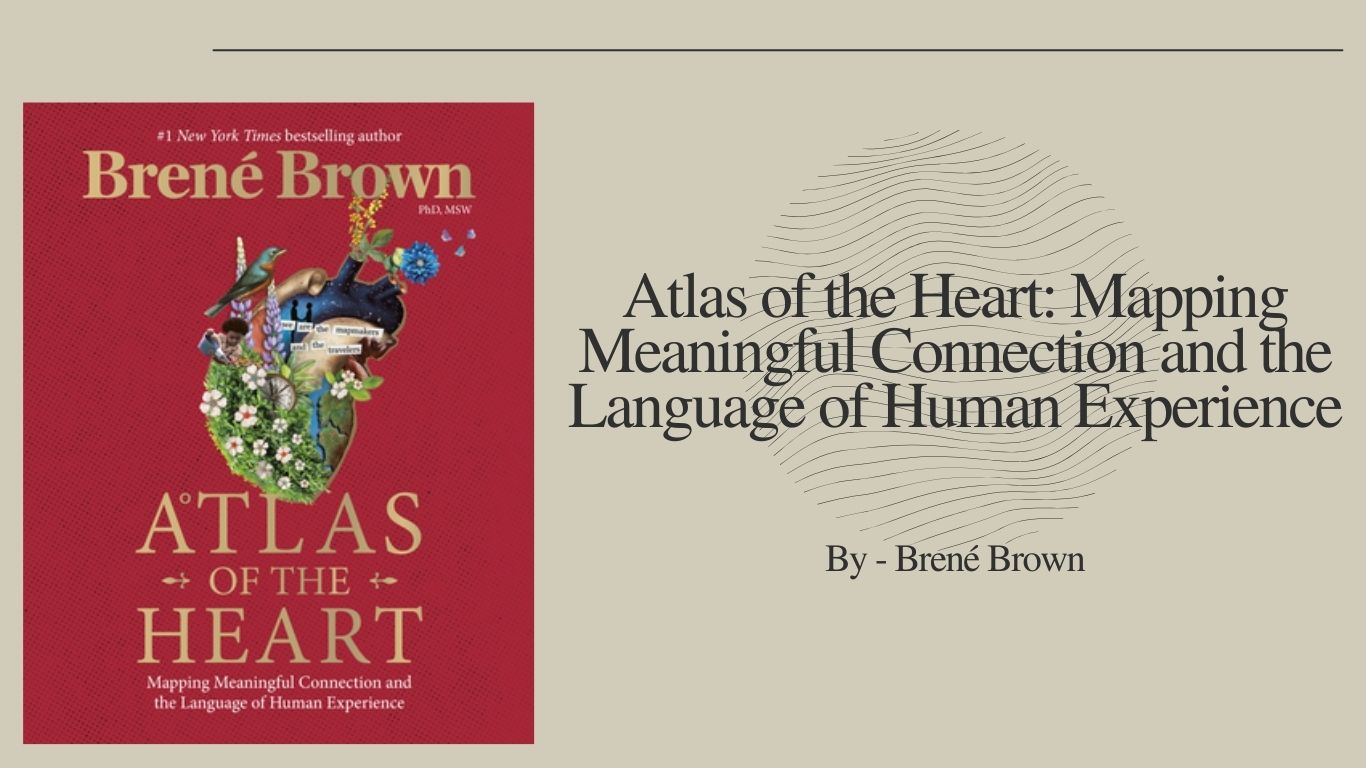
When you pick up Atlas of the Heart, don’t expect a typical “self-help book.” What Brené Brown has created is much more like an emotional atlas — a detailed map of the inner world we all carry but rarely explore with intention. Instead of generic advice, she gives us vocabulary, stories, and frameworks that help us actually say what we feel and understand what goes on beneath the surface of our reactions.
Brown defines and explores 87 unique emotions and experiences, grouping them into 13 thematic categories such as Places We Go When the Heart Is Open, When We’re Hurting, and When Life Is Good. Each section feels like a stop on a journey toward better self-understanding rather than a lesson you’re being lectured through.
🧠 Why Brené Brown’s Approach Works
What truly sets this book apart is Brené Brown’s ability to balance research with real life. She doesn’t write like someone talking down from a podium. She writes like someone sitting across from you, saying, “This is hard — and you’re not alone in it.”
She doesn’t just define emotions; she explains how they show up — in our bodies, our relationships, and the stories we tell ourselves. You begin to notice how often you’ve mislabeled what you’re feeling. That irritation might actually be disappointment. That sadness might be grief. That anger might be fear wearing armor.
One of the strongest ideas running through the book is that language shapes experience. When we don’t have the words for what we’re feeling, we struggle to process it. Brown argues that naming emotions accurately isn’t nitpicking — it’s how we gain clarity, empathy, and emotional control.
💬 Key Takeaways That Hit Home
Language Deepens Connection
A powerful theme throughout Atlas of the Heart is that emotions don’t live in isolation. They influence how we communicate, how we react, and how we connect with others. Brown makes a compelling case that misunderstood emotions lead to disconnection, while well-named emotions open the door to understanding.
Many of us say things like “I’m fine” or “I’m stressed” when what we actually mean is much more specific — lonely, discouraged, overwhelmed, or resentful. This book gently pushes you to slow down and ask, What am I really feeling? That simple shift can change conversations, relationships, and even self-perception.
❤️ On Vulnerability & Courage
If you’ve read Brené Brown before, vulnerability won’t be a new concept — but here, it feels more grounded and practical. In Atlas of the Heart, vulnerability isn’t presented as a buzzword or a motivational slogan. It’s shown as a daily reality of being human.
Vulnerability shows up when we love, when we grieve, when we hope, and when we fail. Brown explains that courage isn’t about eliminating fear or discomfort; it’s about showing up honestly despite them. That idea alone makes the book deeply reassuring, especially for readers who feel pressure to always appear strong or composed.
🌀 What I Loved (and What Might Challenge You)
⭐ Strengths
One of the book’s biggest strengths is its depth without judgment. Brown never tells you how you should feel. She simply helps you understand what you do feel.
The writing is reflective and personal, filled with real-world examples that make abstract emotions feel tangible. It’s also surprisingly practical — not in a checklist way, but in how it reshapes the way you think, listen, and speak.
⚠️ What Might Feel Heavy
This isn’t a light, skim-through kind of book. Because it explores emotions like shame, despair, loneliness, and heartbreak, some sections can feel emotionally intense. It asks you to reflect — and sometimes that reflection can be uncomfortable.
The structure also feels somewhat encyclopedic at times. Covering 87 emotions means you may not want to read it straight through in one sitting. It’s the kind of book you return to, underline, and revisit when certain feelings surface in your life.
🧭 Final Thoughts: Who Will This Book Speak To?
Atlas of the Heart is for anyone who wants to understand themselves — and others — with more honesty and compassion.
It’s especially meaningful for:
- people navigating complex relationships
- leaders and professionals who value emotional intelligence
- readers working through personal growth
- anyone who has ever struggled to explain how they feel
Brené Brown doesn’t promise transformation overnight. What she offers instead is something more sustainable: clarity, language, and connection. By the time you finish the book, you won’t just recognize emotions — you’ll respect them.
If there’s one lasting message this book leaves behind, it’s this: when we can name what we’re feeling, we’re better equipped to live with courage, empathy, and meaning.