

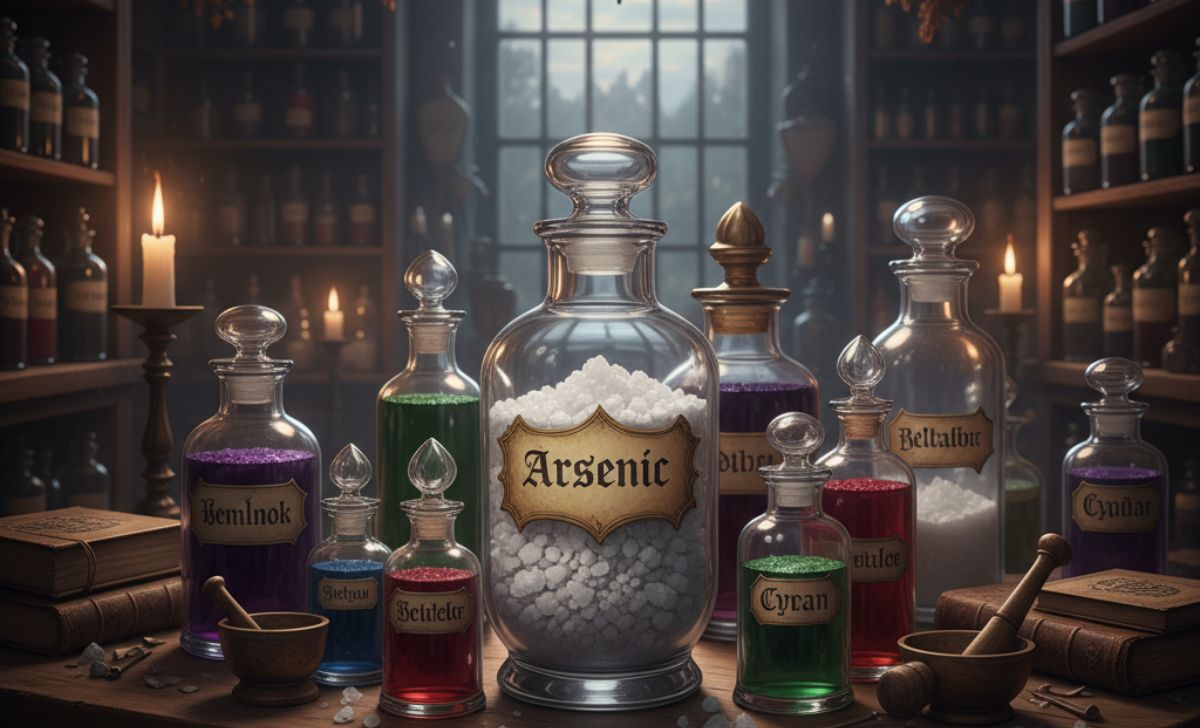
Arsenic, often dubbed the “king of poisons,” has been both a silent killer and a tool of power across centuries. Odorless, tasteless, and deadly when combined with other elements, this naturally occurring substance has shaped political plots, royal intrigues, industrial hazards, and forensic science itself.
Mithridates and the Birth of Poison Resistance
In 120 BCE, Mithridates VI of Pontus inherited a dangerous world of political betrayal. His father had been murdered by poison, and he feared the same fate awaited him at the hands of his own mother. Seeking survival, Mithridates disappeared into hiding and began a strange experiment: consuming small doses of toxins daily to build immunity. This practice, known as mithridatism, became legendary. By the time he reached his seventies, Mithridates chose death at the point of a sword rather than capture, his body almost impervious to poison. His story marked the beginning of humanity’s dark fascination with mastering toxins.
Understanding Arsenic’s Danger
Pure arsenic on its own is relatively harmless since our bodies do not readily absorb it. The danger arrives when arsenic bonds with other elements, particularly oxygen. This reaction creates white arsenic—a fine powder that can kill instantly or slowly destroy the body over time.
At a molecular level, white arsenic mimics phosphate, which is essential for cellular energy production. By replacing phosphate in cell reactions, arsenic disrupts the very basis of biological life. Symptoms mimic common sicknesses, making poisonings hard to detect throughout history. With its stealth—being tasteless and odorless—arsenic became the perfect weapon of murder.
Arsenic in the Ancient and Medieval World
Humans first encountered arsenic while mining and smelting metals. Ancient Egyptians and Greeks quickly recognized its potency. By the 8th century, Islamic Golden Age alchemist Jabir ibn Hayyan recorded the first known preparation of white arsenic, setting the stage for its future infamy.
Renaissance Italy witnessed arsenic poisoning become an art form. The Venetian Council of Ten strategically wielded poisons to eliminate rivals, often commissioning alchemists and doctors to prepare deadly concoctions. Among the infamous poisoners, the House of Borgia stood out, reportedly relying on a special arsenic-infused powder called Cantarella to dispatch inconvenient guests during social gatherings.
Paris, Inheritance Powder, and the Affair of the Poisons
By the reign of King Louis XIV, Paris was awash with arsenic scandals. Known as inheritance powder, arsenic became a convenient way for nobles to hasten the deaths of inconvenient relatives.
In 1675, this shadow economy of poison ignited one of France’s greatest scandals: the Affair of the Poisons. The case unravelled when a noblewoman confessed to murdering her family. Investigations revealed a vast network of poison peddlers, spiritualists, and fortune tellers. At the center was Catherine Monvoisin, or “La Voisin,” a woman who blended black masses, love potions, and lethal recipes of aconite, belladonna, and arsenic. Her clientele reached as high as the royal court itself, implicating mistresses and confidants of the king.
Arsenic in the Industrial Era
The Industrial Revolution, while celebrated for progress, also unleashed arsenic on an unprecedented scale. As demand for metals grew, furnaces belching impurities filled the air with trace amounts of white arsenic. Scraped from chimney deposits, arsenic entered the market as cheap pest control—and as a weapon.
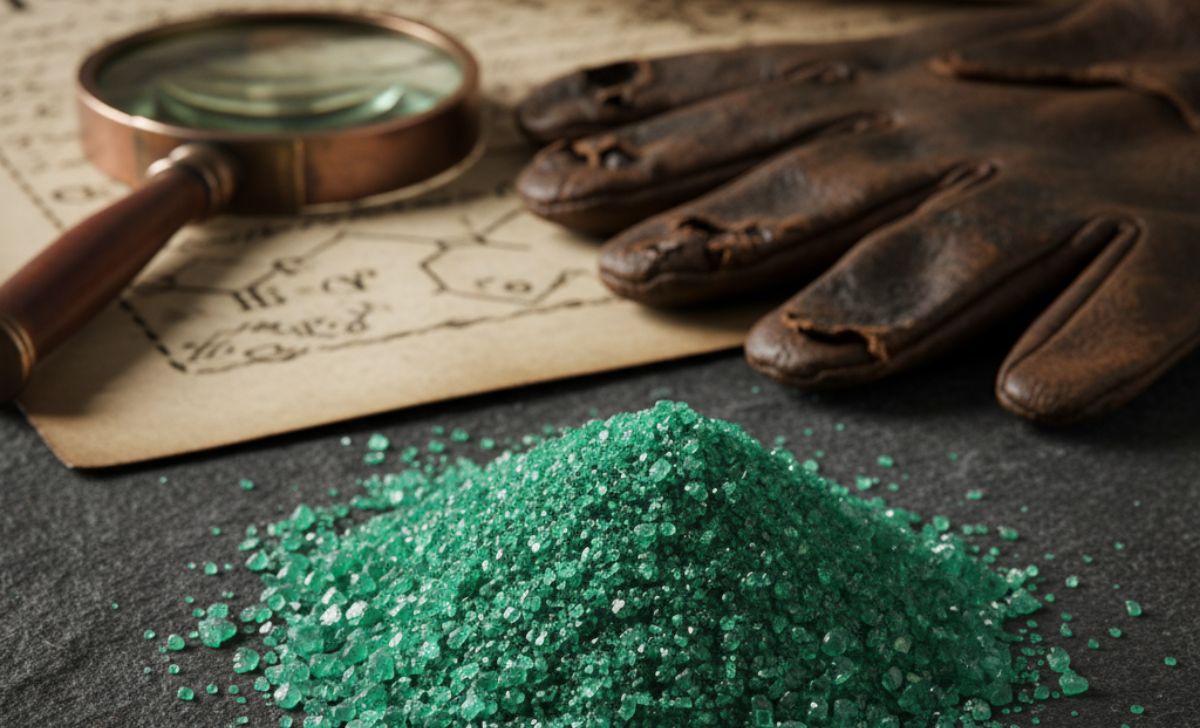
In 1775, Swedish chemist Carl Wilhelm Scheele created Scheele’s Green, a copper-arsenic compound producing a brilliant green pigment. Its popularity spread rapidly, coloring wallpapers, fabrics, children’s toys, cosmetics, and even food. By the late 1800s, reports surfaced that children had died from exposure to arsenic-laced wallpaper. Public outcry eventually led to household bans. Yet deliberate poisoning remained rampant, in part because early forensic science could rarely catch perpetrators.
The Birth of Forensic Toxicology
One of the most critical shifts in arsenic’s story came in 1832 with chemist James Marsh. Tasked with proving arsenic in a murder case, Marsh used the standard chemical test of the time, which produced a temporary yellow deposit. Unfortunately, the instability of the evidence meant it degraded before reaching court, and the accused walked free.
Frustrated, Marsh pioneered a new method. His test made arsenic produce arsine gas, which, when ignited, left behind a stable metallic arsenic deposit. This innovation became the first reliable forensic test for arsenic, reshaping how courts handled poisoning cases. Later advancements and antidotes would refine detection and treatment, but the Marsh test marked the beginning of modern forensic toxicology.
Arsenic’s Enduring Legacy
From the survival tactics of Mithridates to the social intrigues of the Borgias and the shadow economy of 17th-century Paris, arsenic shaped power struggles in both intimate and global spheres. The Industrial Revolution only extended its reach into daily life, turning beauty and convenience into hidden agents of death.
Though safer today, arsenic’s history remains a stark reminder of how a simple element can wield extraordinary influence—both as a tool of science and a weapon of betrayal. Its legacy is written in blood, scandal, and innovation, cementing its title as the king of poisons.