
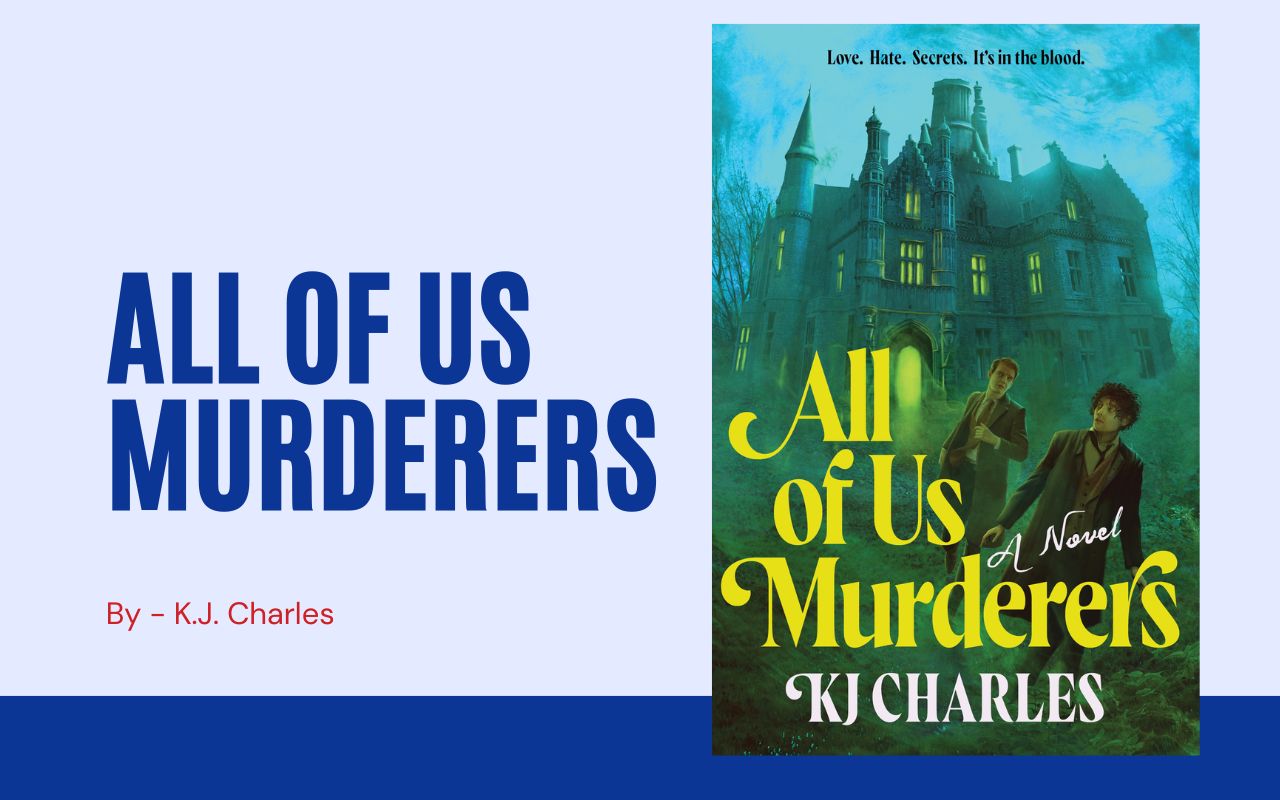
K.J. Charles’ All of Us Murderers arrives like a storm over Dartmoor: slow-building, heavy with menace, and suddenly cracking open with flashes of horror and sharp humor. Marketed as a gothic mystery with a queer historical romance twist, it’s the kind of novel that traps you in a crumbling mansion alongside a truly awful family and then calmly starts turning off the lights.
Rather than simply pastiching classic gothic tropes, Charles plays with them. The book balances an isolated house, suspicious relatives, possible ghosts, and a family curse with a thoroughly modern moral lens and a protagonist whose restless, racing mind is central to how the story unfolds. Readers and critics alike have described it as atmospheric, twisty, and unexpectedly funny — a blend that gives the novel its distinctive edge.
If you like the idea of a stylish murder mystery colliding with windswept moors, morally questionable heirs, and a slow-burning second-chance romance, this novel comfortably fits that niche while adding emotional weight beneath the surface suspense.
What Is All of Us Murderers About?
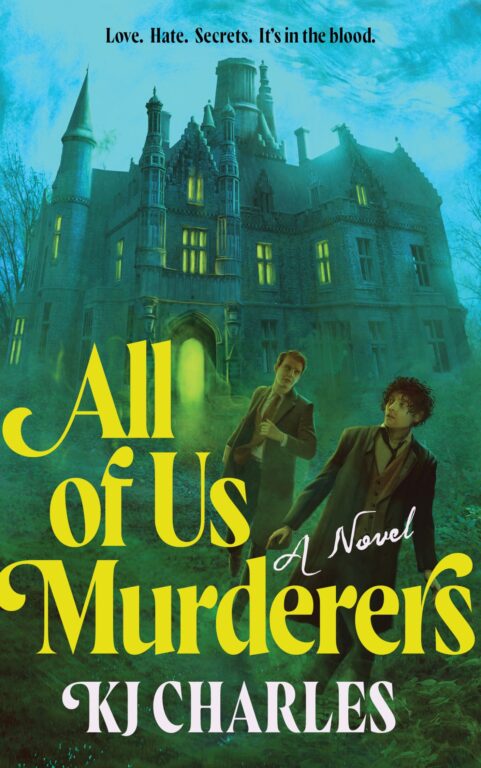
At the center of the story is Zeb Wyckham, the poor relation of a wealthy but morally decayed family. Summoned through a series of unsettling letters, Zeb travels to Lackaday House, a remote Dartmoor estate owned by his cousin. What he expects is an uncomfortable family reunion and perhaps a chance at financial stability. What he walks into instead is a closed-off nightmare.
The Wyckhams gather under highly suspicious circumstances: resentful siblings, embittered cousins, and opportunists who have grown comfortable on wealth built through colonial exploitation and slavery. As tensions rise, it becomes painfully clear that no one will be leaving until long-buried secrets are dragged into the light. The house itself seems determined to participate — trapping its inhabitants, amplifying fears, and contributing to an ever-growing sense of dread.
Complicating matters further is the unexpected presence of Gideon, Zeb’s former lover and academic colleague. Their history is fractured by regret and professional fallout, and their forced proximity adds an emotional pressure point to an already volatile situation. As strange events escalate and bodies begin to appear, Zeb realizes survival depends on untangling layers of betrayal woven through generations of corruption.
A House Full of Monsters, Human and Otherwise
The Wyckham family is not designed for easy sympathy. They are petty, selfish, exploitative, and in many cases openly cruel. While this may feel overwhelming at first, it serves a purpose — the horror of this story doesn’t stem solely from ghosts or curses, but from human choices and inherited moral rot.
Charles uses the family’s legacy to confront uncomfortable realities of historical exploitation. Slavery and colonial wealth form the backbone of their privilege, and the novel refuses to sanitize that truth. Instead, it lets the past seep into the present, turning Lackaday House into a living monument of inherited guilt.
The tension lies not only in identifying the murderer but also in confronting the unsettling idea that no one inside the house qualifies as truly innocent. Moral ambiguity becomes the engine driving suspense, forcing readers to question who deserves punishment — and who deserves escape.
Zeb Wyckham: Anxious, Restless, and Impossible Not to Root For
Zeb is far from the typical gothic protagonist. He is distracted, mentally scattered, and painfully aware of his own shortcomings. His behaviour, often interpreted by his family as incompetence, closely mirrors traits associated with ADHD, giving his character an authentic sense of internal struggle.
Yet, it is exactly this restless nature that sharpens his awareness. While others justify, deny, or ignore the creeping horror, Zeb observes. He notices small inconsistencies, vibrations in the atmosphere, emotional undercurrents that others refuse to acknowledge.
His journey becomes one of quiet defiance. Against a lifetime of being labeled a failure, Zeb begins to recognise his own perceptiveness as strength. Watching him take control of his narrative adds emotional depth that grounds the supernatural tension in real, human resilience.
Romance in the Middle of the Haunting
The relationship between Zeb and Gideon unfolds as a second-chance romance embedded within chaos. Their past is cluttered with unresolved hurt, misplaced pride, and mutual regret. Charles wisely avoids rushing reconciliation, letting silence, hesitation, and awkward honesty shape their emotional arc.
Their connection feels grounded in realism. Trust is rebuilt slowly, carefully, with every step earned. The romance does not overpower the central mystery, but it does quietly pulse beneath the narrative, offering warmth amid the creeping chills.
This balance works because the emotional stakes are aligned with the story’s broader theme: the struggle to break free from inherited damage and self-blame.
How Scary and How Bloody Does It Get?
This is not a gentle mystery. The atmosphere leans heavily into unease, with lingering dread, shadowed hallways, and unsettling silence dominating the mood. Violence appears when necessary, delivered with impact but not gratuitous excess.
The novel’s horror lies in its restraint. The slow tightening of tension, the sense of being watched, the suggestion of something lurking just beyond sight — these elements build discomfort without relying solely on gore.
Though dark in tone, moments of humor and dry wit puncture the tension, providing brief relief through Zeb’s sharp inner commentary and human interactions.
Pacing, Twists, and the Locked-House Design
The opening chapters invest heavily in character introduction and environment setup, which may feel methodical at first. However, once the narrative finds its momentum, it accelerates with purpose.
The locked-house structure enhances the suspense. Limited escape routes, emotional confrontations doubling as interrogations, and steadily rising paranoia solidify the novel’s grip. Every revelation feels deliberate, leading to a conclusion that is equal parts surprising and satisfying.
The resolution doesn’t rely solely on shock value but rather on character evolution, ensuring the finale resonates beyond surface-level thrills.
Final Verdict: Who Should Read All of Us Murderers?
All of Us Murderers delivers a masterfully eerie tale layered with social commentary, emotional complexity, and gothic tension. It doesn’t shy away from the ugliness embedded in inherited wealth, nor does it offer easy redemption.
Recommended for readers who enjoy:
- Gothic settings and isolated manor mysteries
- Queer historical fiction with emotional nuance
- Character-driven suspense
- Stories confronting legacy, guilt, and moral decay
Those seeking lightweight escapism might find it intense, but for anyone craving a richly crafted mystery with ethical depth and atmospheric storytelling, this novel proves to be a compelling and unforgettable read.