

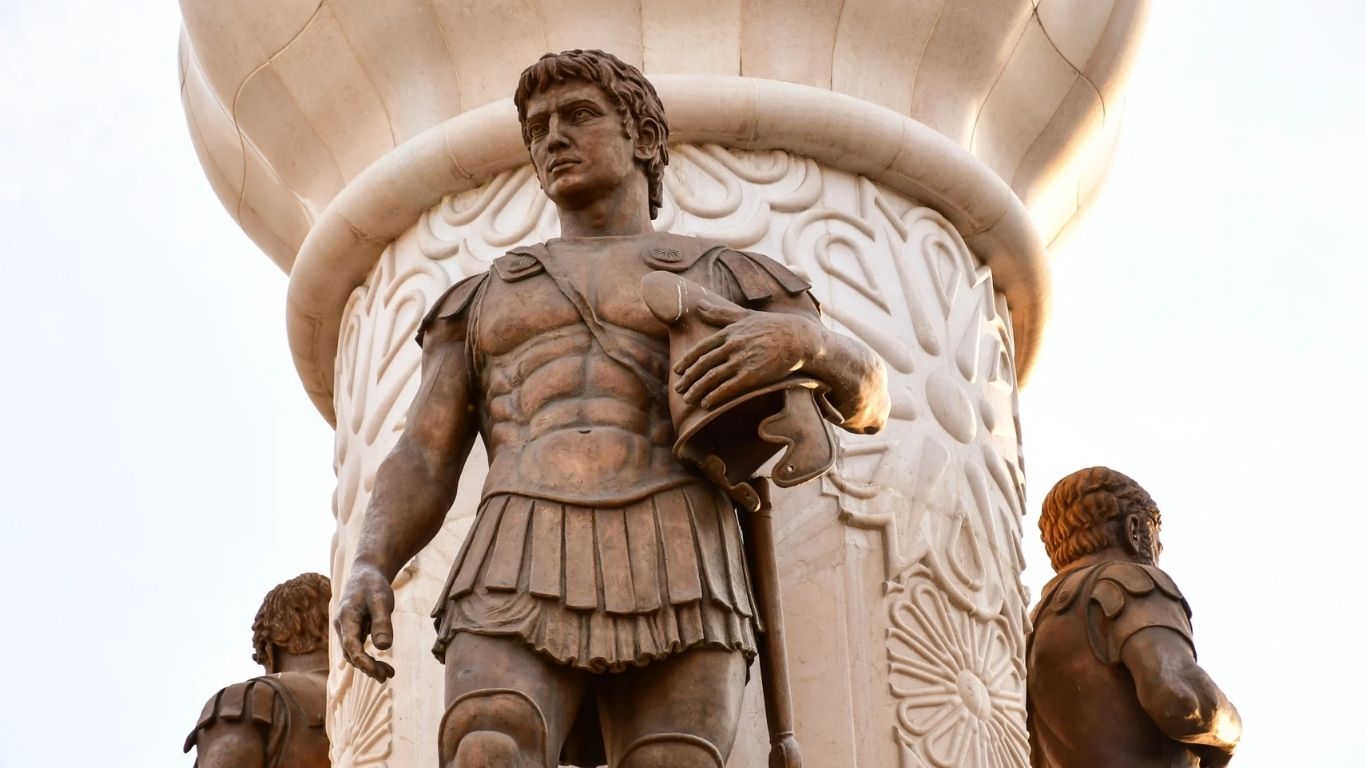
Few figures in history inspire as much admiration, controversy, and debate as Alexander the Great. His name alone conjures images of unstoppable armies, legendary battles, and a young king who reshaped the ancient world before dying at just 32. Yet behind the grandeur lies a far more complicated question: how should history judge a man whose achievements were inseparable from violence, ambition, and conquest? Was Alexander a heroic liberator spreading culture and unity, or a ruthless conqueror driven by ego and glory? The truth, as with most towering historical figures, exists somewhere between legend and reality.
The Myth and the Man
Alexander’s reputation was extraordinary even during his lifetime. King of Macedon, student of Aristotle, conqueror of Persia, and hailed as a living god in Egypt—his image was carefully cultivated to appear larger than life. Over centuries, that image hardened into myth.
One of the most famous stories associated with him is the Gordian Knot. According to legend, an impossibly tangled knot was said to grant rule over Asia to whoever could undo it. Alexander allegedly “solved” the problem by slicing it apart with his sword. To admirers, this symbolized boldness and creativity; to skeptics, it represents how stories were crafted to glorify him rather than record objective truth.
Even the title “the Great” is contested. Some see it as a natural recognition of unparalleled achievement. Others argue that it reflects centuries of propaganda, celebrating conquest while ignoring its human cost. From the very beginning, Alexander’s life forces historians to confront the tension between storytelling and reality.
Why He Invaded Persia
At the center of Alexander’s legacy lies his invasion of the Persian Empire. Supporters often frame it as a justified campaign. Persia had once invaded Greece and ruled over several Greek city-states. Alexander’s father, Philip II, had already laid the groundwork for a retaliatory war, presenting it as a mission to free Greeks under Persian control.
From this perspective, Alexander was finishing an old score—avenging past invasions and liberating fellow Greeks.
Critics see a different picture. “Liberation,” they argue, is a generous label for replacing one ruling power with another. Greek cities under Persian authority did not gain true independence; they simply exchanged Persian overlords for Macedonian ones. In this view, Alexander’s campaign was less about justice and more about expansion, prestige, and personal ambition.
Both interpretations contain elements of truth. His invasion can be read as both politically justified and opportunistic—a reminder that motives in history are rarely pure.
Power, Family, and Suspicion
Alexander’s rise to power is shadowed by controversy, particularly the assassination of his father, Philip II. Philip’s death conveniently placed Alexander on the throne at a time when his position could have been threatened by new heirs.
Some historians have suspected Alexander’s involvement, pointing to the timing and the intense political pressure within the Macedonian royal family. Others emphasize that no concrete evidence links him to the crime, and alternative explanations place the blame on personal grievances unrelated to Alexander.
What remains certain is that power struggles breed suspicion. Whether guilty or not, Alexander inherited a throne steeped in intrigue, setting the stage for a reign that would constantly balance loyalty, fear, and ambition.
Genius on the Battlefield
No serious evaluation of Alexander can ignore his military brilliance. His campaigns repeatedly demonstrated an extraordinary understanding of strategy, terrain, and timing.
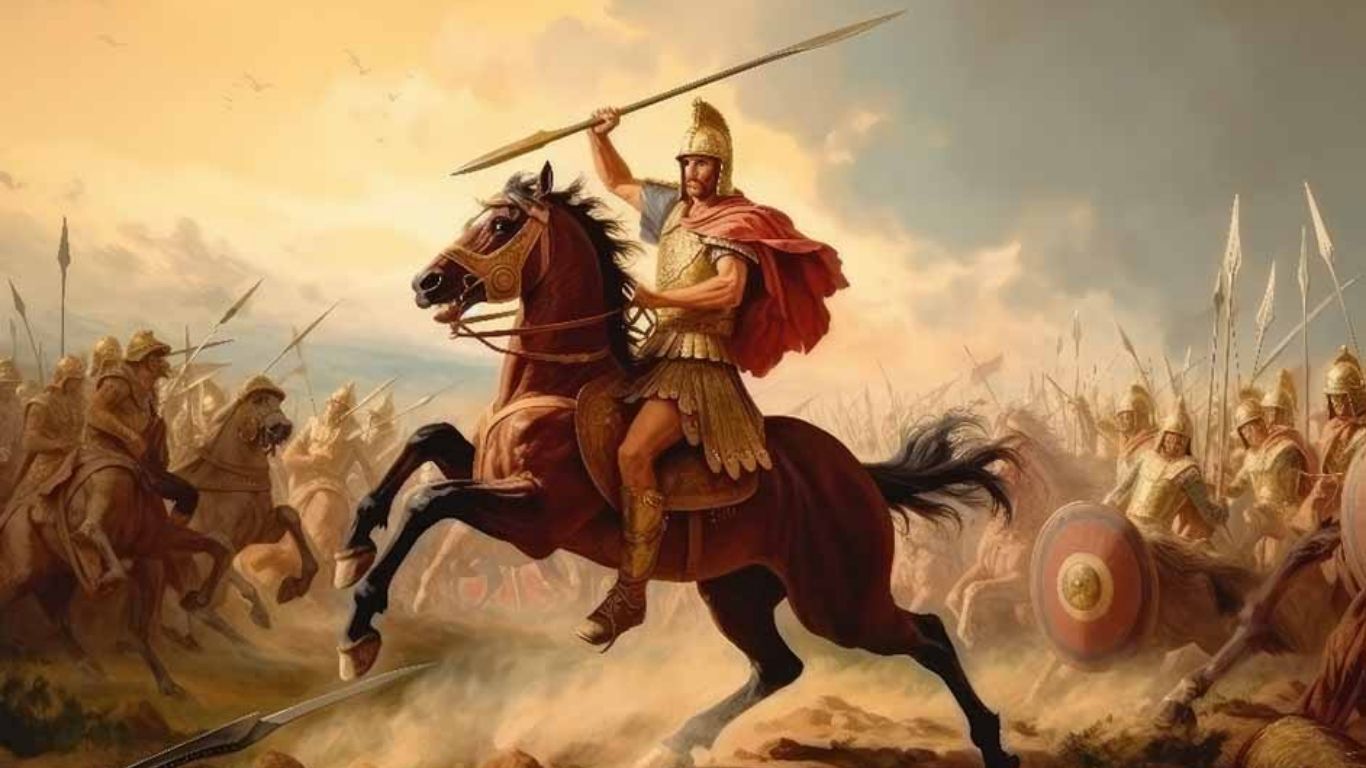
At the Battle of Issus, for example, Alexander deliberately forced the vastly larger Persian army into a narrow battlefield along a river. By limiting their movement, he neutralized their numerical advantage and secured a decisive victory. Time and again, he used precision and daring to overcome enemies who, on paper, should have defeated him.
For admirers, this genius justifies his enduring fame. For critics, it raises a moral dilemma: does brilliance in war make someone admirable, or simply more effective at killing and destruction? Skill alone cannot resolve that question.
Builder or Destroyer?
Alexander’s conquests were not uniformly destructive. In many regions, cities surrendered peacefully, infrastructure was preserved, and trade flourished. He founded numerous cities—many named Alexandria—which became centers of administration, learning, and commerce. These cities helped spread Greek language and culture across vast territories.
Yet one act stains this record: the burning of Persepolis, the ceremonial capital of Persia. The destruction was immense and symbolic. Supporters argue it was a calculated political act, framed as revenge for Persia’s earlier destruction of Athens. Critics see it as an act of excess and brutality, revealing the darker side of conquest.
The contrast is striking. Alexander could be both a city-builder and a destroyer, depending on circumstance and intent.
The Limits of Conquest
Despite his reputation as unstoppable, Alexander encountered limits. As his armies marched east into the Indian subcontinent, exhaustion and fear began to outweigh loyalty. His soldiers, worn down by years of campaigning and unfamiliar conditions, eventually refused to go further.
Alexander was forced to turn back.
This moment reveals his humanity. He was not a god commanding endless obedience, but a leader dependent on the will of real people. His willingness to fight alongside his troops earned deep loyalty, but even that loyalty had its breaking point.
Cultural Fusion and Resistance
Alexander did not rule solely through force. He attempted to blend cultures, adopting local customs and promoting cooperation between Greeks, Persians, and other peoples within his empire. These efforts laid the foundations for cultural exchange that would define the Hellenistic Age.
However, integration came at a cost. Greeks resented the elevation of Persians. Macedonians disliked changes that reduced their privileged status. Many conquered peoples still saw Alexander as a foreign ruler. Attempts at unity often produced friction rather than harmony.
Ruling such diversity was an almost impossible task, especially for a man who spent most of his reign far from his homeland.
Death Without a Plan
Alexander’s sudden death at 32 left his empire without clear leadership. According to later accounts, he declared that his empire should go “to the strongest,” a phrase that seemed to invite chaos. What followed were decades of brutal wars among his generals, tearing his empire apart.
Some historians doubt the authenticity of those final words, suggesting they were invented later to justify power struggles. Still, the lack of a clear succession plan remains one of the strongest criticisms of his rule.
Whether this failure was due to youth, illness, or overconfidence, its consequences were devastating.
A World Forever Changed
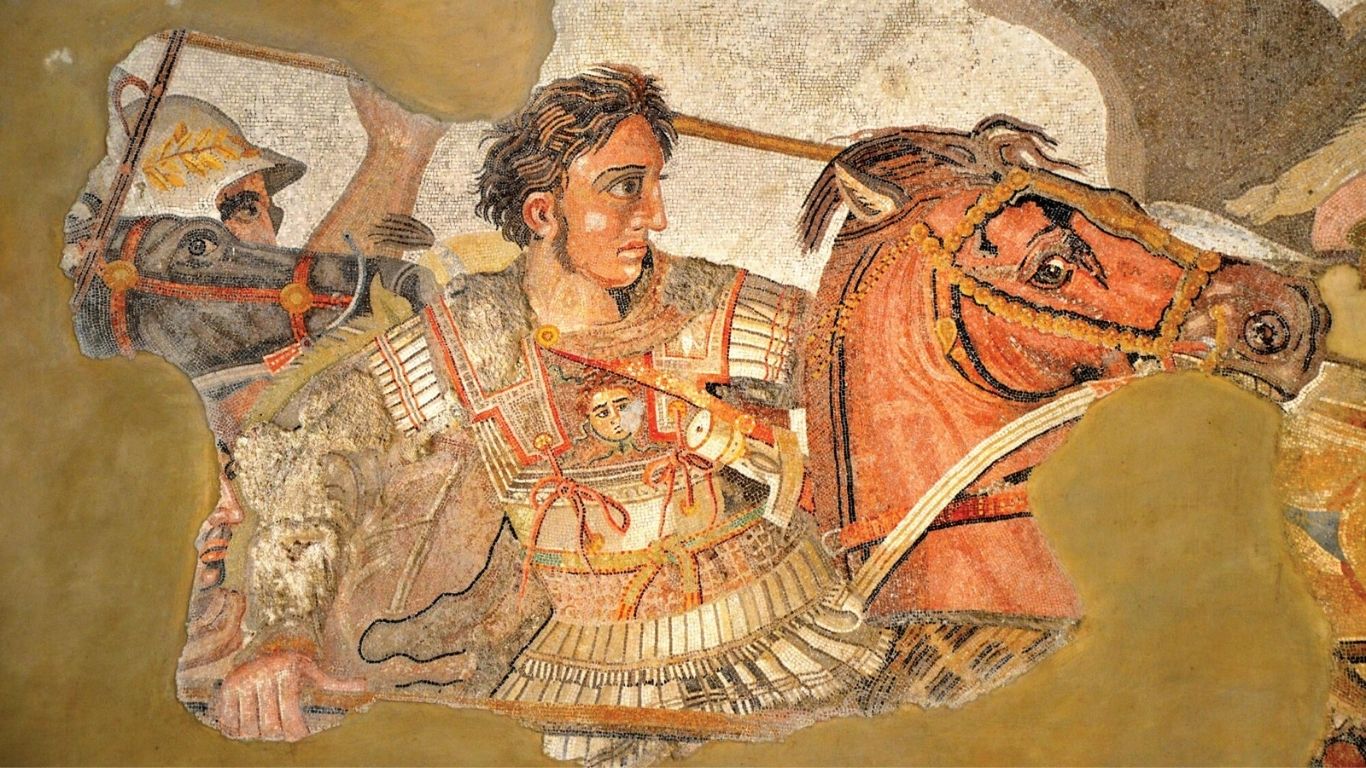
Despite all criticism, Alexander’s impact is undeniable. His conquests accelerated the spread of Greek language, art, philosophy, and science across three continents. The Hellenistic Age reshaped politics, culture, and thought in ways that influenced Rome and, ultimately, Western civilization itself.
Yet impact alone does not equal moral greatness. Alexander shaped history, but whether he improved it remains an open question.
So, How Should We Judge Him?
Alexander the Great resists simple judgment. He was a visionary and a destroyer, a unifier and a tyrant, a brilliant strategist and a deeply flawed human being. His life reminds us that history is not a courtroom with clear verdicts, but a landscape of competing truths.
Perhaps his greatest legacy is not the empire he built, but the questions he forces us to ask: about power, ambition, and the cost of glory. To study Alexander is to confront the uncomfortable reality that greatness and cruelty often walk hand in hand—and that judging the past says as much about us as it does about those who came before.