
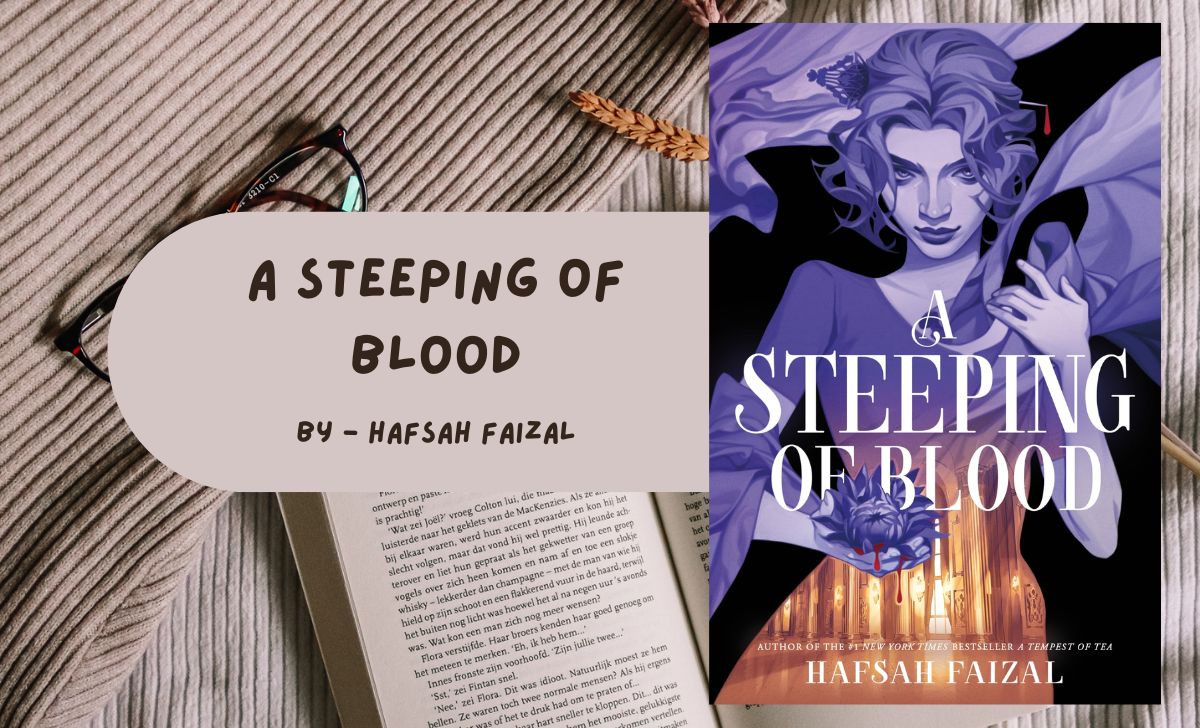
Hafsah Faizal’s A Steeping of Blood arrives as the final, high-stakes chapter of the Blood & Tea duology — a novel that trades the cozy posturing of tea rooms for sharper edges, darker bargains, and an ending that asks readers to hold both heartbreak and triumph at once. If you loved the lunging capers and simmering tension of A Tempest of Tea, this sequel pushes the crew into a city on the brink: grappling with the fallout of a violent night, the tightening jaws of power, and the ways loyalty is tested when everything is at stake.
The book is, in short, everything a second act should be: it deepens the emotional register, accelerates the action, and forces its cast to reckon with the consequences of choices made earlier.
Plot — What Happens (Without Spoilers)
At the novel’s start, the world Faizal built is fractured. Following the events of the first book, Arthie Casimir and her ragtag crew must pick up the pieces of a city thrown into panic. Vampires, power brokers, and an unforgiving public press complicate any straightforward plan, and the Ram — a rising antagonist figure — uses the chaos to consolidate power.
Arthie’s immediate goal is survival and retaliation: she must reassemble her team, outmaneuver enemies both seen and hidden, and face ghosts from her past that won’t stay buried. Romance threads through the heist and the heartbreak, and Faizal stages several confrontations that are equal parts strategy and emotional reckoning. The book moves from tight, small-team scheming to broader political collapse, ensuring the final payoff lands with emotional weight and narrative closure.

Characters and Relationships
What keeps the duology human are its people. Arthie remains the magnetic center: cocky, cunning, and yet increasingly vulnerable as she contends with the consequences of her actions and the betrayals that follow.
The crew — once a seamless machine of criminal brilliance — is frayed, and Faizal spends considerable page-time showing how fractures shift roles, loyalties, and affections. Secondary characters gain new dimensions here; allies become mirrors for Arthie’s flaws and catalysts for her growth.
Romance, which arrives faster than some readers might expect, doesn’t derail the plot; instead, it complicates decisions, altering stakes in meaningful ways. Faizal succeeds at making emotional stakes feel as tactical as any heist plan, and the relationships drive several of the book’s most painful and triumphant moments.
Writing Style, Worldbuilding, and Tone
Faizal’s prose walks a careful line: it can be sly and playful in heist-setup scenes, then raw and lyrical when teasing out loss. The world — a sort of drizzle-soaked, vampiric society layered over class divides and political unrest — is compact but textured.
Faizal doesn’t pause for long passages of exposition; instead, the setting is revealed through the crew’s plans, dialogue, and immediate needs. That approach keeps tension high and prevents the middle from sagging, though some readers may still find portions of the middle either slow or dense with competing emotional threads.
Overall, the tone shifts adeptly between sly camaraderie and the somber stakes of a finale. Critics have noted this tonal agility as one of the book’s defining strengths.
Pacing and Structure
A sequel that follows a cliffhanger has a hard job: it must resolve the previous book’s rupture while delivering fresh narrative momentum. Faizal largely succeeds.
The opening moves briskly, reassembling pieces and setting new traps. The middle section does slow at times — largely because the author invests in character reckonings and strategy-building — and some readers have said this portion feels uneven or over-long. But those slower stretches make the climactic sequences feel earned; when the story pivots from strategy to reckoning, it does so with considerable force.
If pacing is a fault, it’s a patient kind: a willingness to let consequences breathe rather than rush into tidy closure.
Themes: Power, Redemption, and Cost
Underneath the heist plots and the romantic sparks, A Steeping of Blood is obsessed with cost. Power — both its seduction and its destructiveness — is a throughline. Faizal interrogates whether revenge can be morally clean, whether unity under pressure is possible, and what sacrifices are acceptable for a greater good.
The book also asks what redemption looks like when systems themselves are corrupt; individual change isn’t always enough to fix a broken city. These themes are woven into action sequences and quiet character exchanges alike, ensuring the book’s emotional core lingers after the final page.
What Worked, and What Might Not Land for Every Reader
What works: sharp character moments, compelling emotional stakes, and set-piece sequences that combine strategy with genuine risk. Faizal’s pacing toward the end delivers a satisfying conclusion for the characters she’s spent two books cultivating.
What might not land: some readers will find the middle’s introspection slows momentum; others might expect fewer romantic beats or clearer political resolutions. Some reactions also indicate the sequel’s tonal shifts — from roguish charm to grim fallout — may feel abrupt in places.
If you value richly drawn characters and are invested in their arcs, the book rewards patience; if you’re after continuous, unrelenting thrills, there are deliberate lulls designed to complicate, not simply entertain.
Final Verdict
A Steeping of Blood is a worthy and affecting conclusion to Hafsah Faizal’s duology. It’s not simply an action-packed finish — it’s a book that asks readers to hold conflicting emotions: triumph and grief, hope and sacrifice.
Faizal leans into the costs of rebellion and the frailty of chosen families in ways that feel earned. For readers who loved the first book’s blend of heist energy, romantic sparks, and a taste of the supernatural, this installment provides resolution and a final, resonant look at what it means to fight for something bigger than oneself.
If you’re on the fence after A Tempest of Tea, the sequel likely rewards a re-commitment — but come ready for a story that wants to make you feel the price of victory.