
For a franchise built on dragons, dynasties, and continent-shaking wars, Game of Thrones has never been subtle. Even its prequel, House of the Dragon, leaned into operatic scale — fire-breathing monsters, palace intrigue, and history-altering betrayals. So the most surprising thing about HBO’s newest Westeros series, A Knight of the Seven Kingdoms, is not who it features, but how deliberately small it feels.
And that, unexpectedly, is exactly why it works.
This third trip into George R.R. Martin’s world trades thrones and civil wars for dusty roads, dented armor, and one struggling knight trying to make a name for himself. The result is not just a fresh chapter in the franchise — it may be the most purely enjoyable Westeros story yet.
A hero far from the Iron Throne
The knight in question is Ser Duncan the Tall, better known as Dunk. Longtime fans may remember his name from a throwaway line in Game of Thrones, when King Joffrey sneers at an unusually long entry in the Kingsguard record book: “Four pages for Ser Duncan. He must have been quite a man.” This series tells us how that legend began — and it starts about as humbly as possible.
The opening scene finds Dunk burying his old master, Ser Arlan, a poor hedge knight he served as squire. Hedge knights are not sworn to great houses; they live job to job, sleeping rough and chasing tournaments for coin and reputation. Ser Arlan died with little money and fewer possessions, but he passed on something more valuable: a stubborn belief in chivalry.
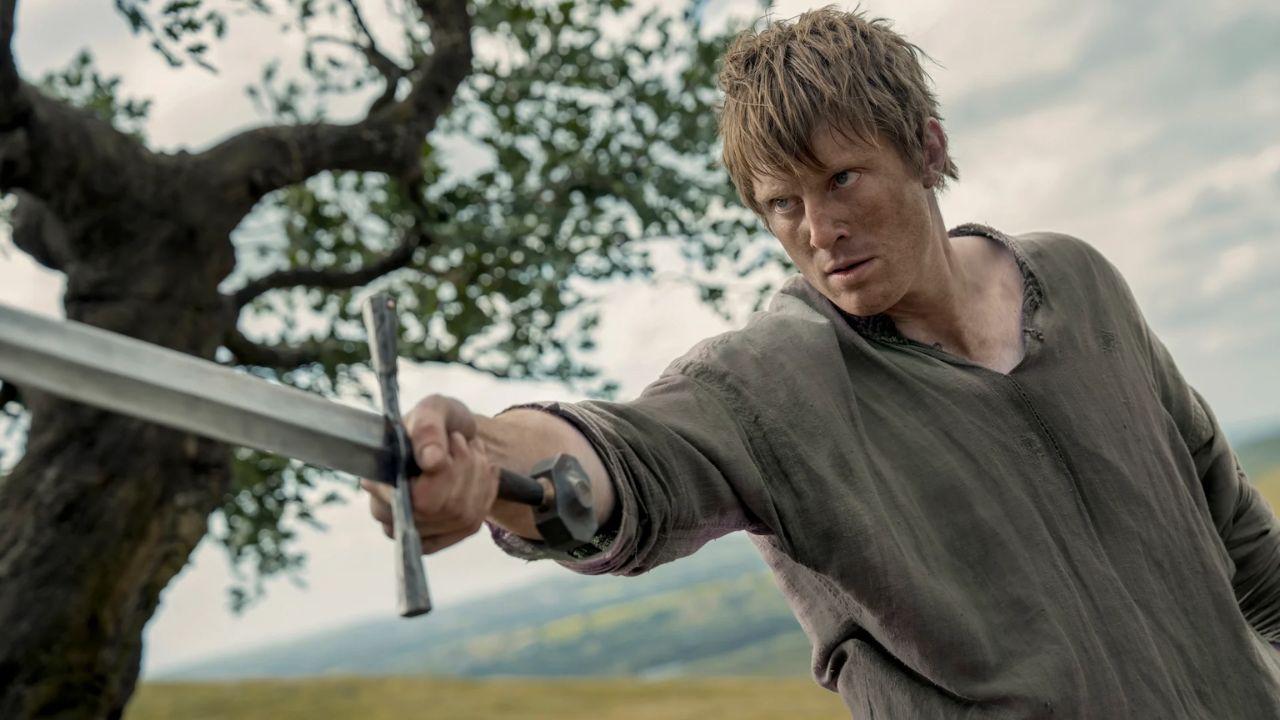
Dunk, however, is no polished warrior. He is massive, awkward, undertrained, and dressed in near-rags, with a rope for a swordbelt and more hope than skill. Penniless and alone, he decides his best chance at a future is to enter a tournament at Ashford Meadow, where a lucky victory might earn him both armor and employment.
It is a modest dream by Westerosi standards. No kingdoms are at stake — at least not yet.
Enter Egg: the soul of the story
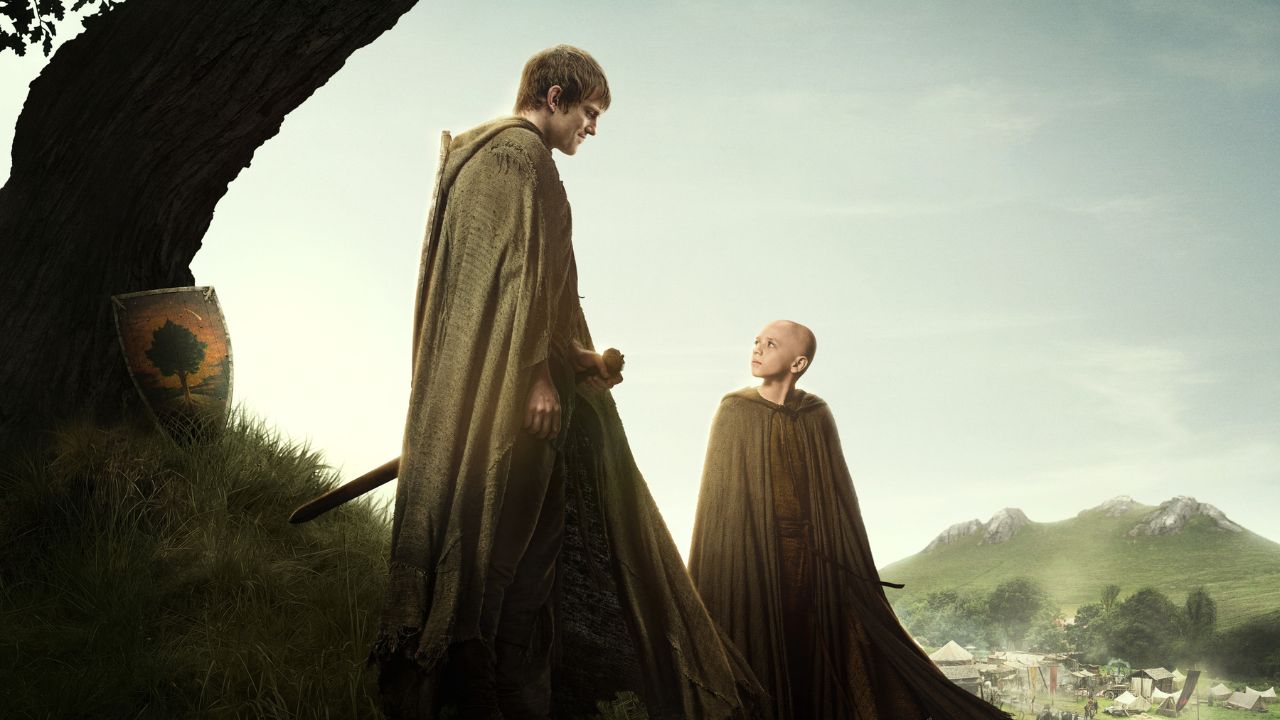
On the road, Dunk meets Egg, a bald, sharp-tongued boy who attaches himself to the knight with irritating persistence. Egg is small where Dunk is huge, clever where Dunk is simple, and endlessly talkative where Dunk is shy. He wants to be a knight and knows far more about famous swordsmen than the man he hopes to serve.
Reluctantly, Dunk takes him on as a squire. What begins as an uneasy partnership quickly becomes the heart of the series.
Their dynamic is classic odd-couple storytelling: the gentle giant and the mouthy child, occasionally bickering but slowly growing attached. Dunk’s decency and Egg’s wit bounce off each other with effortless charm. Their conversations — about honor, songs, and the absurdities of knightly life — recall one of the best parts of early Game of Thrones: mismatched travelers forming unlikely bonds on the road.
The chemistry between Peter Claffey and young Dexter Sol Ansell is remarkable. Claffey brings warmth and vulnerability to Dunk, a man shaped by hardship but not hardened by it. Ansell balances Egg’s arrogance with flashes of boyish insecurity. Together, they feel less like actors sharing scenes and more like a seasoned double act.
A lighter Westeros, without losing its edge
Tonally, A Knight of the Seven Kingdoms is a sharp turn from its predecessors. Where Thrones and Dragon sprawl across continents with tangled plotlines, this series follows a single story, almost entirely from Dunk’s point of view. The focus is not on kings and queens but on “smallfolk” — hedge knights, puppeteers, squires, and tournament officials.
The episodes are short, brisk, and unusually funny. The humor ranges from physical comedy to dry wordplay and even moments of near-absurdity, including a deadpan debate over the deeper meaning of an outrageously filthy drinking song. It is a kind of lightness Westeros has rarely allowed itself.
Yet the show never becomes frivolous. Beneath the jokes lies the same skeptical view of glory and power that defines Martin’s writing. The tournament at Ashford Meadow may look like a medieval festival — part sporting event, part celebrity circus — but it is also a nest of political tension. The rivalries and grudges on display will echo far beyond the jousting field, with consequences that ripple into the era of Game of Thrones itself.
And when violence comes, it lands hard. Jousts are brutal and visceral. A trial by combat is stomach-churning. The series reminds us that this is still Westeros — charm and bloodshed coexist.
Familiar names, fresh perspective
Set roughly a century before Game of Thrones, the series features younger versions of famous houses: Baratheons, Targaryens, and others navigating their own internal dramas. Among the standouts are the fair-minded Baelor “Breakspear” Targaryen and the boisterous Lyonel Baratheon, the so-called Laughing Storm.
But unlike earlier shows, the nobles orbit the story rather than dominate it. We see them through Dunk’s eyes — distant, powerful figures whose decisions shape the world of ordinary people struggling beneath them.
This narrow focus is reflected in the production style. There is no elaborate title sequence, minimal CGI, and a stripped-back approach that favors intimacy over spectacle. Even the music avoids the familiar bombast. The series feels closer in spirit to early Thrones than to the grand operatics of House of the Dragon.
Why this may be Westeros at its best
What ultimately sets A Knight of the Seven Kingdoms apart is its sense of joy. Game of Thrones could be thrilling and House of the Dragon could be intense, but this series is, quite simply, fun. It balances humor, heart, and high stakes with an ease that makes each half-hour fly by.
Perhaps paradoxically, by shrinking its scope, the franchise has rediscovered its humanity. Instead of obsessing over who will rule the world, the show asks simpler questions: What does it mean to be a good knight? How does an ordinary person survive in a brutal system? Can decency exist in a land built on power?
Through Dunk and Egg, the series finds its answer.
A Knight of the Seven Kingdoms may not have dragons darkening the sky or armies clashing on burning fields. But in focusing on one towering knight and one stubborn boy, it delivers something the franchise has been missing for years — a story that feels personal, playful, and unexpectedly uplifting.
In a world famous for excess, this smaller tale may be the most winning of them all.