
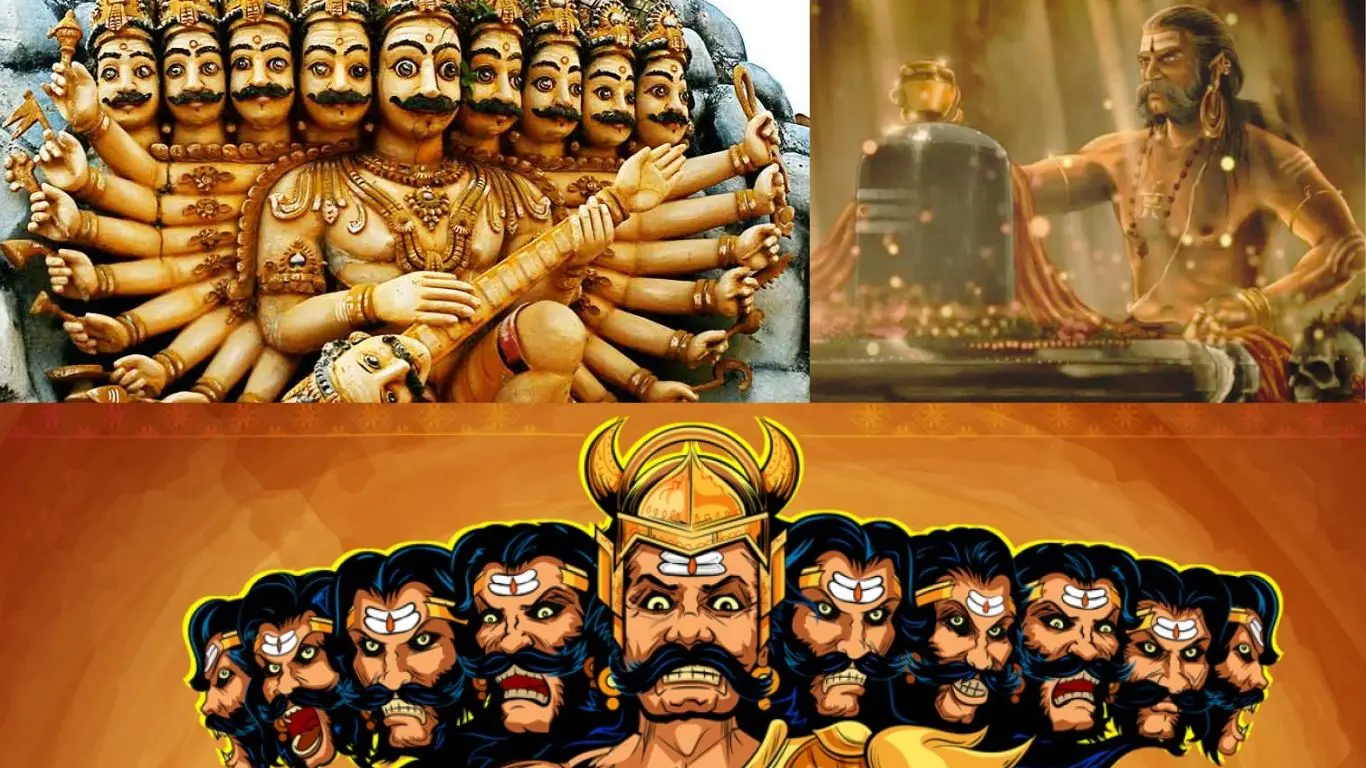
Ravana, the ten-headed king of Lanka, looms large in Hindu mythology as both a brilliant scholar and a symbol of evil. Often depicted with ten heads representing his vast intellect, Ravana’s complex character goes beyond mere villainy. As the central antagonist in the epic Ramayana, his cunning and valor are matched by a contradictory nature that includes devotion and wisdom. Ravana’s legacy extends beyond ancient scriptures into modern culture, where his character continues to be explored and debated. This article delves into the multifaceted life and enduring impact of Ravana, unearthing the intricacies that make him one of Hindu mythology’s most compelling figures.
Ravana: The Ten-Headed King and His Complex Legacy in Hindu Mythology
The Birth and Upbringing of Ravana
Ravana’s origin is steeped in myth and legend. Born to the sage Vishrava and the demon princess Kaikesi, Ravana was part of a family renowned for their power and intellect. His ancestry included both Brahmanical and demon lineage, setting the stage for a life filled with complexity.
From a young age, Ravana exhibited exceptional abilities. Under his father’s guidance, he studied the Vedas and mastered various forms of warfare. His devotion to Lord Shiva was unparalleled, leading him to perform rigorous penance to seek the god’s blessings. However, Ravana’s upbringing was not without challenges. Influenced by his mother’s demon heritage, he also embraced a path that was ambitious and aggressive. The tenacity and arrogance that marked his rule as the king of Lanka were evident even in his youth.
His education was multifaceted, reflecting his ten heads, each symbolizing a different form of knowledge or expertise. From music and art to science and philosophy, Ravana’s upbringing forged him into a figure of immense wisdom and capability. Yet, his character was a blend of contrasts. While highly educated and cultured, he also possessed a fiery temper and an insatiable lust for power. This dichotomy between virtue and vice set the stage for the epic events in his life, making Ravana’s birth and upbringing essential to understanding his complex legacy.
Scholar and Devotee of Lord Shiva
Ravana’s intellect and scholarship were legendary, making him one of the most learned figures in Hindu mythology. His ten heads were symbolic of his profound knowledge in various disciplines, including astronomy, music, political science, and the sacred Vedas. But it was his deep devotion to Lord Shiva that truly distinguished him. Ravana’s love for Shiva was not mere lip service; it was an unquenchable thirst that drove him to perform intense penances and rituals. This fervent devotion earned him the title of “Shiva’s foremost devotee.”
His hymn to Shiva, known as the “Shiva Tandava Stotram,” is still recited today, a testament to his profound understanding of spirituality and his poetic prowess. This hymn, composed by Ravana himself, captures the essence of Shiva’s cosmic dance and is considered one of the most powerful Sanskrit hymns.
Ravana’s Attempt to Lift Mount Kailash
Ravana’s relationship with Shiva was complex and multifaceted. On one hand, he earned Shiva’s blessings through his unwavering devotion, gaining immense power and invincibility. On the other hand, his arrogance led him to challenge Shiva, reflecting the duality of his character. His dedication to Shiva was so immense that he attempted to lift Mount Kailash, Shiva’s abode, just to demonstrate his devotion.
The story goes that Ravana, in a display of his immense strength and devotion to Lord Shiva, attempted to lift Mount Kailash, Shiva’s celestial abode. When Shiva felt the mountain shake, he pressed it down with his toe, trapping Ravana beneath. It is said that Ravana let out a great cry of pain and frustration, and some believe this is where his name “Raavan” comes from, meaning “one who cries.”
His Rule and Kingdom
Ravana’s rule over Lanka stands as an emblem of might, wisdom, and opulence in Hindu mythology. As the formidable king of the Rakshasas, his reign was marked by unmatched military prowess, extending his rule far and wide. Lanka, often referred to as the “Golden City,” was a marvel of architecture, prosperity, and cultural richness. Ravana’s governance was imbued with a blend of justice and ambition, reflecting his scholarly grasp of the Vedas and a zeal for power.
His rule was complex, marked by both enlightenment and arrogance. The love for arts, literature, and devotion to Lord Shiva made his reign unique, while his unquenchable desire for supremacy led to acts that overshadowed his otherwise enlightened rule. Ravana’s Lanka, with its multifaceted character, continues to be a subject of study and reflection, revealing insights into leadership, governance, and the human condition, thereby adding depth to the broader canvas of Hindu mythology.
The Pushpak Viman
The Pushpak Viman is a legendary flying chariot in Hindu mythology, often associated with Ravana, the mighty king of Lanka. Created by the divine architect Vishwakarma, it was initially owned by Kubera before Ravana acquired it, either forcibly or as a boon from Lord Shiva. This extraordinary aircraft had the unique ability to change its shape and size according to the owner’s will and could travel at the speed of thought. Adorned with precious gems, it stood as a symbol of luxury and power, reflecting Ravana’s supremacy over both earthly and celestial realms.
Its role in the epic Ramayana is pivotal. Ravana used the Pushpak Viman to abduct Sita, igniting the central conflict of the story, while Lord Rama later used it to return to Ayodhya after Ravana’s defeat. In modern times, the Pushpak Viman has been interpreted by some as evidence of advanced ancient technology and has been depicted in various forms of art and media. Whether seen as a mythical marvel or a symbol of innovation, the Pushpak Viman continues to captivate, adding an intriguing dimension to the complex character of Ravana and the rich tapestry of Hindu mythology.
Ravana’s Downfall and Death
Ravana’s downfall began with his obsession with Sita, the wife of Lord Rama, leading to her abduction and the subsequent battle between him and Rama. Despite his remarkable intelligence, might, and devotion to Lord Shiva, his arrogance and lust clouded his judgment. Lord Rama’s unwavering commitment to righteousness and the support of an army of devoted vanaras, led by Hanuman, mounted a relentless assault on Lanka.
The fierce battle culminated in a dramatic duel between Rama and Ravana. Though Ravana’s ten heads made him a formidable adversary, his powers were gradually weakened due to his own moral lapses. Guided by the wisdom of the divine, Rama finally struck Ravana’s only vulnerable spot, his navel, leading to his death. Ravana’s end was both tragic and enlightening, a poignant reminder of the inevitable fall from grace that comes with the misuse of power and wisdom. His last moments, filled with regret and understanding, add a layer of complexity to his character and continue to resonate in the vast narrative of Hindu mythology.
Ravana and His Complex Legacy in Hindu Mythology
Ravana, the Ten-Headed King of Lanka, remains an enigmatic and multifaceted figure in Hindu mythology. His reign, filled with wisdom, strength, and innovation, is counterbalanced by a downfall triggered by arrogance, lust, and an insatiable thirst for power.
The story of Ravana provides a profound message that even great wisdom and power can become futile when corrupted by base desires. His scholarly devotion to Lord Shiva, his magnificent kingdom with marvels like the Pushpak Viman, and his tragic end at the hands of Lord Rama, paint a picture that transcends the ordinary boundaries of heroism and villainy. Ravana is neither purely a villain nor a perfect hero but a character imbued with human complexity and contradictions. His legacy serves as a timeless reminder of the intricate nature of ambition, power, wisdom, and folly, and a warning about the fragility of greatness when tainted by unchecked desires.
In exploring Ravana, we uncover insights into the human condition that resonate across time and culture. His story, echoing through art, literature, and tradition, continues to captivate and instruct us, reflecting not only the richness of Indian mythological tradition but also the universal truths about human nature and the delicate balance that sustains integrity and honor.
Also Read: 10 Heads of Ravana Teaches us Ten Things Not to Keep in Mind