
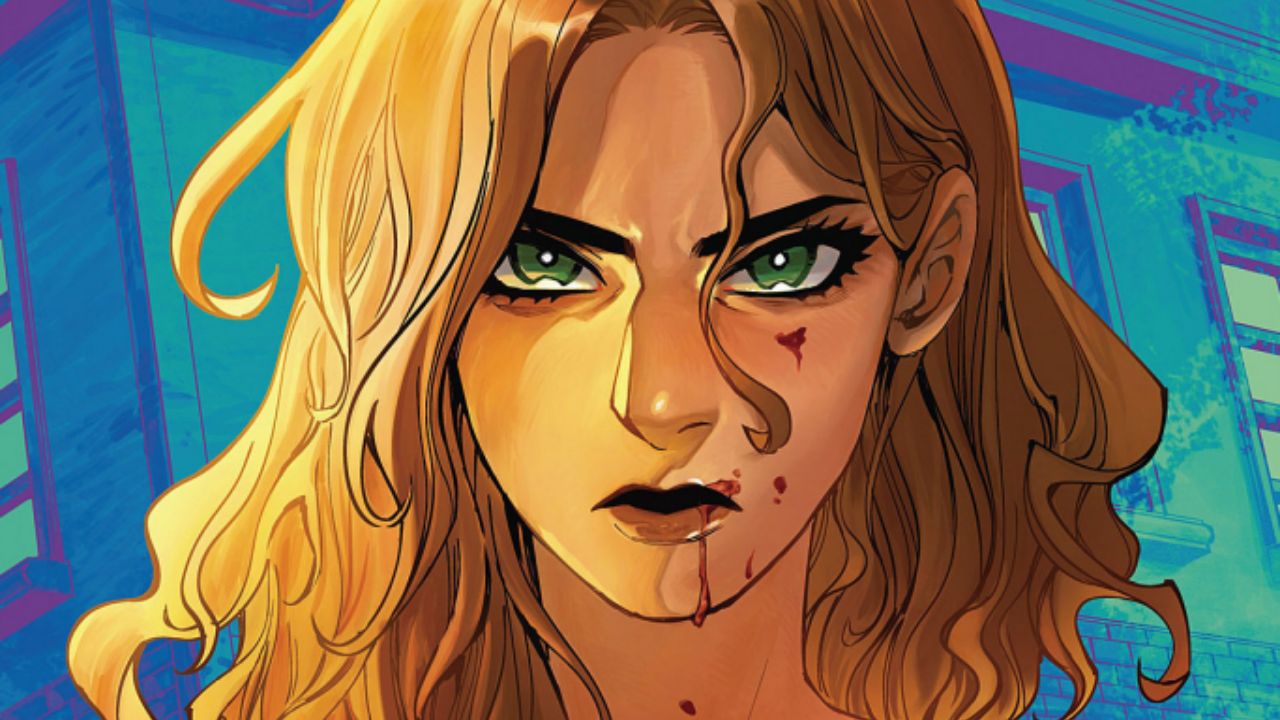
The world of indie comics often thrives on the subversion of the mundane, and BOOM! Studios’ latest offering, Neighborhood Watch #1, is a masterclass in building tension within the confines of suburban “perfection” and communal idealism. Created by Sarah Gailey and Haining, with colors by Rebecca Nalty and letters by Jodie Troutman, this debut issue introduces a dual-narrative mystery that explores the thin veneer of safety in two very different societies.
The Opening Mystery (Pages 1-3)
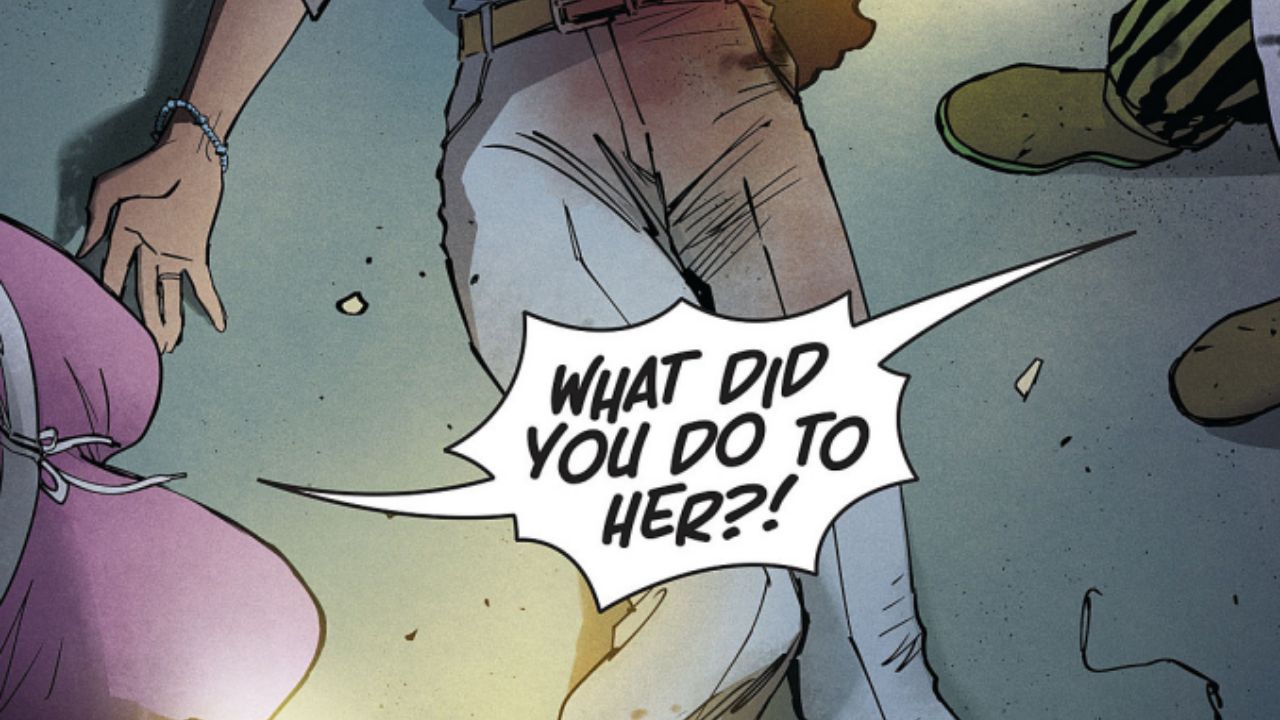
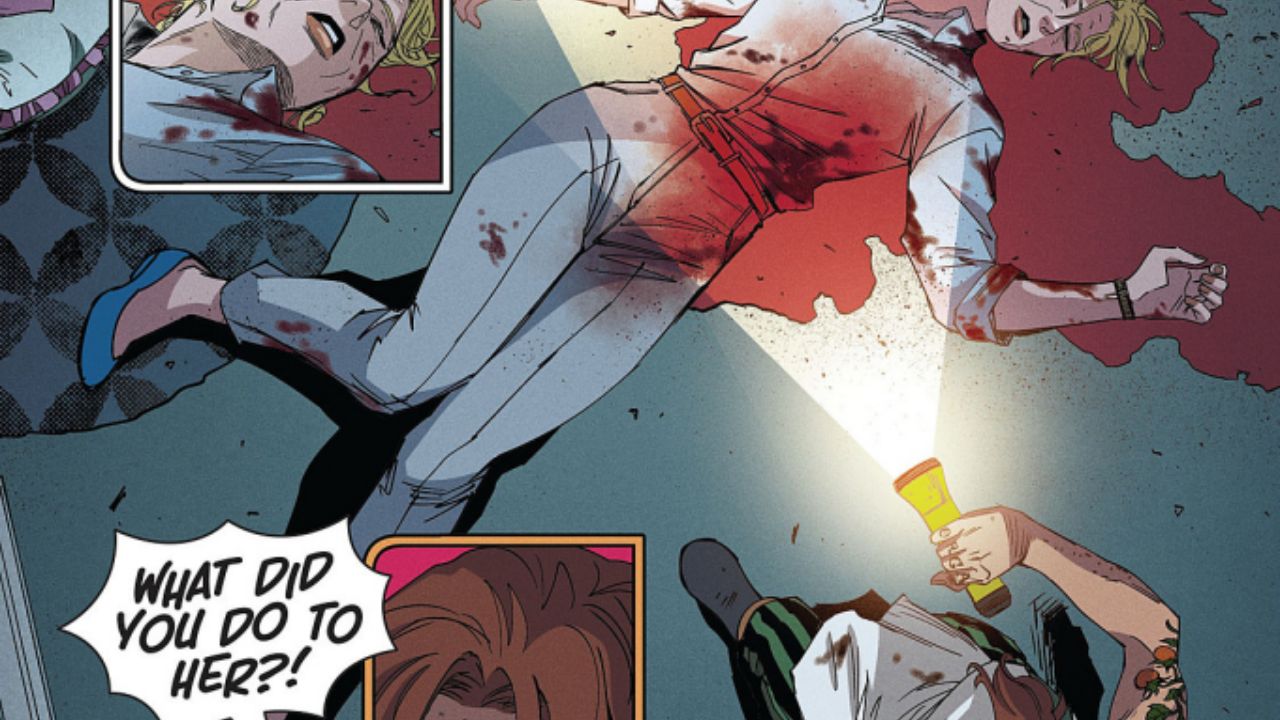
The journey begins with a striking cover and credit pages that set the tone for a 2026 setting. However, the story truly kicks off on page 3 with a visceral, high-stakes teaser. A voice cries out, “WHAT DID YOU DO TO HER?!”. This immediate plunge into conflict serves as a narrative anchor, signaling to the reader that despite the idyllic settings we are about to see, violence and betrayal are lurking just beneath the surface.
A Tale of Two Communities (Pages 4-5)
Pages 4 and 5 establish the stark visual and ideological contrast between the two central locations. We first see Willow Haven, a quintessential suburban enclave. The imagery is filled with traditional markers of Americana: lemonade stands for 10 cents, manicured lawns, and a prominent “Neighborhood Watch” warning sign. It presents an image of rigid order and protected privacy.
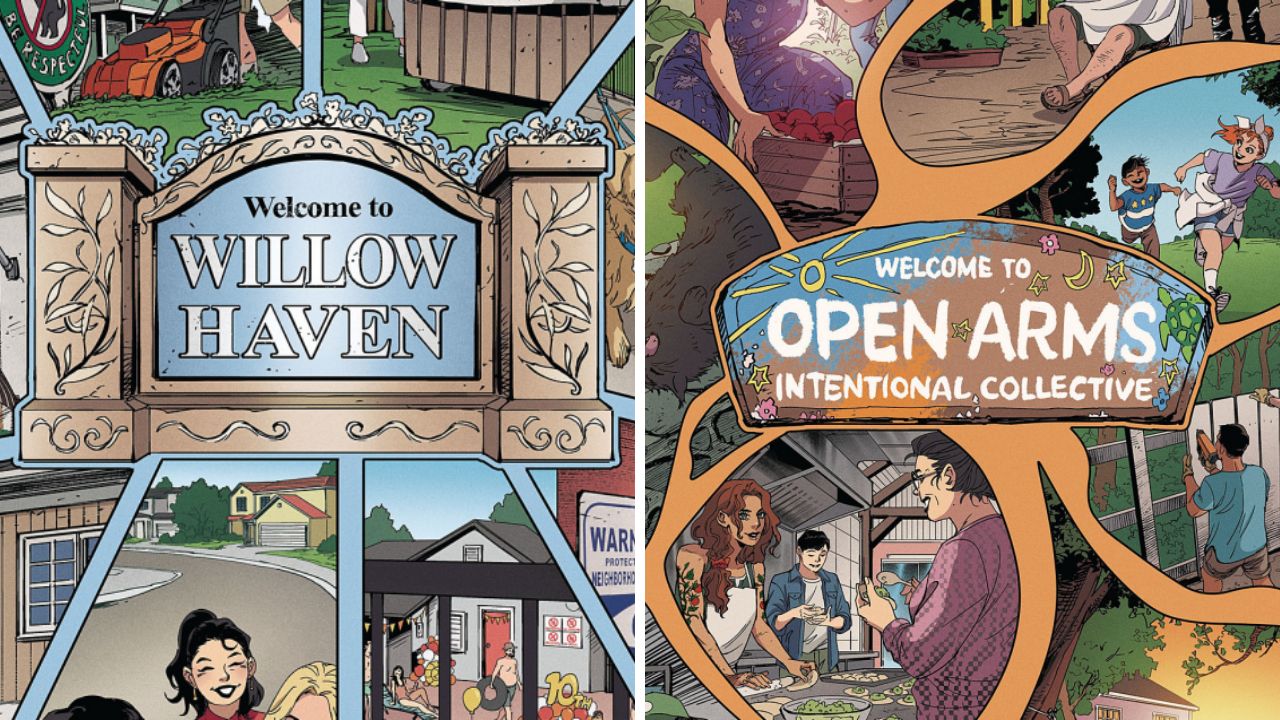
In sharp contrast, page 5 introduces the Open Arms Intentional Collective. Where Willow Haven emphasizes “Watch” and “Warning,” Open Arms focuses on “Intentional Collective” and “Open Arms.” The visual language shifts from individual property lines to shared spaces, setting the stage for a clash of philosophies that defines the issue’s tension.
The Willow Haven HOA (Page 6)
We enter the Willow Haven Homeowners Association meeting. The dialogue perfectly captures the petty tyranny of suburban governance. Bianca, a central figure who appears more interested in her Sauvignon Blanc than the agenda, is called to order. The group bickers over “appropriate” lawn decorations—specifically an inflatable—and the color of fences.
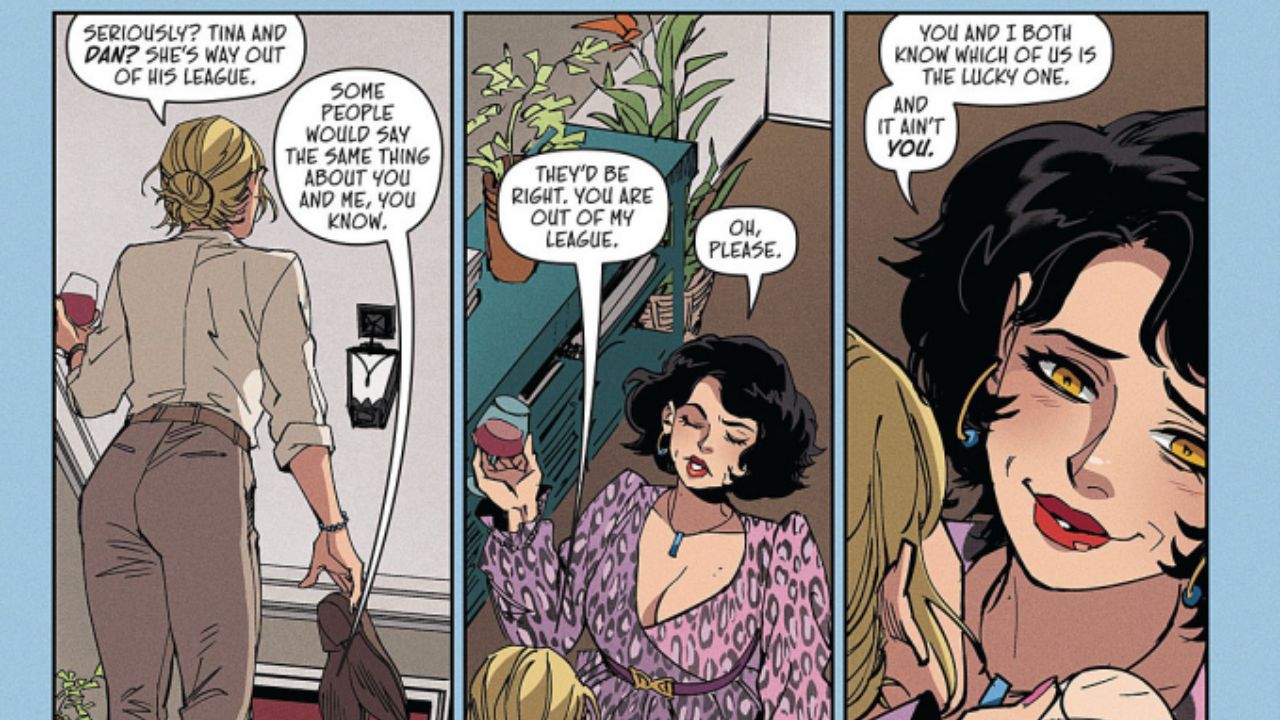
The scene takes a darker turn when the “final order of business” is announced: Neighborhood Watch rotations. The residents are urged to put fresh batteries in their flashlights, accompanied by the chilling mantra: “You can’t report what you don’t see”. This emphasizes a culture of surveillance where “safety” is maintained through constant, suspicious observation of one’s neighbors.
Life at Open Arms (Pages 7-9)
The narrative then shifts to the Open Arms meeting, providing a direct parallel to the HOA. Instead of wine and fence colors, the collective debates “the cilantro seedling issue” and the “anticipated eggplant yield”. While the HOA meeting felt restrictive and judgmental, the Open Arms gathering is messy and passionate.
Characters like Eddie and Fran engage in heated debates over “accelerationist” gardening strategies, while Val (the kitchen steward) tries to maintain peace. Despite the bickering, the meeting ends on a note of communal solidarity: “The community that grows together, grows together”. Yet, even here, there are hints of trouble; mentions of “Shed Five” suggest that this collective has its own secrets and strict protocols.
Suburban Gossip and Hidden Lives (Pages 10-13)
We see the story bridge the gap between the two worlds through character interactions. At Willow Haven, Bianca gossips with her friends about the “Nortons” and the potential for domestic violence if a fence is painted the wrong color. They joke about Jill, a neighbor, “slitting Rita Norton open like a trout,” showcasing a dark humor that masks underlying anxieties.
Meanwhile, the scene transitions to Val at Open Arms, where the dialogue reveals a deeper connection to the other side. We learn that Val helped deliver a baby—nicknamed “Little Toad”—during a flash flood. The mother of this child is Jill, the very same woman mentioned in the Willow Haven gossip. This establishes the core mystery: Jill/Cassie seems to be leading a double life, moving between the rigid suburbs of Willow Haven and the communal lifestyle of Open Arms.
The Disappearance (Pages 14-18)
The tension ratchets up as Jill (known as Cassie at Open Arms) goes missing. Jill’s daughter, Aurora, expresses concern because her mother didn’t come home. She checks the garden and the mysterious “Shed Five,” but finds nothing.
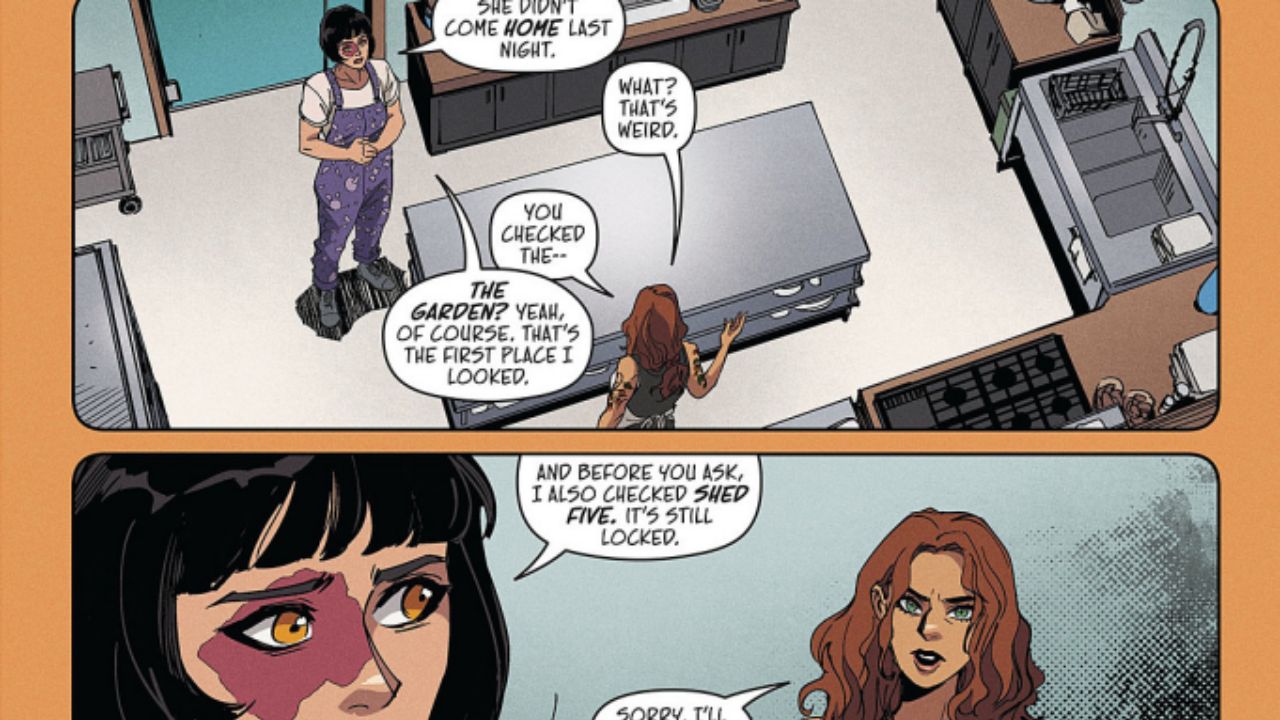
We see the Willow Haven perspective on the same disappearance. Jill’s husband, Erik, is manning a grill at a “Blue Lives Bake Sale”. When Bianca asks about Jill, Erik claims she went to visit her mother because she was “overwhelmed”. The contrast between Aurora’s genuine fear and Erik’s dismissive, performative normalcy at the grill creates a sense of dread. Bianca is clearly unconvinced, noting that Jill hasn’t answered any texts.
Val and Aurora are in a state of full-blown panic. Val learns that “Cassie” didn’t show up for her shift to aerate the compost. Realizing that something is terribly wrong, Val initiates the “Locate Protocol,” organizing the collective for a search while trying to reassure Aurora that they will find her “together”.
Parallel Investigations (Pages 19-21)
Bianca and Val searching for the truth in their respective environments. Bianca takes her Neighborhood Watch shift solo, fueled by wine and a desire for “fun” without Jill’s usual insistence on “respecting people’s privacy”. She investigates a pool house, hoping to catch neighbors in an affair, but instead discovers something far more sinister: a hidden basement that “deserves a punctual audience”.
In parallel, Val is shown in the Open Arms pantry, struggling to manage resources like coconut milk and potatoes while her mind is consumed by Cassie’s absence. She tries to rationalize the disappearance, telling herself “Cassie is fine,” even as she makes plans to check hospitals. The juxtaposition of Bianca’s intrusive surveillance and Val’s communal concern highlights the different ways these women interact with their environments.
The Shocking Discovery (Pages 22-26)
The issue reaches its climax as the two worlds finally collide. Bianca’s investigation and Val’s search lead them to the same harrowing scene: the body of the woman they are both looking for.
The dialogue is frantic and revealing. One calls her “Jill,” the other “Cassie,” leading to the confused cry: “What did you call her?!”. The realization that their friend had a secret identity is quickly overshadowed by the severity of the situation. Val, who has experience as a street medic, identifies a “gunshot wound”.
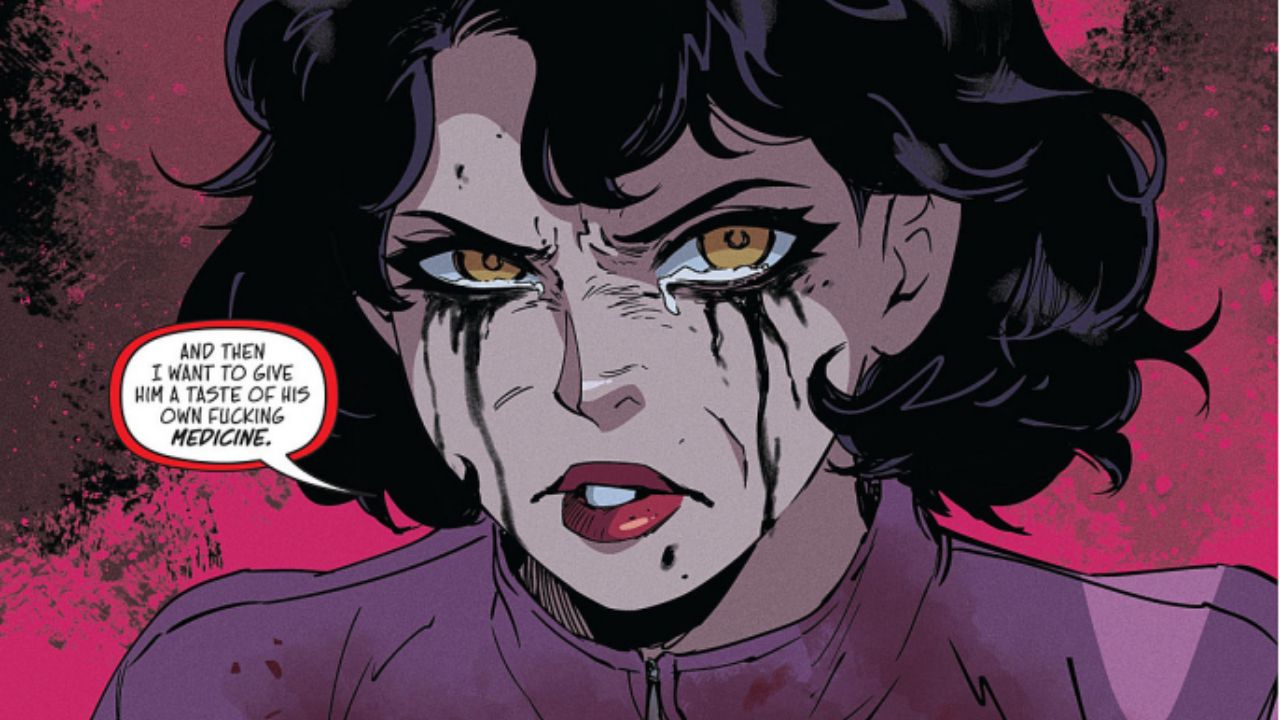
The final pages force an unlikely alliance between the suburbanite and the collective member. When Bianca asks if Val trusts her, Val bluntly replies, “No!”—yet she acknowledges that they must move before the shooter returns. The issue ends with a vow of vengeance. Val doesn’t just want to hide; she wants to meet the “bastard who shot her” and give him a taste of his own medicine.