

Picture this: a daily commute, fifteen spare minutes, and the quiet urge to slip into a story. You open a manga app and are met with a familiar friction—pinching to zoom, scanning cramped layouts, trying to decode the flow of Traditional Manga Panels squeezed onto a small screen. Then, almost instinctively, you switch. A webtoon loads. You scroll once, then again. The narrative unfolds seamlessly, panel by panel, in a rhythm that feels almost native to your thumb. That shift—from effort to ease—is at the heart of why Readers Prefer Vertical Long-Strip Formatting in today’s mobile-first world. It isn’t just a stylistic evolution or a passing trend. It reflects a deeper transformation in how stories are consumed on digital devices, where clarity, pacing, and immersion must adapt to the constraints—and possibilities—of a six-inch screen. This isn’t simply a change in format—it’s a redefinition of how stories breathe, move, and reach us in the digital age.
Something quiet happened to the way the world reads comics. It didn’t arrive with a manifesto or a press conference. It arrived in the palm of your hand, one lazy scroll at a time — and millions of readers never looked back.
The Problem That Started It All: Print Logic on a Digital Screen
Traditional manga — the format that has dominated comics culture for decades — was designed for the printed page. It was engineered for a specific physical reality: paper with fixed dimensions, held in two hands, read from right to left in the original Japanese tradition. Every element of the design, from the multi-panel grids to the dense dialogue bubbles and the precise use of blank space, assumes that the reader has a full page to look at all at once.
That assumption held for a long time. It held through the golden years of bookstore shelves stacked with Shonen Jump volumes, through the early internet era when fans scanned physical pages and uploaded them, through the arrival of e-readers with their generous screen real estate.
Then the smartphone took over.
Suddenly, the medium that billions of people used to consume digital content had a screen roughly the size of a playing card. Trying to read a traditional manga page on that screen meant either accepting illegibly tiny text, or constantly zooming and panning — a rhythm-breaking, immersion-destroying interruption every few seconds. Screen sizes were condensed, and showing an entire comic page’s worth of content in one static webpage simply didn’t work because each panel became too small to read comfortably.
The vertical long-strip format, popularized largely through Korean webtoon platforms like Naver’s LINE Webtoon, emerged as a direct answer to this problem. Instead of adapting print comics to mobile screens, creators rethought the entire structure from the ground up. Scrolling downward felt intuitive, almost invisible, and suddenly reading comics on a phone no longer felt like a compromise — it felt native.
| 800M+ Registered users on LINE Webtoon globally | #1 Most popular comic format among 18–34 readers on mobile | 100+ Webtoon series adapted to TV or film |
The Scroll Is Not Just Navigation — It’s Storytelling
Here’s where things get genuinely fascinating, and where a lot of mainstream commentary stops too short. Reducing the vertical scroll format to “it’s easier on mobile” is like saying cinema is popular because it’s more comfortable than standing theatre. True — but it completely misses the creative revolution that the format enables.
In a traditional printed manga page, the artist controls what you see all at once. When you turn a page, your eyes are already catching glimpses of both pages simultaneously. That means a shocking reveal on the right-hand page has already partially registered before you “officially” reach it. In a print comic, a reader’s eye is going to take in both pages they see after a page turn, even if only for a moment. Despite a creative team’s best efforts, a surprise moment on the right-hand page will already have happened for the reader on some level, losing some of its impact.
The vertical scroll eliminates that problem entirely. In a vertical scroll webtoon, creators can hide information, and they can control how long it takes readers to be able to access that information. A dramatic reveal doesn’t come until the reader’s thumb brings it onto the screen. A creator can place an image three full screen-heights below the previous panel, building tension in the blank space between them — tension that is actually felt, physically, as the reader scrolls through silence toward something unknown.
The act of scrolling itself has become a language. Empty space between panels isn’t dead air — it’s a held breath, a pregnant pause, the narrative equivalent of a film director holding on a close-up before cutting.
Once artists were freed from page limits, they began experimenting with space in new ways. Long stretches of empty background could slow time. A single image placed far below the previous panel could build anticipation before a reveal. Over time, readers learned how to “feel” a scene through scrolling speed alone.
Think about what that means for horror stories. A creator can place something terrifying just barely off-screen — and the slow, unstoppable physics of the reader’s own scroll delivers it to them. You’re not clicking to see the next page. You’re pulling the monster toward yourself, helplessly, one millimeter at a time. That’s not just format convenience. That’s a fundamentally new kind of dread.
The Mobile-First Mind: How We Actually Read Today
Let’s be honest about how modern people consume content. We scroll through social media feeds. We swipe through news articles. We read long-form content on phones, thumbs moving in that now-instinctive downward gesture. The vertical scroll is not a quirky format choice — it’s the native grammar of digital information consumption in 2026.
Webtoons are built from the ground up for mobile devices, using a continuous vertical scroll that mimics social media feeds and online articles. This makes navigation effortless — readers tap or swipe upward without flipping pages, making it ideal for one-handed use. That last detail matters more than it might seem. One-handed use means reading on a crowded bus, in line at a coffee shop, with a cup in the other hand. It means accessibility. It means the format fits into the actual shape of a modern human life.
Statistics show that online comics are read more on mobile devices as opposed to desktop devices. This isn’t surprising — it’s the same trajectory that reshaped music streaming, news consumption, and social media. The device we carry everywhere becomes the primary portal for leisure content. Any format that fights against that reality faces an uphill battle for attention.
Traditional manga, for all its artistic richness, asks readers to adapt their phone to the format. Vertical long-strip formatting does the opposite: it adapts to the reader. And in a content landscape where every platform is competing ferociously for attention, meeting your audience where they are isn’t just nice — it’s survival.
What “frictionless” really means: When a format requires you to zoom, rotate, or navigate complex panel layouts just to read dialogue, each of those micro-interruptions is a tiny withdrawal from your engagement account. Enough withdrawals and you close the app. Frictionless reading keeps that account full.
Color, Art, and the Democratization of Visual Storytelling
Pick up almost any traditionally published manga volume and you’ll find it almost entirely in black and white. This is not a creative limitation — it’s an economic one. Printing full-color pages for a weekly serialized magazine was, and remains, prohibitively expensive. Generations of manga artists developed extraordinary mastery of black-and-white linework, shading through screen tones, and visual language that works without color. That mastery is real and deserves deep respect.
But digital distribution changes the economics completely. Many webtoons incorporate color — a rarity in traditional manga due to printing costs. Full-color visuals improve readability on mobile displays and allow for richer world-building. Combined with scroll-based timing, these elements create a multimedia-like experience distinct from static print.
Color, in the hands of a skilled webtoon artist, becomes a narrative tool. Instead of indicating a flashback with solid blacks or specific frame divisions, a webtoon creator can express it with sepia tones. Mood shifts can be communicated through color temperature — cool blues for isolation, warm ambers for safety, desaturated tones for grief. A villain’s aura can visually poison the palette of the panels surrounding them. These aren’t gimmicks — they’re cinematic techniques that the long-strip format makes accessible to independent creators who have never had a printing budget.
And that word — “independent” — leads to perhaps the most underappreciated dimension of this format shift: who gets to tell stories.
A Lower Barrier, A Wider World of Stories
Traditional manga publishing has historically been a formidable gatekeeping institution. To become a serialized manga artist in Japan, you generally needed to submit your work to a major publisher, survive the editorial selection process, and commit to the grueling schedule of weekly chapter production. Many brilliant artists never made it past the gate. Many stories went untold.
Webtoon platforms — particularly in South Korea but increasingly worldwide — upended this model. Digital platforms lowered the entry barrier. Independent artists could upload episodes regularly, receive feedback instantly, and grow audiences organically. Monetization models followed quickly — free episodes supported by ads, paid early access, and creator support systems. These structures allowed creators to sustain long-running series without relying on print sales.
The result has been an explosion of genre diversity, cultural perspective, and storytelling voice. Romance, horror, slice-of-life, fantasy, psychological drama — all flourishing across webtoon platforms from creators in South Korea, Indonesia, Thailand, France, the United States, and countless other places. Creating a full comic or manga for print is a lot of work, but when it comes to webtoon-style comics, even a shorter story with fewer panels can be uploaded and reach an audience. That accessibility has unlocked talent that traditional publishing simply never would have reached.
| Traditional Manga Format | Vertical Long-Strip Format |
|---|---|
| Designed for print, adapted for digital | Designed natively for mobile screens |
| Right-to-left panel reading order | Top-to-bottom intuitive scrolling |
| Primarily black & white art | Full color standard on most platforms |
| Multi-panel pages, complex layouts | Flexible spacing used as narrative tool |
| Difficult to read on small screens | Optimized for one-handed phone use |
| Publisher-gated distribution model | Open platforms, direct creator upload |
| Page-turn pacing and reveal logic | Scroll-controlled pacing and reveals |
| Deep legacy genre catalog | Rapidly expanding genre diversity |
Pacing, Cliffhangers, and the Art of the Hook
One of the things webtoon creators have had to master is an entirely different relationship with narrative pacing. Episodes often end on cliffhangers perfectly timed for five to ten minute reading sessions during commutes or breaks. This isn’t a bug — it’s a sophisticated understanding of how readers engage with serialized digital content.
Manga chapters also employ cliffhangers, but the rhythm of webtoon episodes has been honed to match the micro-leisure windows in modern life. A chapter that takes twelve minutes to read has a certain psychological completeness — long enough to feel satisfying, short enough to consume during a lunch break. Episodes are long enough to feel satisfying, yet short enough to read during a commute. Weekly updates create routine without demanding too much time at once.
One Japanese manga creator who transitioned to webtoon format put it candidly: since webtoons are online-based, readers won’t pay coins or take any other concrete action unless they really want to read the next episode. That’s why every episode needs to have a hook. The format demands storytelling discipline. You cannot coast. You have to earn the next scroll, the next episode, the next reader action.
This pressure, while intense on creators, tends to produce tight, propulsive narratives. There’s very little room for the kind of extended filler arcs that sometimes bloat long-running manga series. Readers vote with their thumbs — and they vote fast.
What the Format Does Less Well (And Why That Still Matters)
It would be dishonest to write this as a pure celebration without acknowledging where vertical long-strip formatting genuinely loses something. The format has real limitations, and they’re worth sitting with.
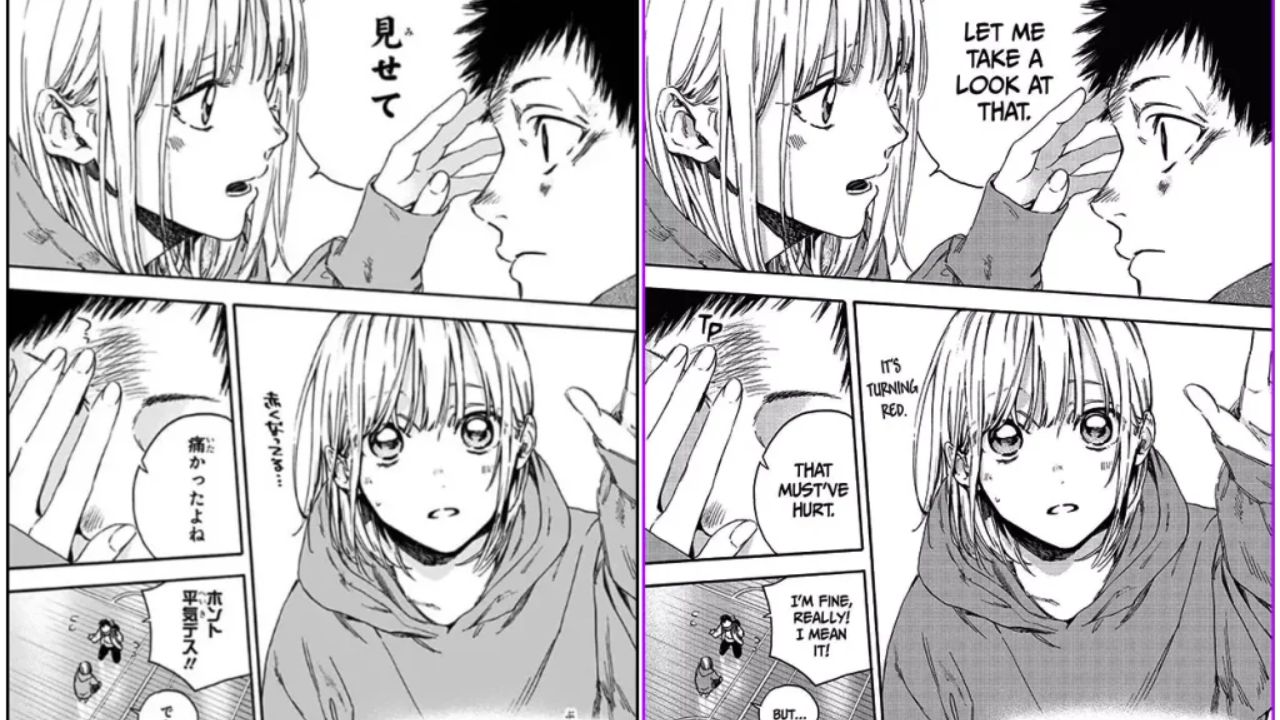
The complex, dynamic panel layouts that manga artists have developed over decades — diagonal cuts, panels overlapping panels, figures bursting through borders, asymmetrical compositions that guide the eye across an entire page in a single dramatic sweep — these are extraordinarily difficult to replicate in a vertical strip. Sports and fighting stories, in many opinions, are better suited for traditional manga because they allow for a bolder panel layout. The kinetic energy of a well-composed action page in manga is genuinely something different from anything the vertical format currently achieves.
There’s also the question of re-readability and depth. Since webtoons can be read quickly, people rarely reread past episodes — so many readers don’t notice foreshadowing or skip over it. The very frictionlessness that makes webtoons so accessible also makes them somewhat disposable. You skim forward; you rarely sit with a moment the way you might linger over a full-page manga spread.
And then there’s the tactile absence — the thing no digital format has figured out how to replicate. There is something deeply satisfying about a physical manga volume. The weight of it. The smell of the paper. The specific resistance of turning a page. The way a well-printed splash page demands your full visual attention precisely because you can’t look away from it. That experience is not coming back in a scroll format, and pretending otherwise would be sentimental dishonesty.
The future isn’t one format winning and one dying. It’s two traditions evolving in parallel, each becoming more itself as it learns from the other — and readers benefiting from both.
Cultural Crossover and the Global Appetite
Something remarkable has happened in the last decade. The vertical long-strip format that began as a Korean innovation has gone genuinely global — and in doing so, it has brought with it a wave of Korean stories, aesthetics, and storytelling sensibilities that have reshaped mainstream popular culture worldwide.
There are a number of popular webtoon original series that have been adapted into books and TV series, such as Lore Olympus, Cheese in the Trap, and Lookism. Tower of God — originally a self-published webtoon — crossed over into anime and became a genuine global franchise. These adaptations aren’t marginal curiosities; they’re mainstream entertainment consumed by audiences who have never thought of themselves as “comic readers.”
The format’s global expansion has also created room for non-Korean creators to reach international audiences without the traditional cultural barriers. A graphic novel creator in Nigeria, a webcomic artist in Brazil, a hobbyist storyteller in the Philippines — all can now publish on platforms that deliver their work to readers in a hundred countries, in a format those readers already know how to consume. The scroll is a universal gesture. It requires no cultural translation.
So What Does This All Mean?
The preference readers have developed for vertical long-strip formatting isn’t irrational, shallow, or purely driven by convenience. It reflects a genuine alignment between format and the realities of contemporary life — how we hold our phones, how we move through our days, how we want stories delivered to us and at what pace.
It reflects the creative possibilities unlocked when artists are liberated from the fixed page and given a canvas that can be as long as the story demands. It reflects an economic model that lets independent voices reach global audiences without a publishing contract. And it reflects storytelling techniques — scroll-based reveals, color as emotional language, controlled pacing through empty space — that are genuinely new tools in the long history of sequential art.
None of this means traditional manga is finished. It isn’t. The panel-based page has produced some of the most sophisticated visual storytelling in the history of human culture, and it will continue to do so. The two formats serve different appetites, different moods, different reading contexts.
But if you’re wondering why your younger sibling, or your coworker, or half the train car you’re sitting in right now is staring at their phone scrolling through a long colorful strip instead of flipping through a volume — now you know. They didn’t abandon comics. They found a version of comics that was waiting for them, already shaped to the exact device in their hand and the exact minutes in their day.
And honestly? That’s a beautiful thing for the medium.