

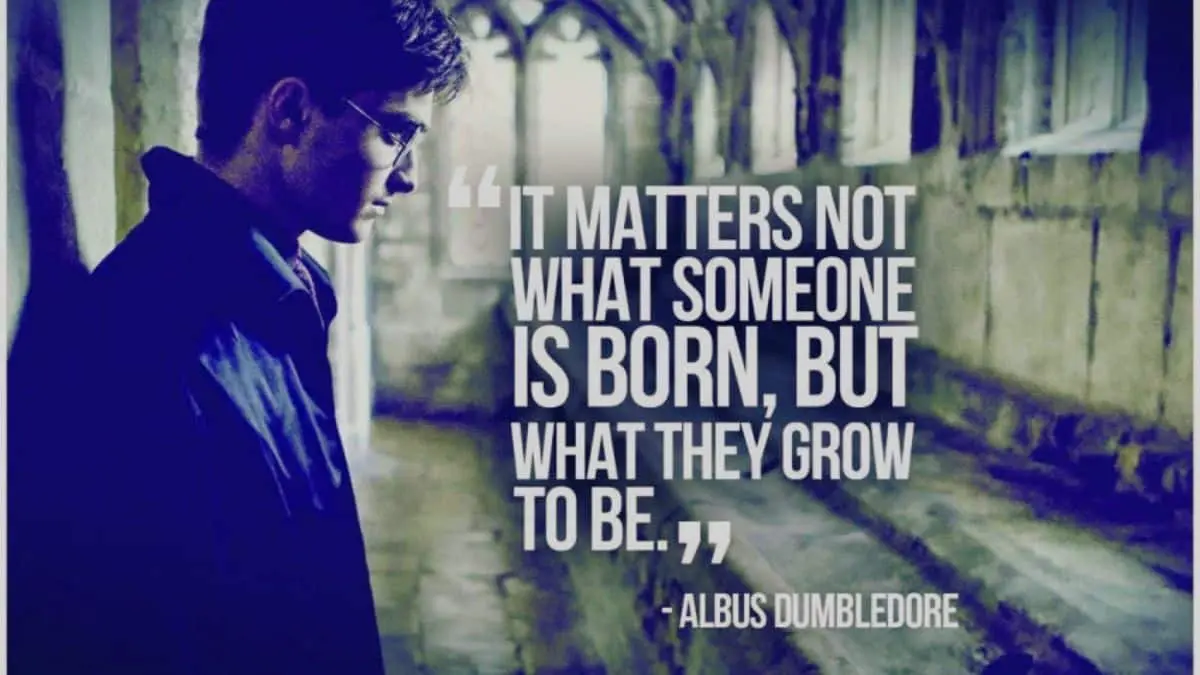
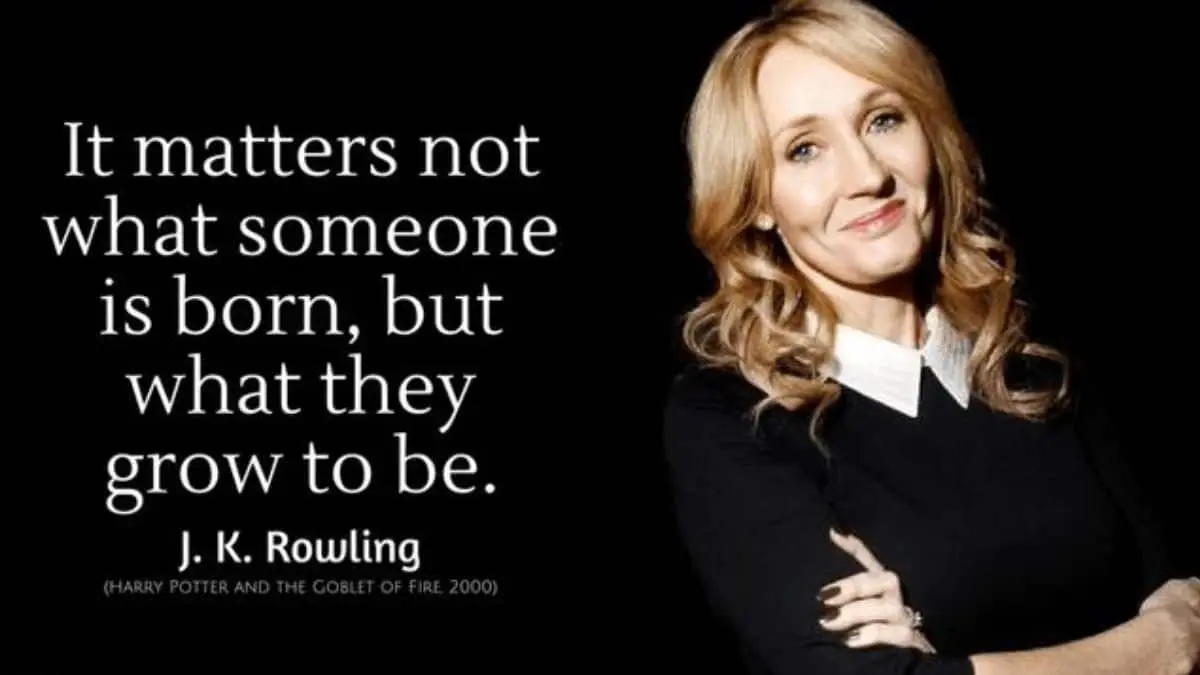
“It matters not what someone is born, but what they grow to be.” This powerful quote from J.K. Rowling’s “Harry Potter and the Goblet of Fire” resonates profoundly in the tapestry of human experiences and aspirations. At its core, it challenges the preconceived notions of destiny and the limitations often imposed by the circumstances of one’s birth. In a world where one’s origin can unfairly dictate the trajectory of their life, this quote emerges as a beacon of hope, emphasizing the boundless potential of personal growth and transformation.
The significance of these words transcends the fictional boundaries of the wizarding world where they were first spoken. In our reality, they serve as a reminder that the essence of who we become is not preordained by our initial conditions – be they socioeconomic status, racial background, or the family into which we’re born. Instead, it is shaped by a confluence of our choices, actions, and the experiences we accumulate over the course of our lives.
Understanding Innate Potential and Environmental Influence
The interplay between innate potential and environmental influence forms the bedrock of our personal development. This intricate dance between what we are born with and what we encounter in our environments is central to understanding how we evolve beyond our initial circumstances.
The Nature vs. Nurture Debate
At the heart of this discussion is the age-old debate of nature versus nurture. This debate questions whether our genetic inheritance (nature) or our environmental experiences (nurture) play a more significant role in shaping who we are. Psychologists have long grappled with this question, and while the consensus acknowledges that both factors are crucial, the intriguing part lies in how they interact. For instance, certain genetic predispositions may never manifest without the right environmental triggers, and conversely, environmental influences can significantly modify or amplify our innate potentials.
Psychological Perspectives
John B. Watson, a prominent figure in the development of behaviorism, famously claimed that given a dozen healthy infants, he could determine the future occupation and life path of each one, regardless of the child’s background. This perspective, albeit controversial, underscores the belief in the power of environmental conditioning. On the other hand, concepts like Tabula Rasa suggest that individuals are born without built-in mental content, and all knowledge comes from experience or perception. This idea supports the notion that our growth and development are significantly shaped by our experiences.
Real-Life Examples
The impact of these theories is best illustrated through real-life Stories. Consider the journey of Oprah Winfrey, who rose from poverty and hardship to become a media mogul and philanthropist. Her story exemplifies how one’s innate abilities, when nurtured in a conducive environment, can lead to extraordinary growth and achievement. Similarly, there are countless stories of individuals from humble beginnings or challenging circumstances who have achieved remarkable success in various fields.
Historical Perspectives on Destiny and Birth
The concept of destiny and the significance of birth have been subjects of contemplation and debate throughout history. Across various cultures and eras, these notions have shaped societal structures, influenced personal identities, and dictated the paths available to individuals based on their birth circumstances.
Ancient and Medieval Views
In many ancient and medieval societies, the circumstances of one’s birth were often seen as a direct determinant of their destiny. For instance, in feudal societies, being born into nobility or royalty afforded privileges and power inaccessible to those born into lower social classes. The caste system in India is another example, where birth determined one’s social status, occupation, and the societal roles they could play, with little opportunity for mobility.
Philosophical and Religious Interpretations
Philosophical and religious teachings have also significantly influenced views on destiny and birth. In many religions, the concept of fate or divine will plays a crucial role in shaping the understanding of one’s life path. Philosophers like Plato and Aristotle discussed the role of “innate qualities” and how they might influence a person’s capacity to learn and grow. However, they also acknowledged the importance of education and moral development, suggesting a balance between inherent qualities and nurtured abilities.
Renaissance and Enlightenment Shifts
The Renaissance and Enlightenment periods marked a significant shift in thinking. The Renaissance celebrated human potential and individuality, moving away from the idea that one’s birth solely determined their destiny. The Enlightenment furthered these ideas, emphasizing reason, individual rights, and the belief that people could shape their destinies through their actions and choices.
Modern Perspectives
In modern times, the emphasis has increasingly shifted towards recognizing the potential for personal growth and achievement regardless of one’s birth circumstances. The rise of democratic ideals and the focus on human rights and equality have contributed to this shift, promoting the belief that individuals are not bound by the limitations of their birth but can transcend them through effort, education, and personal development.
Conclusion
As we conclude our exploration of the profound quote, “It matters not what someone is born, but what they grow to be,” we reflect on the journey through various facets of human development and the forces that shape our identities. This journey has taken us from the historical perspectives of destiny and birth, and through the intricacies of the nature versus nurture debate
Also Read: Being deeply loved by someone gives you strength, while loving someone deeply gives you courage