


Let’s be honest—Batman sits atop the detective throne like he owns the deed. With an IQ of 192 and a reputation that literally brands him the “World’s Greatest Detective,” Bruce Wayne has turned crime-solving into a superpower. He can pinpoint a killer from a single fiber, dismantle death traps built by immortal eco-terrorists, and still find time to master 127 forms of martial arts while running a global empire. He’s the gold standard. But gold standards are meant to be tested. And while Batman broods in Gotham’s shadows, television has quietly produced 5 TV detectives smart enough to outsmart Batman—or at least push him to his limits. These aren’t routine badge-and-gun types. They’re razor-sharp minds who make genius look effortless, the kind of thinkers who might actually keep pace with the Dark Knight when the case turns impossible.
5 TV Detectives Smart Enough to Outsmart Batman
Sherlock Holmes
When Benedict Cumberbatch’s Sherlock Holmes strides into a crime scene, he doesn’t just observe—he consumes it. Every scuff mark, every misplaced hair, every microscopic detail becomes data points in a mental algorithm that processes faster than Gotham’s Batcomputer. His mind palace isn’t just a metaphor; it’s a weaponized memory system that stores and retrieves information with terrifying precision.

What makes Sherlock truly dangerous to someone like Batman is his raw processing speed. While Bruce methodically builds contingency plans for every scenario, Sherlock solves mysteries in real-time, often before the bodies hit the floor. In “A Study in Pink,” he dismantles an entire serial killer’s methodology during a single cab ride, connecting decades-old patterns that Scotland Yard’s finest missed entirely. That’s not just smart—that’s operating on a different temporal plane.
Batman’s detective work relies heavily on technology, forensics, and preparation. Sherlock needs none of these. He could walk into Wayne Manor, spend three minutes in Bruce’s study, and potentially deduce his secret identity from the way the books are arranged and the specific wear patterns on the piano keys. The man identified a software mogul’s murderer by analyzing the victim’s watch tan line and the type of ink on a suicide note. Batman’s gadgets give him an edge against supervillains, but in a pure battle of wits? Sherlock’s brain is the ultimate gadget.
Dr. Spencer Reid
Criminal Minds gave us Dr. Spencer Reid, and honestly, the BAU should be paying him in Nobel Prizes instead of government salaries. Three PhDs by his mid-twenties, an IQ that tests off standard charts, and a memory that makes Wikipedia look forgetful. Reid doesn’t just remember facts—he becomes them, synthesizing psychology, mathematics, linguistics, and pure logic into a predictive engine that maps criminal minds like Google Maps.
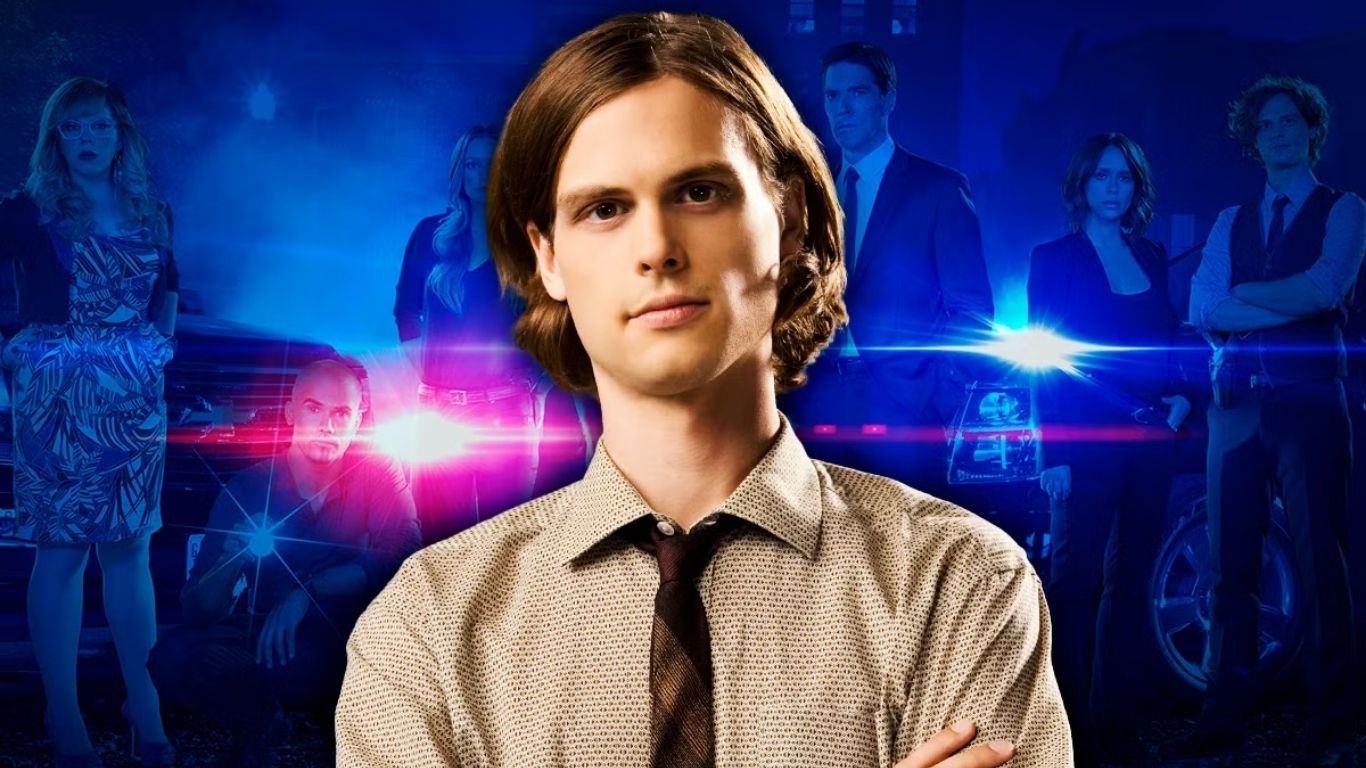
Where Batman studies criminals to understand them, Reid becomes them. He can enter a killer’s psychology so completely that he risks losing himself in the process. In multiple episodes, he profiles unsubstantiated subjects with such accuracy that he predicts their next moves down to the minute and location. His ability to process statistical probabilities while simultaneously analyzing behavioral patterns creates a dual-layered investigative approach that even Bruce Wayne’s methodical preparation might struggle to counter.
The kicker? Reid’s youth and social awkwardness make him unpredictable. Batman excels at reading hardened criminals with clear motivations, but Reid operates in the space between genius and madness—a territory where traditional detective logic breaks down. While Bruce is calculating how to take down a rogue Justice League member, Reid is already three steps ahead of a serial killer who hasn’t even chosen his next victim yet. That’s not just detective work; that’s temporal manipulation through pure intellect.
Patrick Jane
Patrick Jane from The Mentalist represents a different kind of threat to Batman’s detective supremacy. Where Bruce uses fear and intimidation, Jane uses charm and psychological warfare. A former fraudulent psychic who turned his talents toward justice after a personal tragedy, Jane approaches crime-solving like a master chess player who can see twelve moves ahead while convincing you he’s just guessing.

His superpower isn’t super—it’s human. Jane reads micro-expressions, body language, and verbal tells with such precision that he might as well be psychic. He solved a double homicide by noticing how a suspect’s eye twitched when mentioning his alibi. He identified a mole in the CBI by observing who avoided looking at a specific photograph. This is detection as performance art, and it operates on principles that Batman’s forensic science can’t always quantify.
What makes Jane particularly dangerous is his understanding of deception from the inside. He spent years as a con man, which means he knows every trick, every misdirection, every psychological blind spot that even the World‘s Greatest Detective might possess. Batman prepares for physical threats; Jane prepares for cognitive threats. He could theoretically walk into a room with Bruce Wayne, have a five-minute conversation about wine, and extract more information than a week of surveillance. While Batman investigates crime scenes, Jane investigates people—and people are always the weakest link in any security system.
Rust Cohle
Matthew McConaughey’s Rustin “Rust” Cohle from True Detective Season 1 isn’t just a detective—he’s a metaphysical wrecking ball wrapped in nihilistic philosophy and Lone Star beer. While Batman operates from a place of trauma-driven justice, Rust operates from the void, seeing patterns in chaos that others dismiss as coincidence. His famous “time is a flat circle” monologue isn’t just drug-fueled rambling; it’s a framework for understanding criminal behavior that transcends traditional investigative methods.

Rust’s genius lies in his ability to connect the cosmic to the criminal. He solved the Dora Lange case by linking it to a decades-spanning conspiracy involving Louisiana’s power structures, religious cults, and historical violence—a web so complex that it required understanding not just the crime, but the entire socio-cultural ecosystem that produced it. Batman solves crimes; Rust solves systems.
The truly terrifying aspect of Rust’s intellect is his comfort with darkness. Batman fights it; Rust inhabits it. This gives him insights into criminal psychology that even Bruce Wayne’s trauma can’t match. While Batman’s detective work is goal-oriented (catch the bad guy, save the city), Rust’s is existential—he understands that some truths are so terrible that they break the people who find them. In a battle of wits, Rust’s willingness to go places Batman won’t could be the deciding factor. He doesn’t just think outside the box; he lives there.
Dr. Gregory House
Technically a doctor, Dr. Gregory House operates as the purest form of detective on television. Every episode of House is a mystery where the victim is a patient, the crime is a disease, and the culprit is a microscopic organism or genetic mutation. House’s diagnostic methodology mirrors Batman’s detective work so perfectly that it’s eerie—except House does it while high on painkillers and insulting everyone in the room.

What makes House a threat to Batman’s intellectual dominance is his absolute refusal to accept limits. While Bruce prepares for known threats, House confronts medical mysteries that have never been solved before. He diagnosed a patient with a disease so rare that only three cases had ever been documented, and he did it by noticing that the patient’s eye twitched exactly three times per minute. That’s detection at a level that makes Sherlock Holmes look sloppy.
House’s genius is chaotic and intuitive. He makes connections between seemingly unrelated facts—a patient’s love of cheese, a business trip to Thailand, and a childhood pet—forming hypotheses that defy medical orthodoxy but prove correct time and again. Batman’s detective work is systematic; House’s is inspired. While Bruce is running forensic analysis on a fiber, House is already connecting that fiber to a factory in Indonesia, a shipping manifest, and a rare form of parasitic infection that only affects left-handed people.
The real kicker? House solves mysteries while actively sabotaging himself. His drug addiction, damaged leg, and pathological need to alienate everyone around him should cripple his abilities, yet they don’t. If he can outsmart death itself while popping Vicodin and antagonizing his entire team, imagine what he could do with Batman’s resources and discipline. He might not just solve crimes—he might solve crime as a concept.