
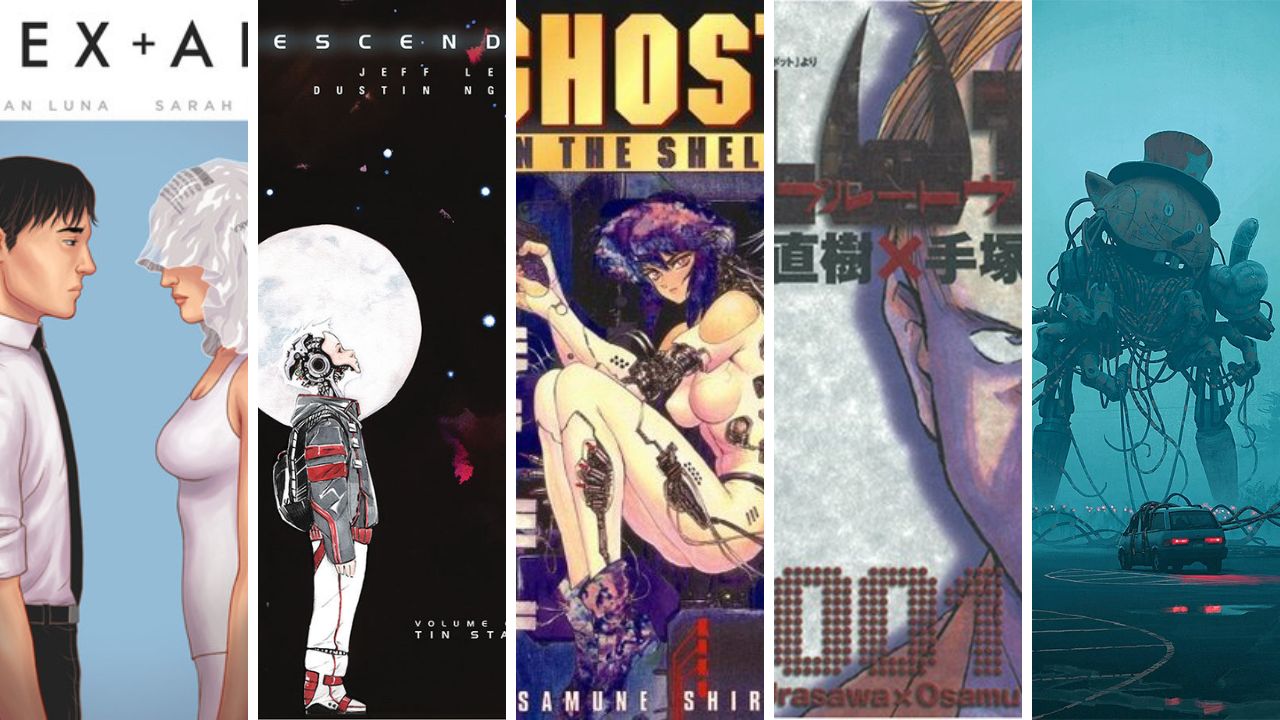
Artificial intelligence has become one of the defining anxieties and fascinations of our era, but some comics go a step further — they don’t just feature advanced machines, they philosophically explore Artificial Intelligence and Consciousness in ways that feel urgent and deeply human. Instead of treating AI as spectacle or villain, these stories slow down and ask harder questions: What makes a being self-aware? Is memory enough to create identity? Can empathy emerge from circuitry? And if a machine begins to think, feel, or choose, does it deserve the same moral consideration we reserve for ourselves?
Comics, as a medium, are uniquely equipped for this kind of inquiry. A single panel can hold silence like a meditation. A fragmented layout can mimic a fractured mind. Artists can blur flesh and metal, organic thought and programmed logic, making the boundary between human and machine visually uncertain. In doing so, they transform philosophical abstraction into something intimate and immediate.
The works highlighted in this list do not offer easy answers. Instead, they present artificial minds wrestling with freedom, grief, purpose, and autonomy — the very struggles we associate with being alive. Through android protagonists, networked intelligences, and post-human futures, these comics quietly turn the spotlight back on us. Because the moment we question whether a machine is conscious, we are also forced to reconsider what consciousness truly means.
5 Indie Comics That Philosophically Explore Artificial Intelligence and Consciousness
Alex + Ada
A softly intimate study of intimacy, consent and agency

If you only read one book on this list because you want a gentle, humane primer on the ethics of synthetic minds, start with Alex + Ada. The series centers on a lonely young man and an android gifted to him as a present; what begins like a relationship story becomes an extended thought experiment about what it means to grant autonomy to an artificial being. The creative decision that makes the book sing is its focus on the mundane: domestic routines, awkward social interactions, the way rights movements get moral traction. Through those small scenes, the comic stages big philosophical questions about consent, legal personhood, and emotional labor.
Why it matters: unlike sweeping “AI uprising” narratives, this one insists consciousness (or the appearance of it) brings responsibility. It asks readers to imagine changing laws, family expectations, even romance to fit beings that look human but began as machines — and it does so quietly, without melodrama. If your interest is the ethics of upgrading — or of “unlocking” a sentient system — this is where you’ll find thoughtful, human-scaled arguments.
Descender
Space opera that uses wonder and grief to ask what a mind wants
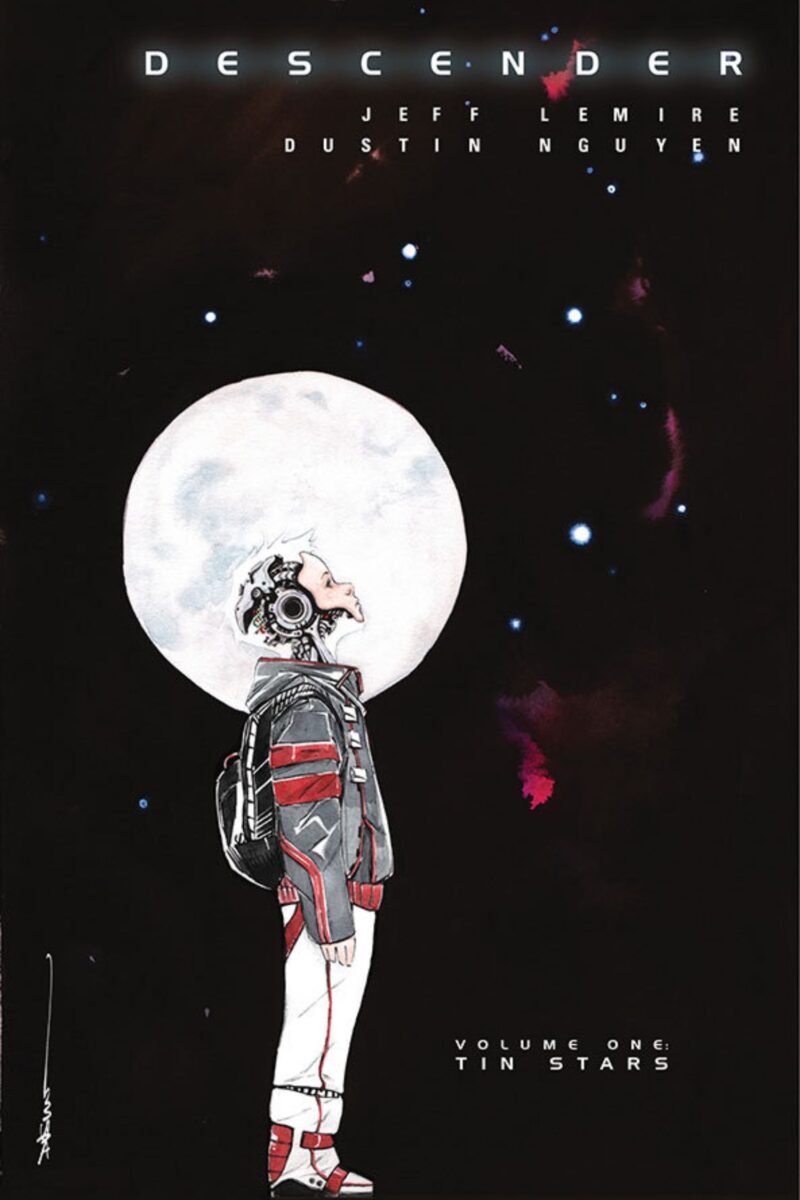
Jeff Lemire and Dustin Nguyen’s Descender takes the opposite tack: huge canvas, dramatic stakes. The premise — a young android hunted across the galaxy after a mysterious ban on robots — is classic sci-fi set-dressing, but Lemire uses it to interrogate identity across species and systems. The series alternates scenes of savage political fear (humans terrified of machines) with haunting intimacies — an android’s nascent curiosity, an attempt to repair a damaged memory, the way grief replicates across both flesh and code. The result is a space opera that keeps returning to the inner life of nonhuman characters, which forces readers to confront whether consciousness is a pattern, a narrative, or a soul.
Why it matters: Descender presents AI not as a monolith but as a family of minds — some gentle, some terrifying — and asks how societies decide which minds deserve protection. If you like philosophical drama framed by gorgeous painted pages and operatic plot turns, this one will sit with you long after the last panel.
Ghost in the Shell
Classic cyberphilosophy: memory, “ghosts,” and networked selves

No list about comics and machine consciousness would be honest without Masamune Shirow’s Ghost in the Shell. Its influence is legion: it formalized a set of questions modern media still riffs on — What is a self when your brain is a net of data? Can a distributed intelligence possess moral agency? The franchise (manga, films, series) uses detective plots and cyber-espionage as scaffolding for sustained philosophy: the puppet master, the hacking of “ghosts,” the Major’s recurring self-reflection are dramatizations of identity thought experiments. Read it to see cyberpunk at its most philosophically curious.
Why it matters: Ghost in the Shell doesn’t give pat answers. Instead it teaches a habit of questioning: probe the continuity of memory, map personhood to narrative, and consider whether a mind’s “interiority” survives technological replication. For readers interested in how popular culture can carry real philosophy, this is a foundational text.
Pluto
A detective story that lets robot grief and human politics collide
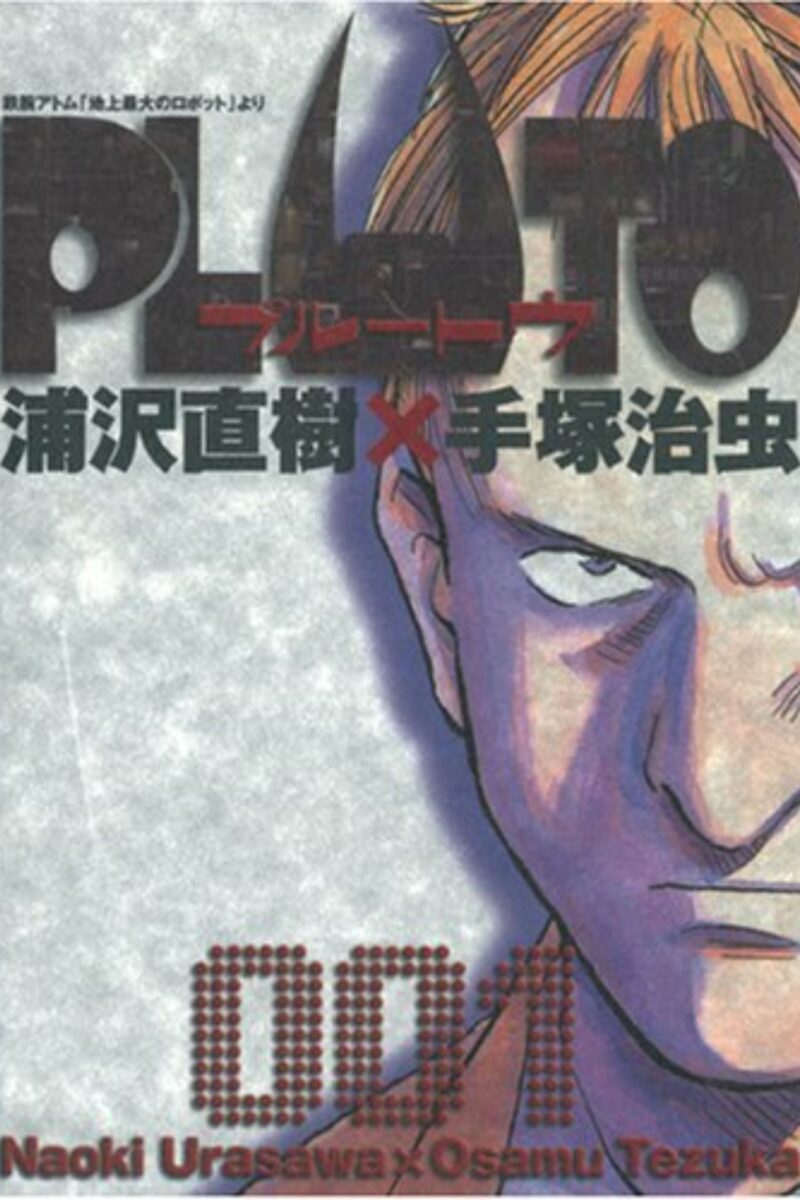
Naoki Urasawa’s reworking of a classic robot tale, Pluto, reads like a locked-room mystery wrapped in moral questions. At its core is a murder investigation that gradually reveals deep layers of trauma, revenge, and moral injury — not only among humans but among the most powerful robots on Earth. Urasawa’s strength is the way he treats robot characters as beings capable of history and loss; their suffering prompts readers to ask whether empathy should be limited by biology. The narrative reframes familiar “Are robots people?” debates within the emotional language of crime fiction, making the philosophical stakes feel immediate and painfully human.
Why it matters: where some works talk about rights in abstract, Pluto dramatizes the aftermath of violence — who pays for it, how vengeance circulates, and whether systems built on war can ever rehabilitate sentient artifacts. If you want philosophy served with moral ambiguity and noir tension, this is the book.
The Electric State
An illustrated elegy about technology, loss, and the human cost of automation
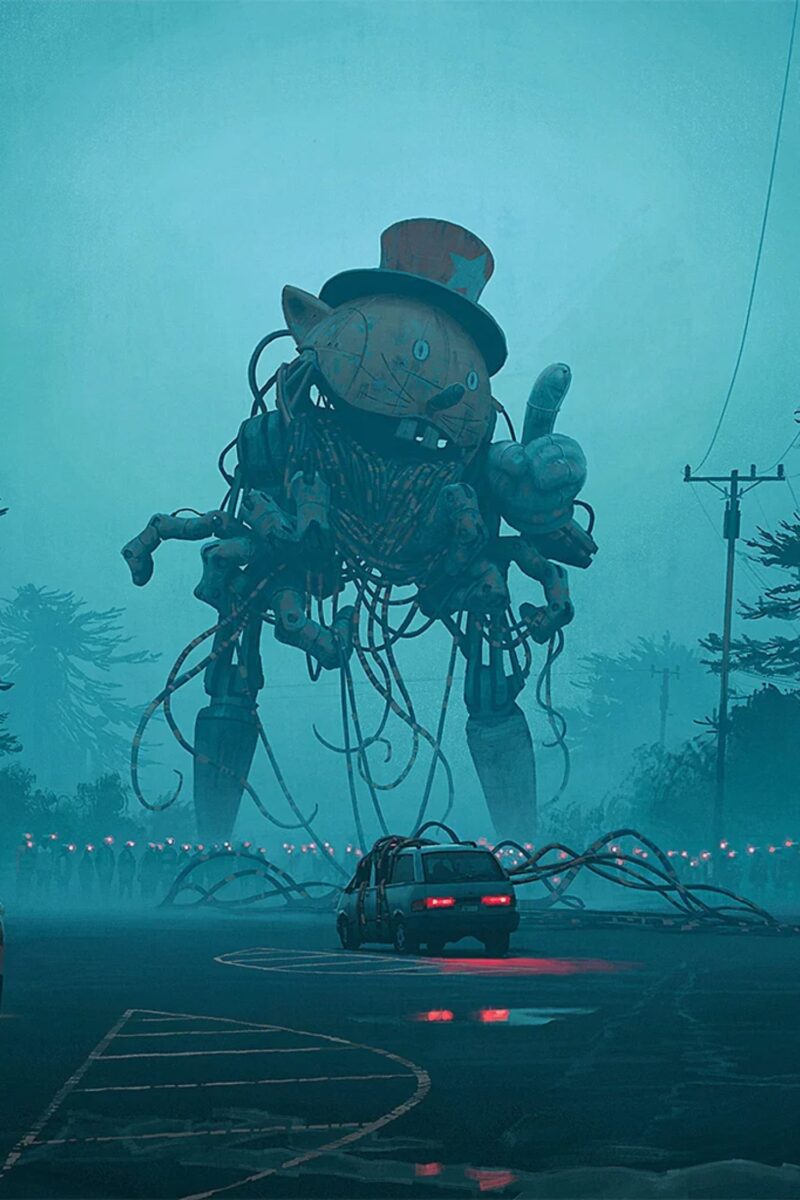
Simon Stålenhag’s The Electric State is less a conventional comic and more a hybrid: lavish, melancholic art punctuated by a lean, haunting narrative. The world is one where consumer technology became militarized — and then, in many ways, stopped being human-friendly. The book’s philosophical work is subtle: it explores how landscapes, memories and personal stories are overwritten by the material detritus of failed machines. Stålenhag’s central characters navigate ruins populated by robots and the ghosts they leave behind; the book asks whether artifacts of intelligence accumulate a kind of afterlife simply by being remembered.
Why it matters: if you’re drawn to meditative takes on AI — less about “can they think?” and more about “what do their ruins teach us?” — this one will haunt you. The Electric State is a reminder that AI stories are also human stories: the machines change us not only by their capacities but also by the landscapes they leave behind.