

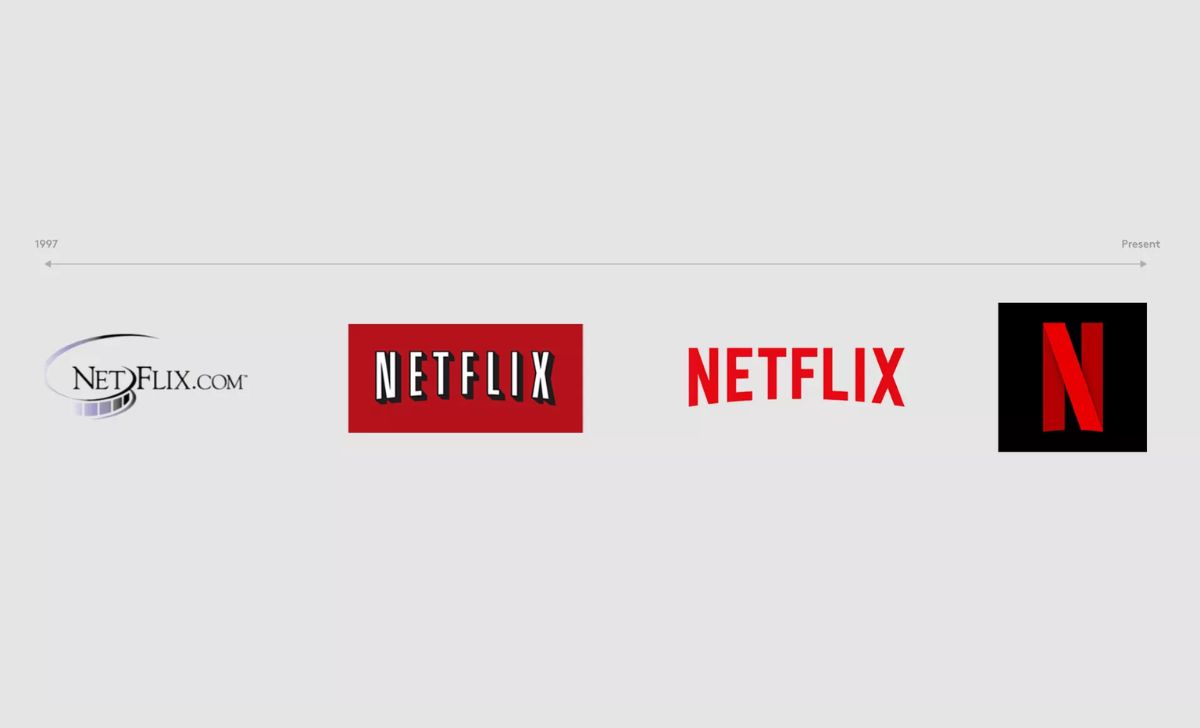
Netflix’s extraordinary transformation illustrates one of the most compelling corporate metamorphoses in modern business history. What began as a modest DVD-by-mail service in 1997 has evolved into today’s undisputed streaming entertainment colossus, fundamentally altering how audiences worldwide consume media and permanently reshaping the entire entertainment landscape. This remarkable evolution from 1997 to Today: A Timeline of Netflix’s Evolution showcases a Silicon Valley startup’s meteoric rise to become a global powerhouse commanding over 300 million subscribers across six continents.
The Founding Vision (1997-1998)
Netflix emerged from a frustrating experience that millions of customers could relate to. In 1997, Reed Hastings faced a $44 late fee for returning a rented copy of “Apollo 13” to Blockbuster six weeks late. This personal inconvenience sparked an entrepreneurial insight that would eventually topple the video rental industry. Hastings, along with his colleague Marc Randolph, founded Netflix on August 29, 1997, in Scotts Valley, California.
The founders tested their revolutionary concept by mailing a Patsy Cline CD to Hastings’ house in a greeting card envelope. When the disc arrived undamaged the next morning, they confirmed that their DVD-by-mail idea could work. Hastings invested $2.5 million from the sale of his previous company, Pure Atria, to capitalize this ambitious venture. Netflix launched as the first DVD rental and sales website with 30 employees and 925 available titles, nearly encompassing all DVDs published at the time.
The company shipped its first DVD, “Beetlejuice,” on April 14, 1998. This humble beginning marked the start of what would become a media revolution. Netflix distinguished itself from traditional video stores by offering an entirely web-based catalog, giving customers nationwide access to its complete library rather than limiting them to whatever titles their local store carried.

Pioneering the Subscription Model (1999-2006)
Netflix introduced its revolutionary subscription model in September 1999, fundamentally changing how consumers accessed entertainment. Customers could rent unlimited DVDs for a low monthly price without worrying about late fees—the very problem that inspired the company’s creation. This innovation directly addressed consumer frustrations with traditional rental stores while providing predictable revenue for Netflix.
During this period, Netflix survived the dot-com bubble crash that destroyed many internet companies. While competitors like Pets.com and WebVan collapsed due to flawed business models, Netflix persevered through its focus on customer satisfaction and operational efficiency. The company’s subscription base grew steadily, reaching 3.6 million subscribers by 2005.
A pivotal moment occurred in 2000 when Netflix co-founders offered to sell their company to Blockbuster for $50 million. In what became one of the most notorious business blunders in history, Blockbuster CEO John Antioco and his executives laughed the offer out of the room. They viewed Netflix as serving merely a “niche market” and failed to recognize the transformative potential of the DVD-by-mail model.
Netflix developed sophisticated data analytics capabilities during these early years, analyzing customer viewing patterns to provide personalized movie recommendations. This algorithm-driven approach to content discovery would later prove crucial when the company transitioned to streaming.
The Streaming Revolution Begins (2007-2012)
Netflix launched its streaming service, initially called “Watch Now,” on January 16, 2007. This represented the company’s most significant strategic pivot, though it began as a complement to the DVD service rather than a replacement. CEO Reed Hastings recognized that internet-based movie delivery represented the future of entertainment consumption, even though mainstream adoption would take time due to technological limitations.
The initial streaming offering required customers to have at least a 1 Mbps internet connection, with 3 Mbps needed for DVD-quality streaming. Netflix started with approximately 1,000 titles available for streaming, compared to 70,000 in its DVD catalog. Subscribers under the $17.99 plan initially received 18 hours of streaming content monthly, though unlimited streaming later became standard for most plans.
Netflix strategically expanded streaming availability across multiple devices, partnering with video game console manufacturers, Blu-ray player makers, and electronics companies to enable viewing on various platforms. The company introduced a streaming-only plan by 2010 and launched mobile apps for iPhones and Android devices.
The year 2007 marked Netflix’s first billion-dollar revenue year, with subscriber growth of 18%, revenue increases of 21%, and net income rising 36% compared to 2006. This growth validated the company’s investment in streaming technology and positioned it for even more dramatic expansion.

Global Expansion Strategy (2010-2016)
Netflix began its international expansion in 2010 with its launch in Canada, where it gained one million subscribers within a year. This successful debut proved that Netflix’s model could work beyond the United States and provided valuable insights for further expansion.
The company adopted a phased approach to globalization, initially targeting markets geographically and culturally similar to the United States. In 2011, Netflix expanded to 43 countries across Latin America and the Caribbean. The streaming service then entered Europe in 2012, launching in the United Kingdom, Ireland, and Nordic countries.
Netflix’s expansion strategy produced remarkable results. Before international expansion, the company reported subscriber growth of approximately 2.4 million members annually. Following its entrance into Canada, Europe, and Latin America, subscriber growth jumped to an average of 7 million annually. This dramatic acceleration demonstrated the massive global appetite for Netflix’s streaming model.
The company reached a major milestone in January 2016 when it announced simultaneous expansion into 130 new territories, making its service available in over 190 countries worldwide. This aggressive expansion strategy established Netflix as a truly global platform, with the notable exceptions of China, North Korea, and regions subject to U.S. sanctions.
The Original Content Revolution (2013-2018)
Netflix fundamentally transformed from a content distributor to a content creator with the February 2013 launch of “House of Cards”. This political thriller, starring Kevin Spacey and produced by David Fincher, represented Netflix’s first major original series and marked a permanent shift in how the industry viewed streaming platforms.
The decision to produce “House of Cards” demonstrated Netflix’s sophisticated use of data analytics. The company analyzed viewing patterns of its 30 million subscribers and identified significant overlap among fans of the original British series, director David Fincher, and actor Kevin Spacey. This data-driven approach gave Netflix confidence to commit $100 million to the series without requiring a traditional pilot episode.
“House of Cards” achieved immediate success, contributing to Netflix adding over three million new subscribers worldwide in the first quarter of 2013. The series broke even within six months and validated Netflix’s strategy of investing in original content. More importantly, it established Netflix as a legitimate producer of premium television content, competing directly with traditional networks and premium cable channels.
Netflix’s original content strategy expanded rapidly following this success. By 2023, the platform boasted more than 3,600 original titles. The company’s commitment to original programming has enabled it to differentiate itself from competitors while reducing dependence on licensed content from other studios.

Navigating the Competitive Landscape (2018-2020)
As streaming became increasingly competitive with the launches of Disney+, Apple TV+, and other services, Netflix focused on expanding its global footprint and diversifying its content offerings. The company continued investing heavily in international content production, creating region-specific programming to appeal to local audiences while maintaining its global appeal.
Netflix’s recommendation algorithm became increasingly sophisticated during this period, utilizing machine learning and artificial intelligence to provide personalized content suggestions. The platform’s ability to analyze viewing behavior, search patterns, and engagement metrics allowed it to create highly targeted user experiences that kept subscribers engaged.
The company also began experimenting with interactive content and different release strategies, including the controversial decision to release entire seasons at once, enabling “binge-watching” behavior that traditional television networks couldn’t match.
Pandemic Boom and Strategic Pivots (2020-2022)
The COVID-19 pandemic created unprecedented opportunities for streaming services, and Netflix became a primary beneficiary of global lockdowns. In the first half of 2020, Netflix added more than 26 million subscribers, beating both Wall Street estimates and its own internal forecasts. This surge resulted from people seeking at-home entertainment during quarantine restrictions.
Netflix’s global reach positioned it perfectly to capitalize on the pandemic. The company completed 50 production projects despite filming restrictions and maintained its release schedule better than competitors. By the end of 2020, Netflix had achieved record-breaking performance in terms of both subscriber numbers and revenue.
However, growth began slowing in 2021 and 2022 as pandemic restrictions lifted and competition intensified. Netflix added only 18.2 million members in 2021, roughly half the number from 2020. The company faced its first subscriber loss in over a decade during the first quarter of 2022, prompting strategic reassessment.

The Password Sharing Crackdown (2022-2023)
Recognizing that password sharing was limiting revenue growth, Netflix estimated that over 100 million households were sharing passwords with people outside their households, including 30 million in the United States alone. The company began implementing restrictions on password sharing in 2022, initially testing the policy in select markets.
Netflix officially launched its password sharing crackdown in the United States in May 2023. The policy limited account access to people living in the same household, while offering options for account holders to add extra members for $7.99 monthly or transfer profiles to encourage separate subscriptions.
Despite predictions of significant subscriber backlash, the password sharing restrictions proved remarkably successful. Cancellation rates remained lower than Netflix expected, while many borrower households converted to paying memberships. The company reported adding 8.8 million subscribers in the third quarter of 2023, significantly exceeding projections.
Gaming and Diversification (2021-Present)
Netflix launched its gaming initiative in November 2021, starting with mobile games available through its Android and iOS apps. The streaming giant initially offered five casual games, including titles based on “Stranger Things” and other Netflix properties. All games are ad-free with no in-app purchases or additional fees for subscribers.
The gaming expansion represents Netflix’s most significant diversification since launching streaming in 2007. The company views gaming as crucial for competing with entertainment platforms like Fortnite and YouTube, which command massive amounts of consumer attention. Netflix has gradually expanded its gaming library to over 120 titles and is testing cloud gaming capabilities for television and PC platforms.
This diversification strategy aims to increase subscriber engagement and provide additional reasons for users to maintain their Netflix subscriptions as competition in the streaming market intensifies.

Recent Performance and Future Outlook (2023-2024)
Netflix has demonstrated remarkable resilience and continued growth following its strategic adjustments. The company reached 301.6 million subscribers worldwide by the end of 2024, representing a 15.9% increase from 260.28 million at the end of 2023. Netflix added a record 41 million subscribers during 2024, with 18.9 million joining in the fourth quarter alone.
The company’s financial performance has been equally impressive. Netflix generated $39 billion in revenue in 2024, with projections of $44 billion for 2025. Third-quarter 2024 earnings showed revenue of $9.82 billion, representing a 15% increase year-over-year, while net income reached $2.36 billion, up 41% from the previous year.
Netflix’s stock performance reflects this strong operational execution, with shares gaining 47% year-to-date through October 2024. The company’s ability to maintain growth despite market saturation concerns demonstrates the effectiveness of its diversified strategy combining international expansion, original content investment, and new revenue streams.
Technological Innovation and AI Integration
Netflix has emerged as a leader in applying artificial intelligence and machine learning to entertainment. The company’s recommendation system analyzes vast amounts of user data, including viewing history, search queries, ratings, and even browsing behavior patterns. This AI-driven approach ensures that approximately 80% of content streamed on Netflix comes from personalized recommendations.
The platform utilizes sophisticated algorithms including collaborative filtering, content-based filtering, deep learning models, and natural language processing to understand user preferences. Netflix has created over 76,000 micro-genres to enable more nuanced recommendations, such as “Romantic Independent Movies” or “Action Thrillers Featuring a Strong Female Lead”.
Beyond content recommendations, Netflix employs machine learning for content production decisions, including selecting optimal filming locations and predicting which shows will succeed with specific audiences. This data-driven approach to both content creation and distribution has become a key competitive advantage.
Looking Forward: The Next Chapter
Netflix’s evolution from a DVD-by-mail service to a global streaming and gaming platform illustrates the company’s remarkable ability to anticipate and adapt to changing consumer preferences and technological capabilities. The company’s success stems from its willingness to cannibalize its own business models when necessary, its commitment to data-driven decision making, and its focus on subscriber experience above short-term profits.