
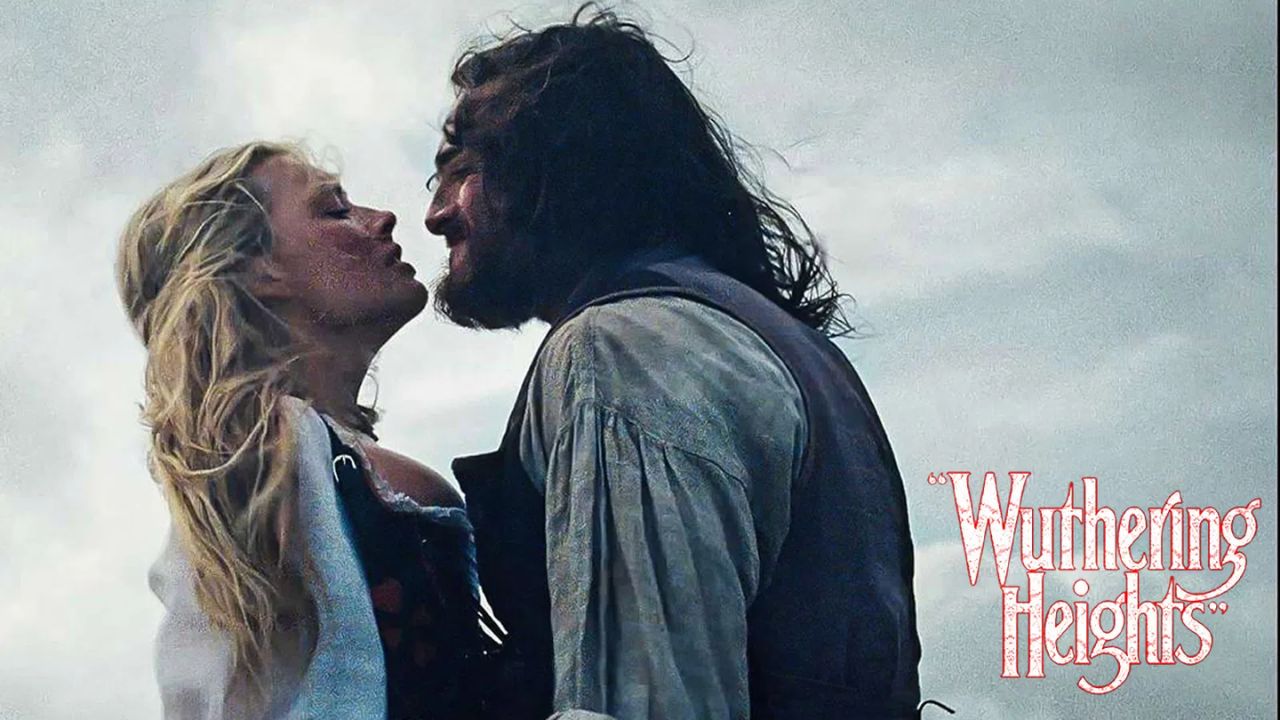
Emerald Fennell’s latest film, Wuthering Heights, is many things at once: lurid, glossy, excessive, and strangely compelling. It is also her most confident and divisive work so far—a Gothic romance dragged through mud, blood, silk, and sweat, then set loose on the windswept Yorkshire moors with no interest in restraint.
Adapting Wuthering Heights has defeated many filmmakers before, and Fennell approaches the problem not with fidelity, but with appetite. Her version leans hard into sensation. The camera dwells on viscera and texture—dripping egg yolks, squelching dough, pig’s blood smeared across fabric. When Cathy Earnshaw trudges across the moor, her elegant dress gathers filth like a second skin. The effect is deliberate. Beauty and rot are constantly pressed together, as if Fennell is insisting that one cannot exist without the other.
That collision suits the novel’s emotional core. Cathy, played by Margot Robbie, is torn between social refinement and feral instinct, between the expectations of Victorian womanhood and a desire that refuses to behave. Fennell makes that repression explicit—sometimes bluntly so—pushing Brontë’s simmering passions into open, often ridiculous heat. This is not a restrained period drama. It is closer to a fever dream, shot like a glossy music video and paced with restless, teenage intensity.
As with most screen versions, the film abandons the novel’s sprawling second generation entirely. Fennell also pares down the first half, excising key characters and simplifying motivations. The focus narrows almost exclusively to Cathy and Heathcliff, charting their bond from wild childhood companionship to corrosive adult obsession. For readers attached to Brontë’s structural oddities and narrative detours, this streamlining may feel like vandalism. Yet it gives the film momentum. What remains feels leaner, even nimble, despite the excess layered on top.
Heathcliff, played by Jacob Elordi, is introduced as an adopted orphan, brought home from Liverpool by Cathy’s impulsive father. As children, the pair are inseparable—running feral across the estate, united in mischief and emotional isolation. Adulthood, and class, intervene. Heathcliff becomes a servant; Cathy becomes a young woman expected to marry well. The arrival of the polite, wealthy Edgar Linton, portrayed by Shazad Latif, crystallizes the divide. Cathy chooses security over kinship, pushing Heathcliff into exile and transforming him into something darker when he returns.
Fennell reshapes Heathcliff into a Byronic figure sharpened for the screen: cruel, seductive, domineering, yet sanded down just enough to remain watchable. His later marriage to Isabella Linton, played by Alison Oliver, is treated less as an act of calculated sadism and more as a knowingly perverse arrangement, with Isabella recast as a willing participant in his emotional games. It’s one of many moments where the film opts for provocation over psychological realism.
Visually, the film is relentless. The Earnshaw home is a decaying, shadow-soaked ruin, while the neighboring Linton estate verges on parody, complete with rooms devoted entirely to ribbons and walls patterned to resemble Cathy’s own freckled skin. Costume choices grow increasingly absurd as Cathy leans into upper-class performance, her wardrobe becoming another form of imprisonment. The soundtrack, packed with songs by Charli XCX, pushes the film further into stylized excess, until entire stretches feel like an extended, high-budget pop video.
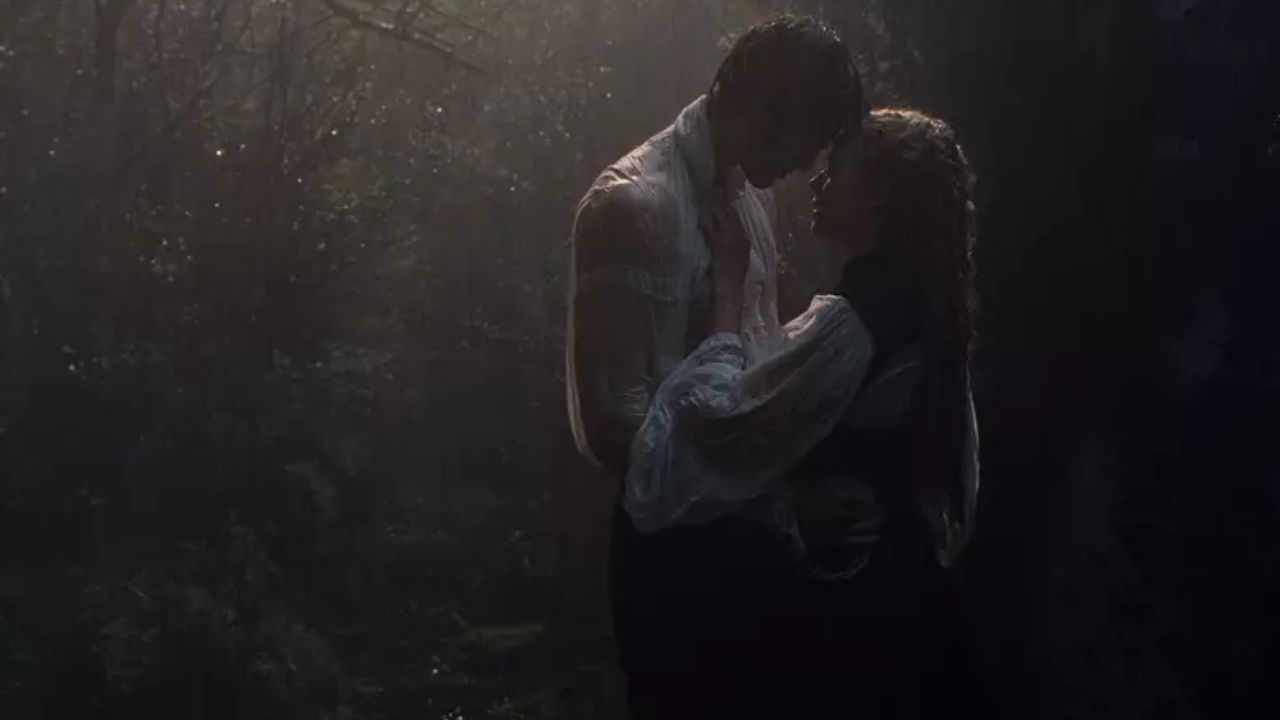
Fennell has explored class invasion before, most notably in Saltburn, but the near-contemporary setting of that film struggled under her heavy-handed instincts. Here, the heightened artifice works better. The moors become a theatrical fantasy space, untethered from realism and closer to melodrama by design. Sex and death are repeatedly intertwined—from an opening sequence that confuses erotic sound with execution, to lovers who seem to prefer annihilation over separation.
Not all of it lands. The emotional scale is so exaggerated that genuine feeling sometimes collapses under its own weight. Where Andrea Arnold’s 2011 adaptation sought raw credibility, Fennell is uninterested in restraint. Compared to Arnold’s grim, earthy sincerity, this version feels knowingly artificial—more pose than prayer. Even measured against Fennell’s own earlier work, including Promising Young Woman, the film lacks the sharp, live-wire impact that once made her provocations feel dangerous rather than decorative.
The film does gesture toward Brontë’s narrative complexity through the character of Nelly Dean, played by Hong Chau. Traditionally the novel’s unreliable witness, Nelly is here confronted directly by Cathy over her role in the lovers’ undoing—a rare moment of self-awareness in a film otherwise intoxicated by its own excess.
By the final act, grief arrives in operatic waves. Tears, recriminations, and grand gestures pile up until the movie risks emotional exhaustion. What remains is less a tragic romance than an extended performance of tragedy—quasi-erotic, pseudo-romantic, and deliberately overblown.
Fennell’s Wuthering Heights may not believe in the passionate truth of Cathy and Heathcliff’s love in the way Andrea Arnold once did. Instead, it revels in the spectacle of desire—messy, self-indulgent, and often unserious. Whether that makes it exhilarating or empty will depend on the viewer’s tolerance for melodrama dialed up to eleven. What’s undeniable is that Fennell has created a version of Brontë’s story that refuses to be polite, faithful, or forgettable.
Rating – ★★★☆☆ (3 out of 5).