


Psychological Thrillers thrive in the uneasy space between what is said and what is true, and that is precisely where Unreliable Narrators take hold. Readers are drawn not just by crime, danger, or the promise of a final twist, but by the lingering suspicion that the voice guiding them may be flawed—mistaken, evasive, traumatized, delusional, or even intentionally deceptive. As Britannica explains, an unreliable narrator is someone who misinterprets events or arrives at faulty conclusions, and that gap between perception and reality becomes the driving force of the narrative. Psychological tension feeds on uncertainty and instability, making Unreliable Narrators an almost perfect fit for Psychological Thrillers, where doubt itself becomes the most compelling character.
The appeal starts with a simple human instinct: we hate not knowing
Readers may say they love a twist, but what they really love is the long stretch before the twist lands. Suspense is not a minor seasoning in thriller fiction; it is the main course. Research on tension and suspense describes these emotions as powerful experiences rooted in conflict, instability, dissonance, and uncertainty, and it notes that media entertainment often draws its appeal from the very feelings people usually try to avoid in daily life. In narrative studies, suspense can be created simply by delaying an outcome, while curiosity comes from being shown the outcome before the missing pieces that explain it. In other words, thrillers are not only selling answers. They are selling the delicious discomfort of being kept in the dark.
That is why an unreliable narrator feels like a perfect match for the psychological thriller. The narrator does not just withhold information; the narrator destabilizes the reader’s confidence in the entire storyworld. Every memory may be partial. Every confession may be self-serving. Every “fact” may be a coping mechanism in disguise. The result is not passive reading but active suspicion. Instead of asking, “What happens next?” the reader is also asking, “What is this voice hiding from me?” That second question is where the real obsession begins.
Unreliable narration turns reading into a mental game
There is a reason psychological thrillers feel so immersive: they force readers to work. A 2023 study on reader engagement in literary fiction found that engagement is a challenging and context-dependent phenomenon, shaped by individual differences and textual qualities. Unreliable narration exploits that fact beautifully. It makes the reader assemble meaning, test possibilities, and revise assumptions in real time. You are not just consuming the book; you are interrogating it.
That cognitive labor is part of the pleasure. A classic study of discourse structure showed that suspense, curiosity, and surprise can all be shaped by the order in which events are told, and that suspense can remain strong even when readers already know the ending. Another line of research found that suspense during reading is linked with brain activity involved in social cognition and predictive inference. So when a thriller hands the narration to an unstable or unreliable mind, it is not simply making the story more dramatic. It is engaging the brain’s prediction machinery and forcing the reader to keep recalculating what might be true.
Uncertainty is uncomfortable, but it is also intoxicating
There is a paradox at the heart of thriller reading: uncertainty is unpleasant, yet readers seek it out anyway. Psychological research on curiosity and uncertainty shows that uncertainty can increase curiosity even as it lowers happiness, which helps explain why people keep returning to stories that refuse to give them clean answers. Curiosity is often described as a response to an information gap — the mind notices that something does not add up and starts pressing toward closure. An unreliable narrator creates exactly that gap, but on a grander scale. The gap is not just about one missing detail. It is about the narrator’s entire relationship with reality.
This is why readers often describe psychological thrillers as “addictive.” The word is not accidental. The story keeps producing a tiny internal itch: a mismatch between what the narrator says and what the reader suspects. Each chapter promises relief, but also postpones it. That delay matters. Studies of suspense note that the emotional pull of a narrative comes from anticipation of uncertain but significant events, while curiosity research shows that resolving uncertainty can itself feel rewarding. The unreliable narrator keeps both systems active at once: the fear of not knowing and the pleasure of finally knowing.
Readers like being made to doubt, because doubt feels intelligent
One reason unreliable narrators are so beloved is that they invite readers to feel clever. The book is not just telling a story; it is offering a challenge. Who is lying? Who is confused? Which details are planted? Which memories are rewritten? When readers catch a contradiction before the reveal, the payoff is not merely shock. It is recognition. They feel they have seen through the fog. And when they do not catch it, the eventual reveal still feels earned because the story has been training them to participate from the first page.
That experience is especially strong in psychological thrillers because the genre is built around mental pressure rather than external spectacle. A thriller can throw bodies, suspects, and clues at the page, but a psychological thriller wants something subtler: a slow corrosion of certainty. The reader starts out trusting the narrative frame, then notices small fractures, and then realizes that the frame itself may be broken. This progression mirrors the way suspense works in general: not as a single shock, but as a sustained state of predictive tension. Readers keep reading because they want to settle the uncertainty they have been invited to notice.
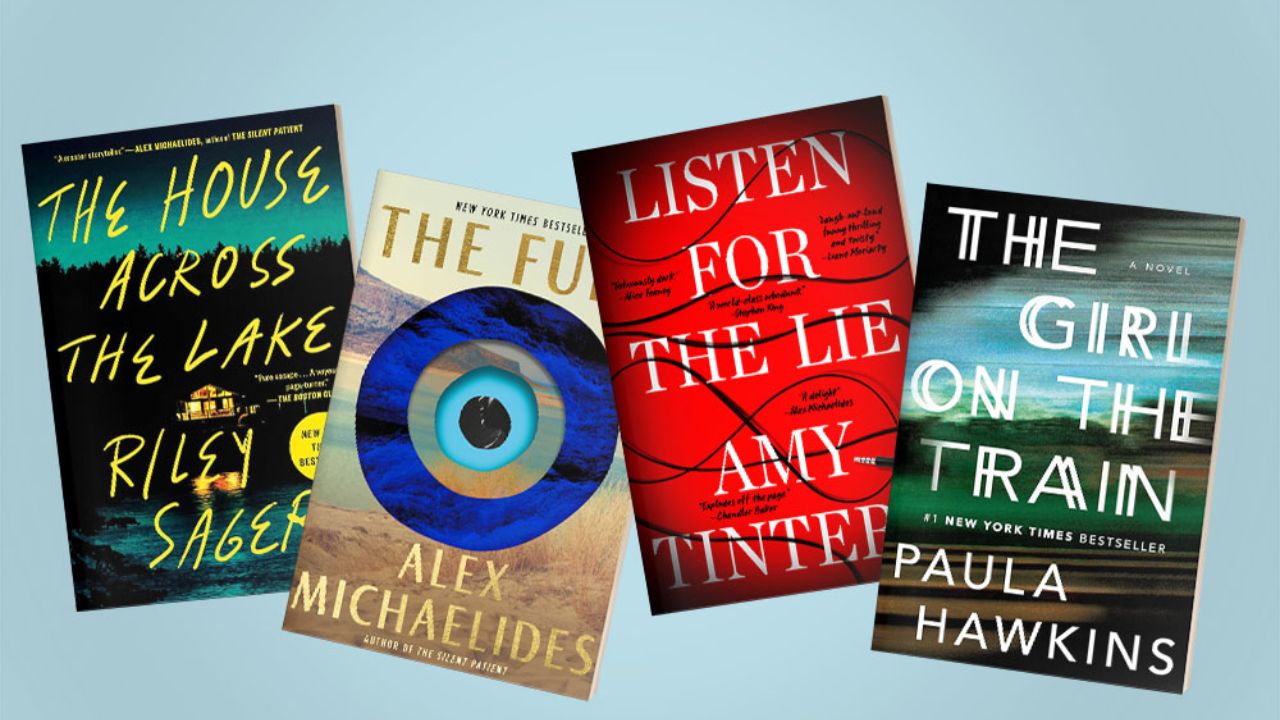
Unreliable narrators are intimate in a way that ordinary narrators are not
A reliable narrator gives information. An unreliable narrator gives access. That is the secret. Readers often feel closer to a flawed, compromised voice than to a perfectly honest one because unreliability creates intimacy through leakage. The narrator is trying to control the story, but the cracks show: the defensive tone, the missing piece, the overexplained alibi, the odd emotional emphasis. Readers do not just observe the mind on the page; they enter it, scan it, and listen for the tremor beneath the words. Britannica’s distinction between the unreliable narrator and the naive narrator is useful here: in both cases, the storyteller’s understanding is limited, but the reader is invited to see beyond that limitation. That shared gap between narrator and audience is where fascination lives.
Psychological thrillers make especially good use of that intimacy because they are rarely content to ask only, “Who did it?” They ask, “What kind of mind could tell this story this way?” Once the reader starts answering that question, the novel stops being a puzzle alone and becomes a character study. The pleasure comes from recognizing that the narrator is not just withholding facts, but revealing personality through the very act of hiding them. A story told by a fractured consciousness can feel more emotionally honest than one told by an orderly, dependable voice, because real human beings are rarely orderly for long.
The best unreliable narrators do not just lie; they self-edit
Some unreliable narrators are liars, but the most interesting ones are usually more complicated. They are defensive. They are ashamed. They are grieving. They are trying to protect the image they have of themselves. They may not even realize they are unreliable. That is why this device keeps working across decades of fiction: it maps onto a very human habit of narration, which is to explain ourselves in the best possible light. The story a person tells about their life is rarely a raw transcript. It is a version, shaped by memory, fear, desire, and self-preservation. Thrillers exploit that universal habit and then sharpen it until it becomes dangerous.
This is also why the trope feels emotionally plausible. Readers do not need to believe that every narrator is clinically unstable or monstrously deceitful. They only need to recognize the softer truth: people are often selective without meaning to be. They leave out what hurts. They smooth over contradictions. They remember the part that flatters them. Once a thriller taps into that ordinary human slippage, the narrator stops feeling like a gimmick and starts feeling like a psychological portrait. The unease deepens because the story is no longer about a stranger’s distortion. It is about the kinds of distortions most people carry, in smaller doses, every day.
The trope works because it feeds both curiosity and moral concern
Suspense is not just about uncertainty; it is also about caring what happens. Research on suspense argues that the emotion depends not only on lack of certainty but also on moral concern for the outcome. That explains why readers can become so attached to unreliable narrators even when they distrust them. The narrator may be compromised, but the stakes still feel personal. Is someone in danger? Is the narrator dangerous? Is innocence being destroyed? Is the truth going to free someone or ruin them? The reader’s emotional investment keeps going even when trust collapses.
This is one reason the best psychological thrillers feel less like puzzle boxes and more like moral weather systems. The reader is not only sorting clues. The reader is judging risk, motive, guilt, and consequence. That layered involvement gives the genre its special charge. A pure mystery may focus on solution; a psychological thriller wants consequence. The unreliable narrator intensifies both, because the reader must decide not only what happened, but what kind of person is telling the story and what that means for everyone caught inside it.
Readers come back because the reveal changes the whole story
A good twist is satisfying. A good unreliable narrator is transformative. Once the truth emerges, the reader does not merely learn a fact; the reader reinterprets the entire book. Earlier scenes acquire new meanings. Casual lines turn into warnings. Emotional outbursts become clues. Silence becomes evidence. Research on narrative structure shows that surprising events can improve how well readers represent a story’s events in memory, which helps explain why these books linger. They invite a second mental pass, and that second pass can be even more pleasurable than the first.
That is the hidden genius of the device. It gives a thriller replay value. Even if readers know the ending, the story is still alive because the earlier pages now behave differently. Suspense research has shown that tension can survive even when the destination is known, because the mind can still imagine uncertainty along the way. That means the best unreliable narrators do not just fool readers once. They create a book that remains active after the final page, because every reread becomes a hunt for the earliest sign that the truth was wobbling all along.
The trope has a deep literary lineage, and readers keep rewarding it
Unreliable narration is not a recent trick invented for bestseller lists. Britannica points to classic examples such as Ford Madox Ford’s The Good Soldier and Robert Louis Stevenson’s Treasure Island, and Poe’s “The Tell-Tale Heart” remains a foundational study in a mind unraveling under its own pressure. The modern psychological thriller inherited that tradition and turned it into a commercial and artistic engine. Readers have repeatedly proven that they are willing to follow a fractured voice as long as the fracture feels psychologically meaningful and narratively controlled.
What keeps the device fresh is not the twist itself, but the emotional contract it creates. The reader agrees to be misled for a while in exchange for a richer final understanding. That bargain only works when the narrative remains emotionally and intellectually coherent, which is why the strongest thrillers do not just hide facts. They organize doubt. The reader senses that the story is playing fair, even while it is refusing to be simple. That is the sweet spot where obsession takes root.

When it fails, readers feel cheated; when it succeeds, they feel awakened
The line between a brilliant unreliable narrator and an annoying one is surprisingly thin. If the character’s distortion feels arbitrary, the reader feels manipulated. If the story hides information without planting meaningful pressure points, the reveal can seem cheap rather than devastating. The best thrillers avoid that trap by making the narrator’s unreliability feel inevitable once exposed. The clues are there, but they are embedded in character, tone, and structure instead of shouted from the rooftops. In that sense, the device is not only about surprise. It is about coherence after surprise.
That is also why readers keep craving this kind of story. A strong unreliable narrator does something rare: it respects the reader’s intelligence while still allowing the book to spring its trap. It makes the audience suspicious, but not cynical. It makes them anxious, but also eager. It turns reading into a psychological pursuit, a moral examination, and a puzzle hunt all at once. That layered experience is hard to replace, which is why psychological thrillers keep returning to the same device with fresh variations. The unreliable narrator does not just tell the story. It turns the act of reading into the story itself.
The bottom line
Readers crave unreliable narrators because these voices do more than mislead. They activate curiosity, deepen suspense, invite moral judgment, and make the reader part of the machinery of meaning. The genre works because uncertainty is not a defect in the reading experience; it is the charge that powers it. Psychological thrillers understand this better than almost any other form of fiction. They know that the mind likes to solve puzzles, but it loves to doubt itself even more. And that is why the unreliable narrator keeps winning.