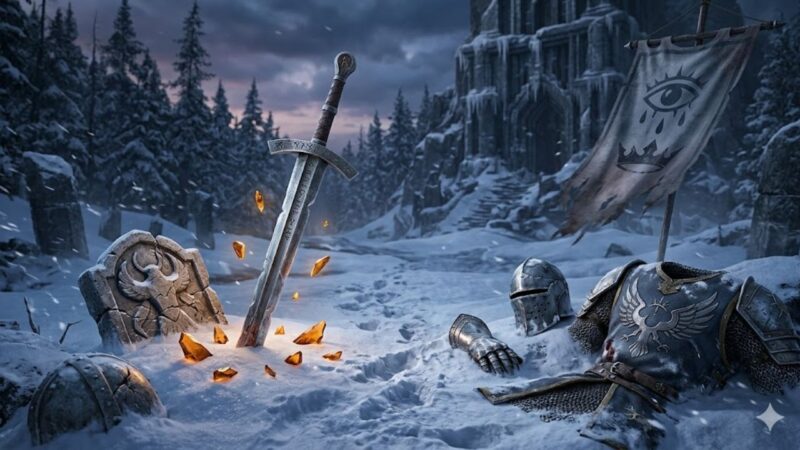

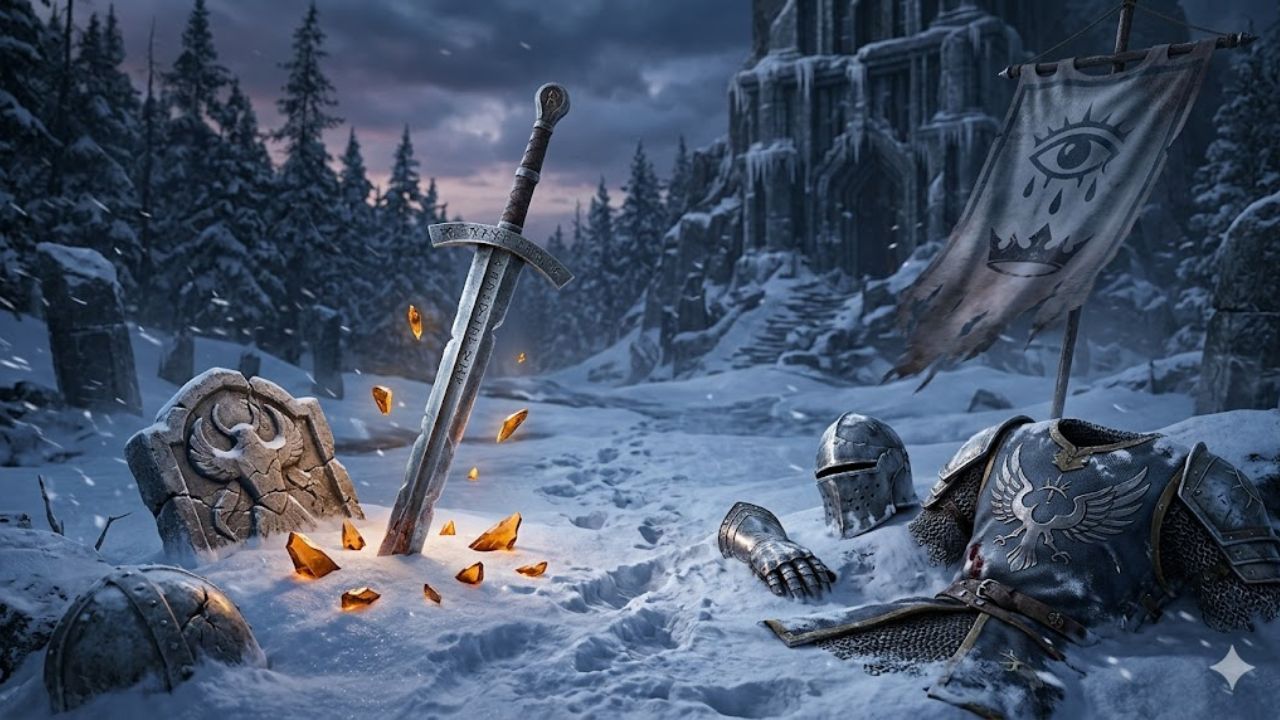
There is a particular ache at the center of the Fallen God trope — and romantasy readers have proven, again and again, that they cannot get enough of it. An immortal being who bent entire worlds to his will, now undone. Not by battle or by fire, but by something far more devastating: the quiet, stubborn love of one mortal woman who refuses to flinch. It sounds almost absurd on paper. A god, reduced. A divine being brought low, humbled, desperately in need. Yet the trope has become one of the most searched, most gifted, most breathlessly discussed in the entire romantasy genre — and for reasons that go far deeper than wish fulfillment.
What Exactly Is the Fallen God Trope?
At its core, the Fallen God story follows a deity — or deity-adjacent being — who has lost something essential. It might be their power, stripped away as punishment or sacrifice. It might be their divinity itself, relinquished for love or shattered by grief. It might be something more internal: a god who still holds every ounce of their cosmic power, but who has lost the will to use it, hollowed out by centuries of isolation.
What remains is a being of staggering capacity and profound damage. Ancient. Dangerous. Capable of terrible things. And — crucially — alone in a way that defies ordinary loneliness. When you have existed since before the world had a name, loneliness stops being an emotion and becomes a condition of existence.
The heroine (or hero — the trope appears across genders, though the brooding male fallen deity remains the dominant configuration) enters this landscape of ruin. She did not ask for this. She does not particularly want to be here. And yet she stays — out of circumstance, out of stubbornness, out of something she cannot quite name — long enough for the god to remember that he is capable of wanting something.
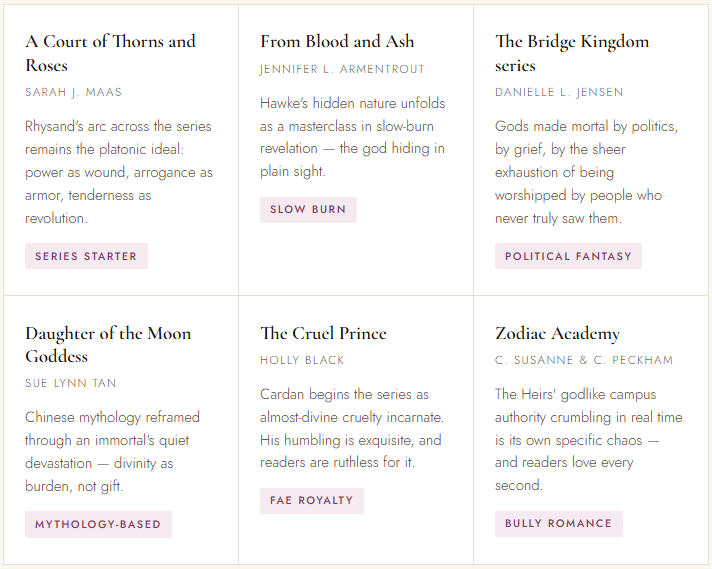
The Six Books Driving the Obsession
Certain titles have become almost synonymous with the trope. Here is where readers keep returning:
The Psychology of the Fall
Romance as a genre has always been, at its foundation, a fantasy of being truly seen. But the Fallen God trope takes that fantasy and amplifies it to a near-theological register. The question at the heart of every romance — can someone love me completely, knowing everything I am? — becomes, in this configuration, almost cosmically extreme.
This is a being who has been worshipped. Who has received the ardent devotion of entire civilizations. And who is, despite all of that — perhaps because of all of that — profoundly, catastrophically unknown. Worship is not intimacy. A thousand people kneeling cannot tell you whether you are worth being known.
The most intoxicating thing the heroine can do is refuse to kneel — and then reach for his hand anyway.
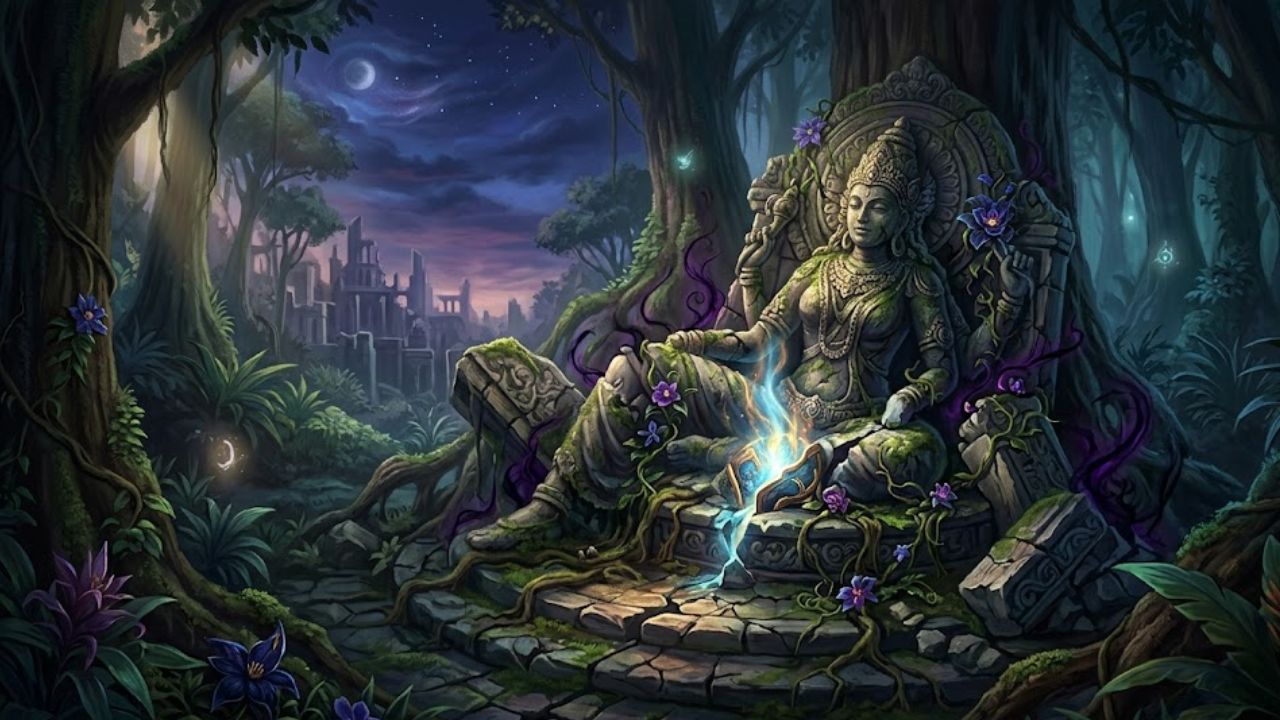
The mortal heroine (or whoever occupies this structural role) does something radical: she sees him without the iconography. She responds to him as a person, not a symbol. She argues with him. She is unimpressed by the divine. And this — this utterly ordinary human audacity — is what breaks through centuries of armor in ways no devoted worshipper ever could.
The Competence Fantasy Turned Inward
Part of what makes the trope so delicious is its inversion of the competence fantasy. Readers love a hero who is extraordinarily capable. The Fallen God is this — and then some. But the fall removes that competence from its usual context. He can still level mountains. He cannot manage to sleep through the night. He can bend time. He cannot stop thinking about her.
This is the emotional payload. The most powerful being in the world, undone by feelings he does not know how to hold. There is enormous satisfaction in watching someone of that magnitude become genuinely flustered by love — not because love makes him weak, but because it demands a kind of vulnerability that power cannot substitute for.
The Permission to Be Difficult
The Fallen God is almost never easy to love. He is cold, or cruel, or dangerous. He has done terrible things — sometimes very recently, sometimes in the deep past he thought he had moved beyond. The heroine’s love does not erase this. It does not excuse it. But it does — and this is the part readers seem to need — continue anyway.
There is something quietly radical in that narrative structure. The idea that someone could know the worst of you and not leave. Not because they are naive or foolish, but because they have decided that you, specifically, are worth the difficulty. For readers who have ever felt like too much — too complex, too damaged, too hard to love consistently — the Fallen God story is a kind of permission slip.
The Anatomy of a Perfect Fallen God
- Staggering PowerThe fall must mean something. The higher the original position, the more devastating — and compelling — the descent.
- Ancient WoundNot just arrogance, but grief. Something happened centuries ago that turned a being of light into one of walls.
- Specific TendernessHe is ruthless with everyone. He is careful with her. The contrast is the whole game.
- The Moment He Chooses VulnerabilityUsually late in the story. Usually devastating. Readers will underline it, screenshot it, and quote it for years.
- Consequences That CostThe best iterations don’t let him off the hook entirely. Love redeems — it doesn’t erase. The accounting still matters.
Why the Trope Works Especially Well in Romantasy
Contemporary romance has its own version of the damaged, powerful love interest — the billionaire, the grumpy doctor, the tattooed bad boy. But romantasy does something distinctive: it externalizes the metaphor entirely. The internal emotional state becomes the literal world. His power is not symbolic of control issues; his power is control, built into the fabric of reality.
This allows romantasy authors to write emotional dynamics that would feel too intense or too convenient in a contemporary setting. When a god restructures his entire existence because of one woman, it is not codependency — it is mythology. The genre gives the trope scale to breathe in.
Fantasy also allows for a longer timeline. One of the particular pleasures of the Fallen God story is the accumulation of centuries — the weight of all that time, all that isolation, suddenly interrupted by the warmth of one specific person. Contemporary romance cannot give us five hundred years of loneliness. Fantasy can. And those five hundred years are doing enormous narrative work.
The Heroine’s Side of the Story
It would be a mistake to read the trope as purely a fantasy about the god. The heroine who stands at the center of these stories is doing something genuinely remarkable — and underappreciated in the critical conversation around the genre.
She does not falter in the face of the divine. She holds herself together when every structural force in the world is arrayed toward making her smaller, more deferential, less. She refuses the role of worshipper when that is precisely what a god is accustomed to receiving. And she does all of this without becoming invulnerable herself — she remains human, breakable, genuinely at risk.
That combination — soft enough to feel fear, strong enough to refuse deference — is its own fantasy. Readers do not just want to be loved by the Fallen God. They want to be the kind of person who could stand before him without flinching. The trope is equally aspirational for the figure at its center as for the figure doing the falling.
The Criticism Worth Taking Seriously
The Fallen God trope has its detractors, and some of their concerns are worth sitting with honestly. When the god’s darkness becomes too literal — when the “terrible things he has done” slide into violence against the heroine herself, dressed up as passion — the trope curdles. The line between complicated and actively harmful love interest is not always drawn with adequate care.
There is also a tendency, in weaker executions, toward what readers have started calling “redemption by proximity” — the idea that being near a good woman is sufficient to transform centuries of cruelty into something bearable. The best entries in the genre resist this. They require the god to do something himself. To change not because love magically fixed him, but because he chose to be different, imperfectly and with genuine difficulty, over time.
Readers are increasingly sophisticated in parsing this distinction. The BookTok discourse around which Fallen Gods “earned it” and which ones were let off too easily is remarkably rigorous — often more so than mainstream literary criticism of the same books.
What Comes Next for the Trope
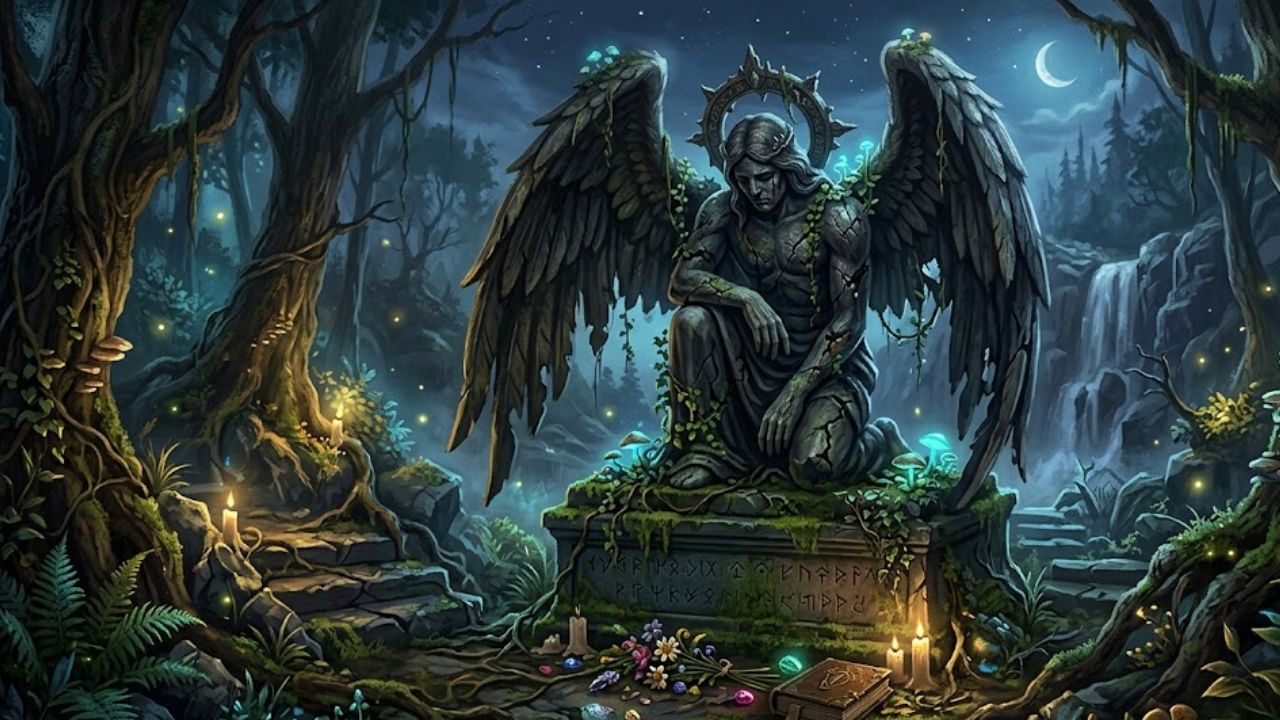
The romantasy market shows no sign of exhausting its appetite for the Fallen God, but the most compelling new entries are beginning to complicate the formula. Fallen goddesses whose power was taken from them by men. Fallen gods who must reckon not just with the heroine’s love but with the people they hurt across millennia. Stories that place the mortal character’s interiority at the center rather than treating her as primarily a catalyst for divine transformation.
The bones of the trope — immense power, immense damage, one human connection that makes it possible to begin again — are sturdy enough to hold all of this. The Fallen God story, at its best, has always been about what it means to choose to be known when you have spent centuries believing that safety required obscurity.
That is not a fantasy that ages. That is a human need dressed in ichor and starlight. And romantasy readers, who have always understood that the fantastical can hold truths the realistic cannot, will keep reaching for it.