
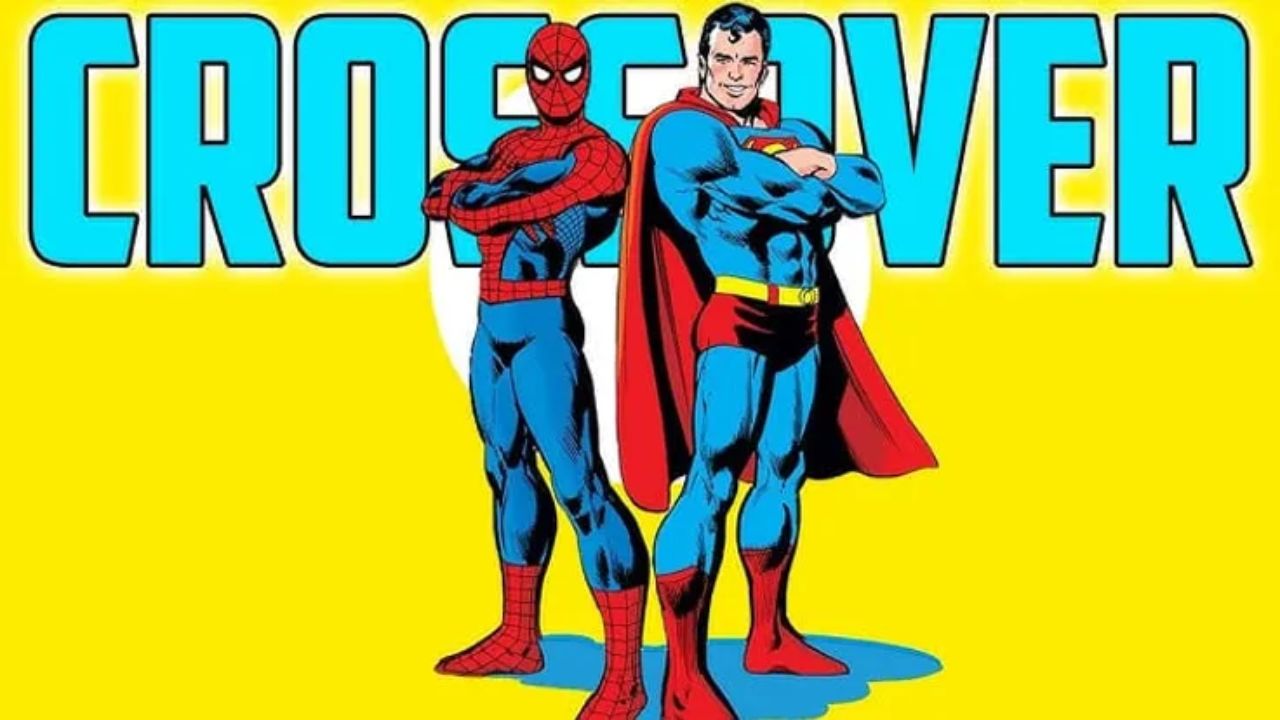
In the annals of American pop culture, few events carry the tectonic weight of early 1976, a moment when the rigid tectonic plates of the comic book industry shifted to allow for a phenomenon previously thought impossible. The publication of Superman vs. The Amazing Spider-Man: The Battle of the Century was not merely a commercial product; it was a cessation of hostilities in a decade-long cold war between National Periodical Publications (DC Comics) and Marvel Comics. For the first time, the two dominant deities of the superhero pantheon—Superman, the solar-powered demigod of the Golden Age, and Spider-Man, the neurotic, radioactive everyman of the Silver Age—shared the same stage.
As the industry celebrates the 50th anniversary of this landmark publication in 2026, the resonance of that initial handshake between corporate giants has only deepened. The 1976 Treasury Edition stands as a monument to a specific era of ambition, where the boundaries of intellectual property were briefly porous enough to allow for a story that captured the collective imagination of a generation. This report provides an exhaustive, forensic analysis of the genesis, execution, and enduring legacy of this collaboration. It explores the intricate negotiations that bridged the cultural divide between the two publishers, the artistic alchemy required to balance two distinct visual languages, and the narrative strategies employed to reconcile the god-like power of a Kryptonian with the street-level agility of a Queens teenager.
To understand the magnitude of this event, one must first strip away the modern ubiquity of crossovers. In the contemporary media landscape, characters cross boundaries with regularity in video games and multiverse films. In 1976, however, DC and Marvel were distinct, fortified citadels. They represented opposing philosophies of heroism, storytelling, and corporate identity. The notion that they would collaborate was akin to Coca-Cola and Pepsi co-producing a beverage. This report details how that impossible dream was realized, examining the precedent of The Wizard of Oz, the diplomatic maneuvering of Stan Lee and Carmine Infantino, and the masterful craftsmanship of Gerry Conway and Ross Andru. Furthermore, it analyzes the revitalization of this partnership half a century later, as the publishers reunite in 2026 to honor the original “Battle of the Century” with new stories that reflect the evolved sensibilities of the modern medium.
Part I: The Cold War of Comics – Industry Context of the 1970s
The Cultural Divide: DC’s Establishment vs. Marvel’s Insurgency
To fully appreciate the breakthrough of 1976, one must first understand the ferocity of the rivalry that preceded it. Throughout the 1960s, Marvel Comics, under the editorial voice of Stan Lee and the artistic visionary Jack Kirby, had aggressively eroded DC’s long-standing dominance. DC Comics was the establishment—the home of Superman, Batman, and Wonder Woman. Their stories were often characterized by a certain polish, a rigid adherence to plot formulas, and a tone that spoke to an idealized, slightly sterilized version of authority. They were the “Cadillacs” of comics: reliable, big, and conservative.
Marvel, by contrast, positioned itself as the counter-culture upstart. The “Marvel Age” introduced heroes with neuroses, financial troubles, and interpersonal conflicts. Spider-Man was the flagship of this new wave—a hero who could save the city but still fail to pay his rent. Marvel’s “Bullpen Bulletins” and letters pages fostered a tribal loyalty among readers, with Stan Lee often referring to the competition as “Brand Echh.” This marketing strategy was brilliant but divisive, creating a fanbase that often defined itself by which publisher they pledged allegiance to.
By the early 1970s, the landscape had shifted. DC, recognizing the changing tides, had attempted to modernize, even poaching Jack Kirby from Marvel in a high-profile defections that sent shockwaves through the industry. However, the animosity remained. The competition for newsstand shelf space—a finite resource in the era before the direct market of comic shops—was a zero-sum game. Every inch of rack space occupied by a Marvel title was an inch denied to DC. In this environment, the idea of collaboration was not just creatively unlikely; it was strategically counter-intuitive.
The Economic Imperative
Despite the rivalry, both companies faced significant economic headwinds in the mid-1970s. The comic book medium was grappling with rising paper costs, shrinking distribution channels, and the encroachment of television and other media on children’s attention spans. The “Treasury Edition” format—oversized, tabloid-scale comics that sold for a premium price (typically $1.00 to $2.00, compared to the 25 or 30 cents of standard issues)—had emerged as a lucrative revenue stream. These massive books, often reprints of classic stories, offered a prestige product that stood out on newsstands.
It was within this economic context that the logic of a crossover began to take root. Both DC and Marvel possessed intellectual property of immense value, but the novelty of standard superhero stories was waning for the mass market. A crossover offered something that neither company could produce alone: an Event. It promised to reach beyond the hardcore hobbyist to the casual reader, the lapsed fan, and the general public who recognized the icons of Superman and Spider-Man from television and merchandise. The economic potential of such a union began to outweigh the tribalistic pride of the publishers.
Part II: The Genesis – Diplomacy and The Wizard of Oz
The Precursor: A Yellow Brick Road to Détente
Contrary to popular belief, the first official collaboration between DC and Marvel was not the meeting of their superheroes, but a joint venture centered on a completely different American mythology: The Wizard of Oz. In 1975, a peculiar coincidence occurred—both publishers began developing comic book adaptations of the classic 1939 MGM film The Wizard of Oz simultaneously.
The film rights were complex, but the public domain status of L. Frank Baum’s original book created a gray area that allowed for competing adaptations. Stan Lee, upon learning that DC was also planning an Oz book, realized that a head-to-head release would likely cannibalize sales for both parties. In a move that demonstrated rare corporate statesmanship, Lee contacted his counterpart at DC, publisher Carmine Infantino. He proposed a radical solution: rather than compete, they should combine their efforts and publish a single, definitive adaptation.
The result was MGM’s Marvelous Wizard of Oz, released in late 1975. While published under a joint banner, the production was largely a Marvel affair, utilizing the creative team of writer Roy Thomas and artist John Buscema, who were already deep into development on the Marvel version. However, the significance of this project lay not in its creative execution, but in its legal infrastructure. It proved that the two companies could sign a contract, share production costs, navigate the distribution logistics, and, most importantly, split the profits without litigation. The Wizard of Oz project was the icebreaker—the diplomatic proof-of-concept that signaled the possibility of a far more ambitious alliance.
The Broker: David Obst’s Vision
With the channel of communication open, the stage was set for the main event. The catalyst was David Obst, a literary agent and author who operated outside the insular world of comic book editorial offices. Obst, looking at the broader pop culture landscape, saw the potential for a blockbuster. At the time, Warner Bros. was in the early stages of developing the Superman feature film (which would be released in 1978), and Spider-Man was gaining traction through television movies and aggressive merchandising.
Obst approached Stan Lee and Carmine Infantino with the concept of a film crossover, but the logistics of film production—rights issues, studio rivalries, budget constraints—were insurmountable. However, the idea of a comic book crossover was tangible. Obst acted as the neutral broker, a “Kissinger of Comics,” facilitating the negotiations that would bring the two publishers to the table.
The Deal: Mutually Assured Success
The negotiations for Superman vs. The Amazing Spider-Man were defined by a rigorous adherence to equality. Both Lee and Infantino were acutely aware that any perception of one company “winning” the crossover would be disastrous for their respective brands. The contract they hammered out was a masterpiece of corporate equity:
- Joint Publication: The book would be co-published, with both logos appearing on the cover.
- Profit Sharing: All net profits would be split 50/50 between National Periodical Publications and Marvel Comics Group.
- Creative Division: To ensure neither house style dominated, the creative duties were split down the middle. DC would provide the writer (Gerry Conway) and Marvel would provide the artist (Ross Andru).
- Editorial Oversight: The project would be overseen by a committee of editors from both sides, requiring consensus on major plot points and character depictions.
This structure was designed to neutralize the rivalry. By mandating collaboration at the creative level, the companies ensured that the final product would be a hybrid of both sensibilities.
Part III: The Architects of the Alliance
The Writer: Gerry Conway’s “Dual Citizenship”
The selection of Gerry Conway as the screenwriter for this historic project was perhaps the most critical personnel decision of the entire endeavor. In 1976, Conway was a unique figure in the industry—a writer who possessed what could be termed “dual citizenship.” He had risen to prominence at Marvel at a profoundly young age, succeeding Stan Lee on The Amazing Spider-Man and scripting seminal storylines, including the controversial “The Night Gwen Stacy Died.” By the mid-70s, however, he had crossed the aisle to DC Comics, revitalizing titles like Justice League of America.
Conway’s dual experience meant he was fluent in the dialects of both universes. He understood the “Marvel Style”—characterized by internal angst, quippy dialogue, and the “illusion of change”—as well as the “DC Style”—defined by plot-driven narratives, iconic stoicism, and legacy. He knew the voice of Peter Parker as intimately as he knew the voice of Clark Kent.
In interviews, Conway has noted that the challenge was not just writing the characters, but balancing their narrative weight. He had to construct a story where neither hero felt like a guest star in the other’s book. His script required a mathematical precision, ensuring that the emotional beats were distributed as evenly as the punches.
The Artist: Ross Andru’s Section Balance
If Conway was the diplomatic voice, Ross Andru was the structural engineer. Like Conway, Andru was an artist who had worked extensively for both companies. He was the definitive Amazing Spider-Man artist of the mid-70s, but he had also spent years drawing Wonder Woman and The Flash for DC. His style was grounded, detailed, and dynamic—capable of rendering the acrobatic contortions of Spider-Man and the monolithic power of Superman with equal fidelity.
Andru faced an unprecedented artistic challenge: he had to visualize a world where Metropolis and New York City coexisted, and where the two heroes appeared to belong to the same reality. To manage the strict requirements of the contract, Andru implemented a rigorous “Section Balance Approach” to the layout of the 96-page giant.
A statistical analysis of the finished book reveals the obsessive level of symmetry Andru achieved:
- Panel Parity: The final count shows Superman appearing in 168 panels and Spider-Man in 164 panels—a difference of less than 1%. This statistical near-tie was no accident; it was the result of meticulous planning in the breakdown phase.
- Splash Page Equity: Both characters were featured in exactly 8 “Major Panel Appearances” (full splash or double-page splash images), ensuring that each fanbase received an equal number of “poster-worthy” moments.
- Villain Screen Time: The antagonists were similarly balanced, with Lex Luthor appearing in 65 panels and Doctor Octopus in 63.
- Supporting Casts: The supporting ensembles were also weighed, with Clark Kent’s circle (Lois Lane, Perry White, Jimmy Olsen) appearing in 55 panels and Peter Parker’s (Mary Jane Watson, J. Jonah Jameson, Robbie Robertson) in 52.
This visual equilibrium was essential. It prevented the book from feeling like a “Superman story featuring Spider-Man” or vice versa. The rhythm of the art shifted the focus back and forth with a metronomic regularity, creating a reading experience that felt truly shared.
Part IV: The Hidden Hands – Art Corrections and Studio Politics
Despite the codified equality of the contract, the production process was fraught with anxiety over brand representation. This anxiety manifested most famously in the art corrections performed by uncredited legends Neal Adams and John Romita Sr.
Neal Adams: Redefining the Man of Steel
As the pencil pages arrived at Continuity Associates—the studio run by Neal Adams and Dick Giordano—for inking, a problem emerged regarding the depiction of Superman. While Ross Andru was a competent draftsman, his version of Superman was seen by some at DC as lacking the majesty required for the character’s flagship crossover. Neal Adams, arguably the definitive Batman and Superman artist of the early 70s, took it upon himself to intervene.
According to inker Dick Giordano, Adams began to redraw the Superman figures directly on the boards. He altered the anatomy to make Superman more muscular, more imposing, and more consistent with the “Adams style” that defined DC’s high-end output at the time. He reshaped the face to be more classically handsome and heroic. Crucially, these changes were made without Ross Andru’s knowledge or consent. Giordano and the production team kept the revisions secret to avoid offending Andru, who was a respected veteran. The result is a Superman that leaps off the page with a distinct vitality, his cape dynamics and facial expressions carrying the signature intensity of Neal Adams.
John Romita Sr.: Protecting the Spider
On the Marvel side, Art Director John Romita Sr.—the man who had defined the “Romita Look” of Spider-Man in the 1960s—exercised similar vigilance. Romita reviewed the pages to ensure that Spider-Man and his supporting cast remained strictly “on model.” He performed numerous corrections to Spider-Man’s mask (ensuring the eye lenses were the correct shape and size) and redrew the faces of Peter Parker and Mary Jane Watson in several panels to align with Marvel’s house style.
Romita’s corrections were less about “improving” the art and more about brand consistency. Marvel characters had a specific aesthetic—a certain soap-opera glamour for the civilians and a specific kineticism for the heroes. Romita’s uncredited inks and touch-ups ensured that Marvel fans would instantly recognize their favorites, even in a book drawn by a freelancer associated with DC.
The Inking Assembly Line
The sheer size of the book—96 oversized pages—required an assembly line approach to inking. While Dick Giordano received the primary credit, the background inks were handled by a collective known as the “Crusty Bunkers.” This group included rising stars like Terry Austin and Bob Wiacek. This collaborative, industrial approach to the art was typical of the era but was pushed to its limit by the tight deadlines of the crossover. The seamless integration of these various hands—Andru’s layouts, Adams’ figures, Romita’s corrections, and the Bunkers’ backgrounds—is a testament to the professionalism of the Bronze Age production teams.
Part V: Narrative Deconstruction of the 1976 Crossover
The Narrative Device: Coexistence Over Multiverse
One of the most significant creative decisions made by Conway was to eschew the complex explanations involving parallel dimensions or the “Multiverse” that would characterize later crossovers (such as JLA/Avengers or Crisis on Infinite Earths). Instead, the story operates on a simpler premise: Superman and Spider-Man exist in the same universe and always have. They simply operate in different cities and have never crossed paths.
This “Coexistence Strategy” was a masterstroke of efficiency. It allowed the story to bypass pages of tedious exposition explaining how the heroes traveled between realities. It presented a world where Metropolis and New York City were neighbors. This decision grounded the story, making the meeting feel organic rather than cosmic. It allowed for casual interactions, such as Clark Kent and Lois Lane flying to New York for a press conference, treating the geography as matter-of-fact.
The “Meet Cute”: Alter Egos and Professional Rivalry
The story begins not with a clash of titans, but with a clash of professionals. Conway smartly leverages the civilian identities of the heroes—Clark Kent the journalist and Peter Parker the photographer. The inciting incident is a World News Conference in New York, covering a new NASA satellite, “ComLab One.” This setting allows for the supporting casts to mingle naturally.
The interactions are written with a keen awareness of the characters’ status. Lois Lane and Mary Jane Watson have a brief moment of friction, establishing MJ’s “party girl” attitude against Lois’s hard-nosed professionalism. Clark and Peter have a “meet cute” where Peter, ever the underdog, is awed by Kent’s reputation as a network anchor (a status quo for Clark in the 70s). These human moments serve to humanize the icons before the spandex comes out, fulfilling the “humanized” requirement of the narrative.
The Villains: Mirror Images of Ego
The choice of villains—Lex Luthor and Doctor Octopus—was thematic perfection. Both are scientific geniuses defined by their arrogance, yet they represent different scales of villainy. Lex Luthor is the global conqueror, the man whose ambitions threaten continents. Doctor Octopus is the obsessive, street-level megalomaniac, driven by a personal vendetta against Spider-Man.
In the narrative, the two villains meet in a federal super-prison and hatch a plan to escape. Their alliance is depicted as fragile from the start, a classic “villain team-up” trope where betrayal is inevitable. They steal the ComLab satellite to manipulate global weather patterns—a plot that raises the stakes to a level worthy of Superman while remaining grounded in the pseudo-science that fits Spider-Man’s world.
The “Battle of the Century”: Solving the Power Imbalance
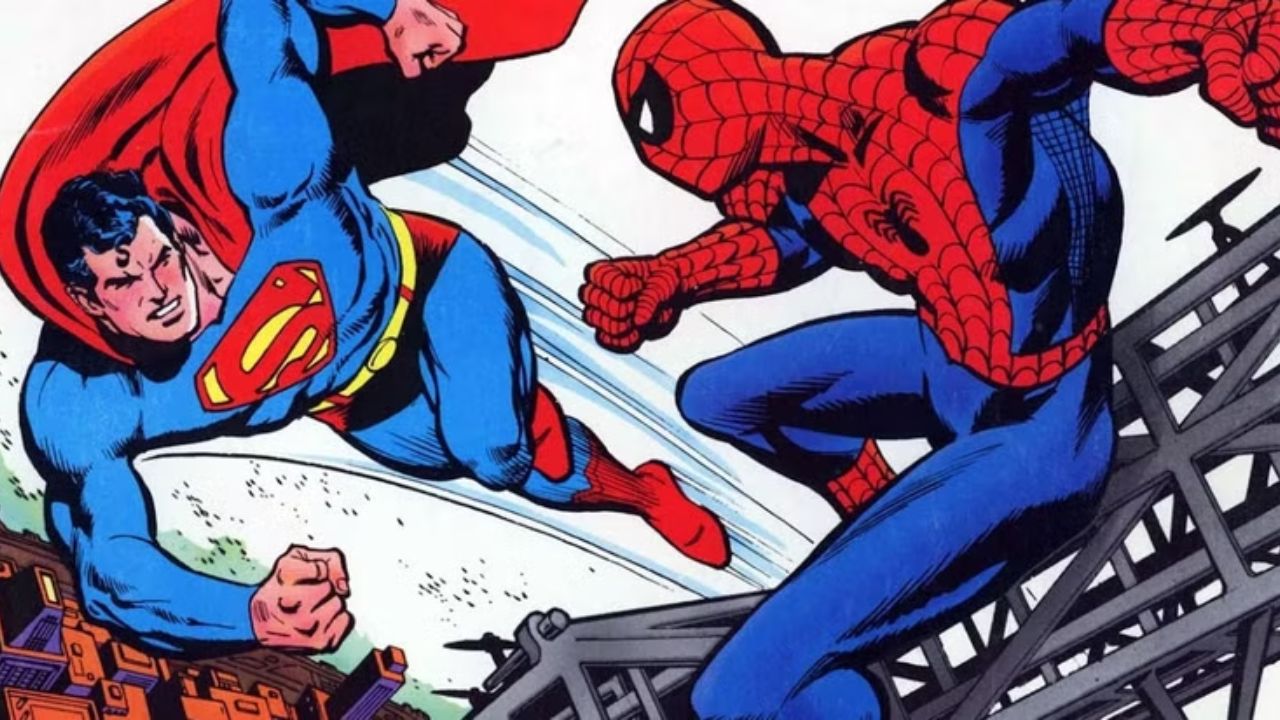
The central marketing hook of the book was the fight between the heroes. However, writing a credible physical confrontation between Superman and Spider-Man presented a massive logistical problem: the power disparity. Superman is a solar battery capable of moving planets and surviving nuclear explosions. Spider-Man, while possessing superhuman strength and agility, is essentially a mutate human. A single punch from Superman should, logically, end the fight instantly.
To resolve this, Conway and Andru utilized a plot device that has since become the gold standard for power-imbalanced crossovers: Red Sun Radiation.
- The Setup: Lex Luthor, disguised as Superman, kidnaps Lois Lane and Mary Jane Watson. Superman, arriving at the scene, mistakenly believes Spider-Man is involved.
- The Equalizer: Luthor, observing from a hidden location, fires a weapon that bathes the battlefield in Red Sun radiation.
- The Physics: The story posits that Red Sun radiation (which strips Superman of his powers) simultaneously supercharges Spider-Man’s radioactive blood.
- The Result: This clever inversion of physics levels the playing field. Spider-Man, now boosted, can hurt the depowered Superman. The ensuing battle sees Spider-Man knocking the Man of Steel through buildings, delivering the visual spectacle fans demanded.
The fight concludes when the radiation wears off. Spider-Man lands a punch that shatters against Superman’s invulnerable chest, hurting his own hand. This moment of realization—”It’s like hitting a steel wall!”—breaks the tension and allows the heroes to stop fighting and start talking. It preserves Superman’s status as the ultimate power while giving Spider-Man a credible moment of triumph.
The Climax: Complementary Heroism
The climax of the story takes the heroes to the villains’ satellite headquarters. Here, Conway showcases the complementary nature of their skill sets. Superman handles the “macro” threat—using his speed to stop a massive tidal wave generated by the weather machine, a feat only a god-like being could accomplish. Spider-Man handles the “micro” threat—infiltrating the station, battling the villains in close quarters, and using his scientific knowledge to disable the control panel.
This division of labor ensures that both heroes are essential to the victory. Superman saves the world; Spider-Man saves the day. The story ends with a double date, reinforcing the human connection that underpins the superheroics.
Part VI: The Sequel – A Shift in Philosophy (1981)
Five years after the triumph of the first crossover, Marvel and DC returned to the well with Superman and Spider-Man (Marvel Treasury Edition #28), released in 1981. If the first book was a perfect hybrid, the sequel was distinctly a product of the Marvel philosophy.
Jim Shooter’s “Marvelization” of Superman
Written by Marvel’s then-Editor-in-Chief Jim Shooter, the sequel is markedly different in tone. Shooter was known for his dense, verbose scripts and his adherence to strict character psychology. In this story, he attempts to transplant Superman into the Marvel Universe’s emotional framework.
The art by John Buscema (pencils) and Joe Sinnott (inks) depicts a Superman who is notably “dour” and “surly”. Unlike the bright, optimistic figure of the 1976 book, this Superman often speaks through clenched teeth, burdened by the weight of his responsibilities. Shooter highlights the contrast between the heroes’ public receptions: Superman is worshipped by the public in Metropolis, while Spider-Man is hunted as a menace in New York. This thematic exploration of the “hero’s burden” is a quintessentially Marvel approach, applying the “Parker Luck” filter to the Man of Steel.
The Plot: Doom and Parasite
The antagonist pairing in the sequel—Doctor Doom and the Parasite—offers a different dynamic. Doctor Doom brings a gravitas that rivals Superman, while the Parasite serves as the physical enforcer. The plot is complex, involving the Incredible Hulk and Wonder Woman as guest stars, and a scheme to turn all fossil fuels into sand to force the world to rely on Doom’s energy technology. While a commercial success, the sequel is often viewed as less “historic” than the original, lacking the novelty of the first meeting and the perfect visual symmetry of Andru’s work.
Part VII: The 50th Anniversary and the Modern Era (2026)
A New Landscape of Collaboration
Fast forward to 2026. The comic book industry has undergone radical transformations. Marvel is now a subsidiary of The Walt Disney Company; DC is a pillar of Warner Bros. Discovery. The rivalry that defined the 70s has evolved into a battle between global multimedia conglomerates. In this context, the announcement of a 50th-anniversary celebration is significant not just for nostalgia, but as a signal of a renewed willingness to leverage legacy intellectual property for mutual benefit.
The 2026 Strategy: Facsimiles and New Canon
The publishers have orchestrated a sophisticated rollout for the anniversary, blending historical preservation with contemporary storytelling:
1. The Facsimile Editions (January/February 2026): Recognizing the collector market’s desire for authenticity, both the 1976 and 1981 Treasury Editions are being reprinted in their original, oversized format. These “Facsimile Editions” reproduce the original ads, letters pages, and paper stock, serving as time capsules of the Bronze Age.
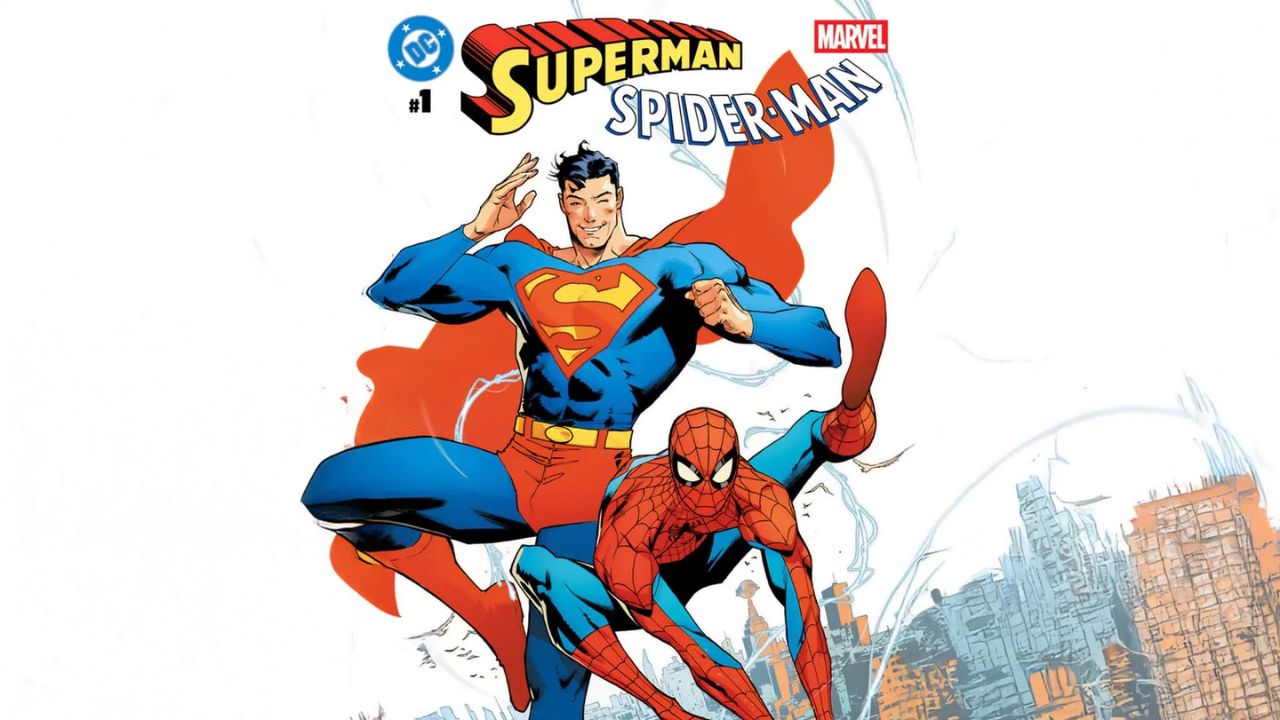
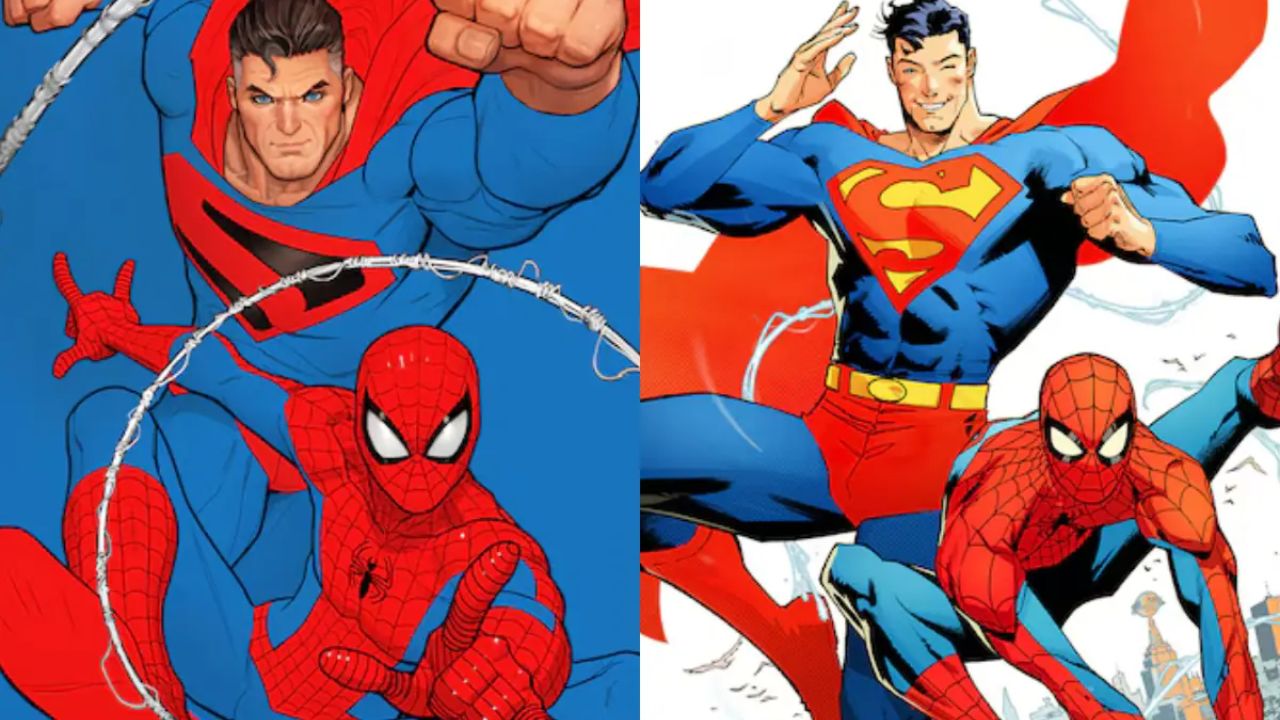
2. Superman/Spider-Man #1(DC – March 2026): The first of the new crossovers is published by DC, written by Mark Waid with art by Jorge Jiménez. Mark Waid is the industry’s preeminent historian-writer, known for his deep understanding of DC’s legacy (Kingdom Come, World’s Finest). His pairing with Jiménez, whose kinetic, manga-influenced style defines modern DC art, promises a story that honors the Silver Age roots while delivering modern visual spectacle. The plot reportedly involves a conspiracy between Brainiac and Doctor Octopus, revisiting the “journalistic rivalry” angle with a modern lens.
3. Spider-Man/Superman #1(Marvel – April 2026): The Marvel contribution is penned by Brad Meltzer with art by Pepe Larraz. Meltzer, a novelist known for emotional, continuity-heavy stories (Identity Crisis), brings a focus on the personal cost of heroism. Pepe Larraz, celebrated for his work on the X-Men relaunch, offers a lush, detailed style that fits the “blockbuster” scale. This story pits the heroes against Lex Luthor and Norman Osborn, a pairing of corporate villainy that reflects the modern era’s focus on corrupt power structures.
The Market Impact in 2026
The return of the crossover in 2026 serves multiple functions. For older fans, it is a nostalgia play, evoking the excitement of the 1970s. For younger readers, it is a novelty, breaking the strict walls of the cinematic universes where such a meeting is legally impossible. The inclusion of backup stories featuring other pairings—Ghost-Spider/Supergirl, Batman/Deadpool—suggests that this anniversary may serve as a pilot program for a broader renewal of intercompany crossovers, a practice that had largely gone dormant in the early 2000s.
Part VIII: Archetypal Resonance – God vs. Man
Beyond the sales figures and plot mechanics, the enduring fascination with Superman and Spider-Man lies in their archetypal resonance. They represent the two poles of the American superhero mythology.
The Apollonian vs. The Dionysian
Superman is the Apollonian ideal: a sun-god, an immigrant from the stars who assimilates perfectly to become the ultimate protector. He represents order, stability, and the establishment. He is the “Father” figure of the genre. In the crossover, he is depicted as the steady hand, the one who views the threat from a global perspective.
Spider-Man is the Dionysian disruptor: a reactive force, a teenager (or young adult) grappling with chaos, guilt, and the unpredictability of life. He represents the “Son,” the strive for maturity. He is the underdog.
The 1976 crossover succeeded because it allowed these archetypes to interact without diluting them. Superman did not become angst-ridden; Spider-Man did not become a god. They remained true to their essential natures, and their interaction highlighted the strengths of both philosophies. Superman learned to appreciate the scrappy resilience of the underdog; Spider-Man learned to trust the wisdom of the veteran.
The City as Character
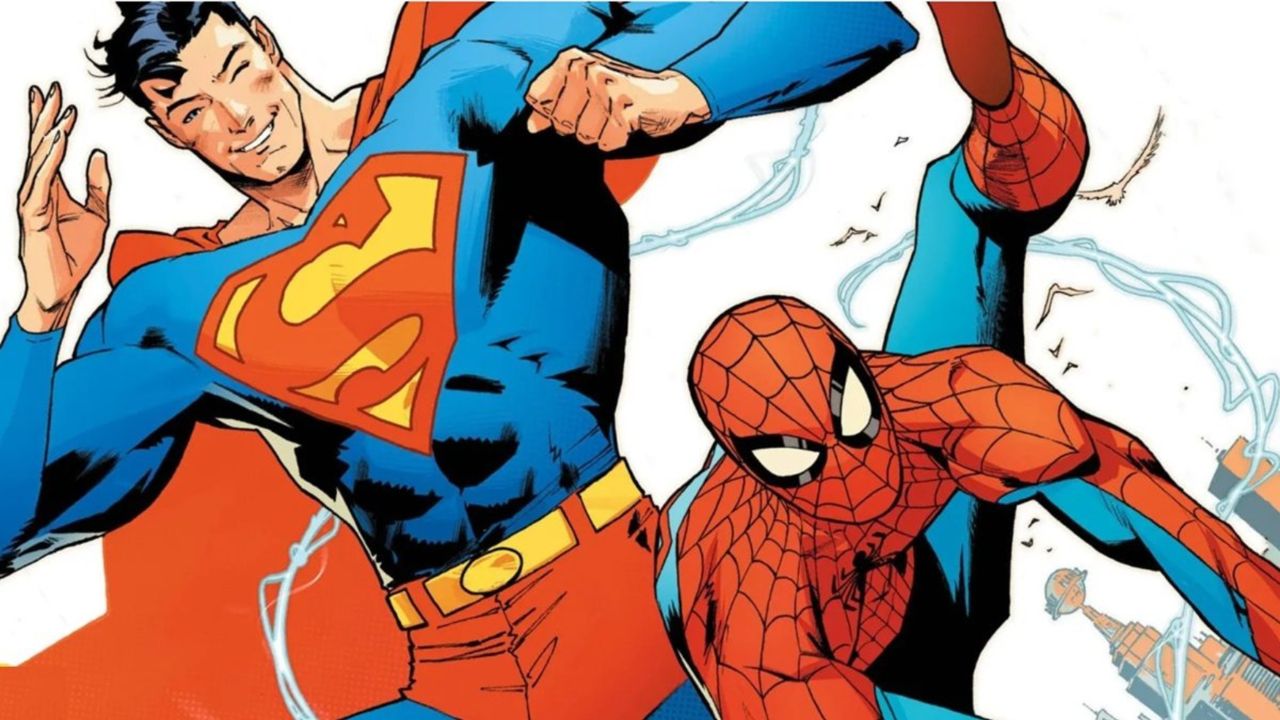
Ross Andru’s art emphasized this duality through the depiction of the cities. Superman’s Metropolis was drawn with clean lines, open skies, and futuristic architecture—a “City of Tomorrow.” Spider-Man’s New York was rendered with water towers, smokestacks, shadows, and gargoyles—a city of grit and texture. The crossover forced these two aesthetics to merge, creating a visual dialogue between the idealism of the Golden Age and the realism of the Silver Age.
Conclusion: The Legacy of the Impossible
The 50th anniversary of Superman vs. The Amazing Spider-Man is a celebration of a moment when the comic book industry dreamed bigger than its own boundaries. In 1976, guided by the pragmatic vision of David Obst and the creative diplomacy of Gerry Conway and Ross Andru, two corporate rivals achieved the impossible. They navigated a minefield of legal complexity, ego, and logistical hurdles to deliver a story that honored the essence of both characters.
The legacy of the 1976 Treasury Edition is not just in the story it told, but in the doors it opened. It paved the way for Batman vs. The Incredible Hulk, The Uncanny X-Men and The New Teen Titans, and JLA/Avengers. It proved that the rigid walls of intellectual property could be breached for the sake of a good story.
As fans in 2026 open the crisp pages of the new Waid/Jiménez and Meltzer/Larraz specials, they are participating in a tradition that dates back half a century. They are reaffirming the simple, joyous idea that laid the foundation for the entire medium: that a boy from Krypton and a boy from Queens could, for a brief moment, stand side by side, and in doing so, make the world of fiction feel infinite.
Appendix: Statistical Symmetry of the 1976 Crossover
| Metric | Superman | Spider-Man | Difference | Context |
| Total Panel Count | 168 | 164 | ~2.4% | Indicates near-perfect screen time balance. |
| Major Splash Appearances | 8 | 8 | 0 | Equal number of “poster moments” for both heroes. |
| Villain Panel Count | Lex Luthor: 65 | Doc Octopus: 63 | 2 | Antagonists received equal narrative focus. |
| Supporting Cast Panels | Metropolis: 55 | New York: 52 | 3 | Clark’s cast (Lois, Jimmy) vs. Peter’s cast (MJ, Jonah). |
| Alter Ego Panels | Clark Kent: 34 | Peter Parker: 54 | 20 | Peter Parker receives more screen time due to the romantic subplot interactions with Lois Lane. 4 |
Timeline of the Crossover Era
| Year | Event | Significance |
| 1975 | MGM’s Marvelous Wizard of Oz | First co-publication; established legal framework for collaboration. |
| 1976 | Superman vs. The Amazing Spider-Man | The “Battle of the Century”; first superhero crossover. |
| 1981 | Superman and Spider-Man | The sequel featuring Doctor Doom; deeper integration of Marvel style. |
| 2003 | JLA/Avengers | The final major crossover before the “silent era” of the 2000s/2010s. |
| 2026 | 50th Anniversary Celebration | Revival of the partnership with Facsimile Editions and new one-shots. |