
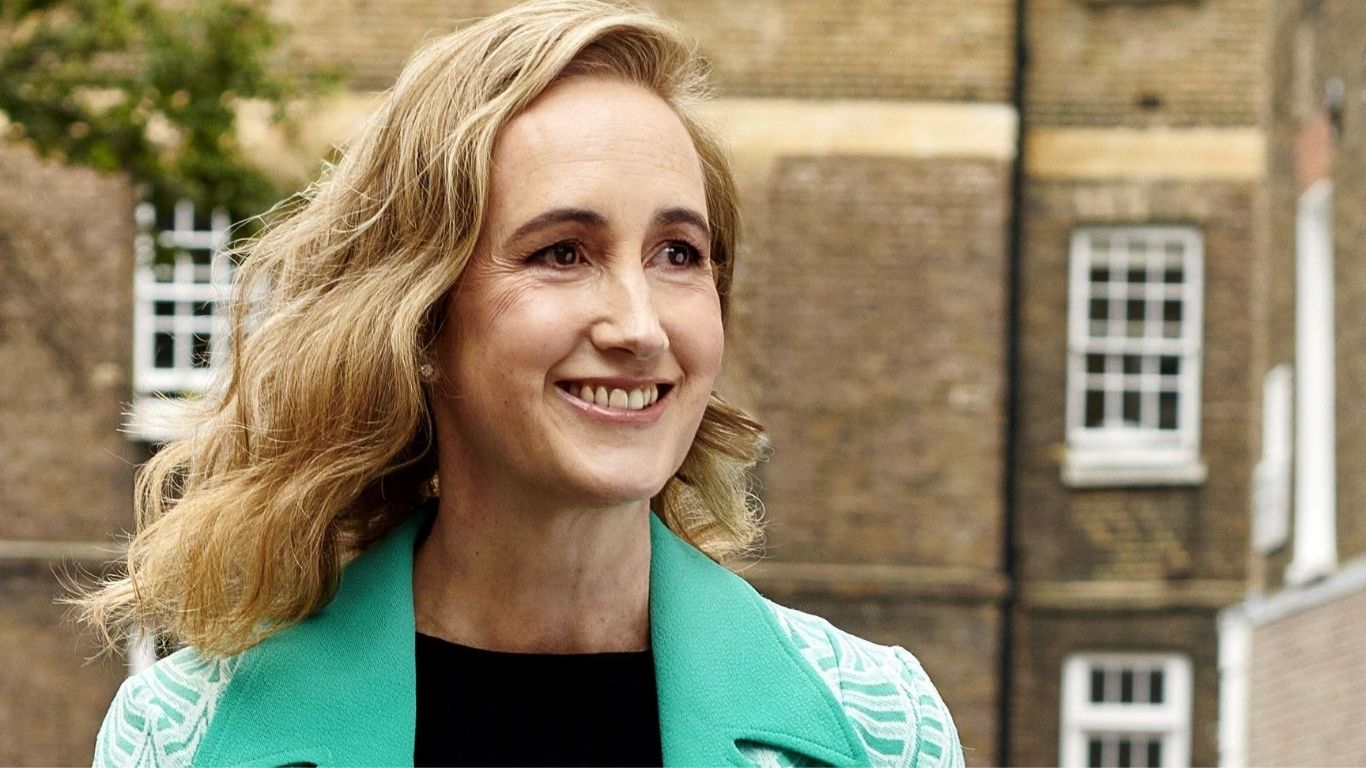
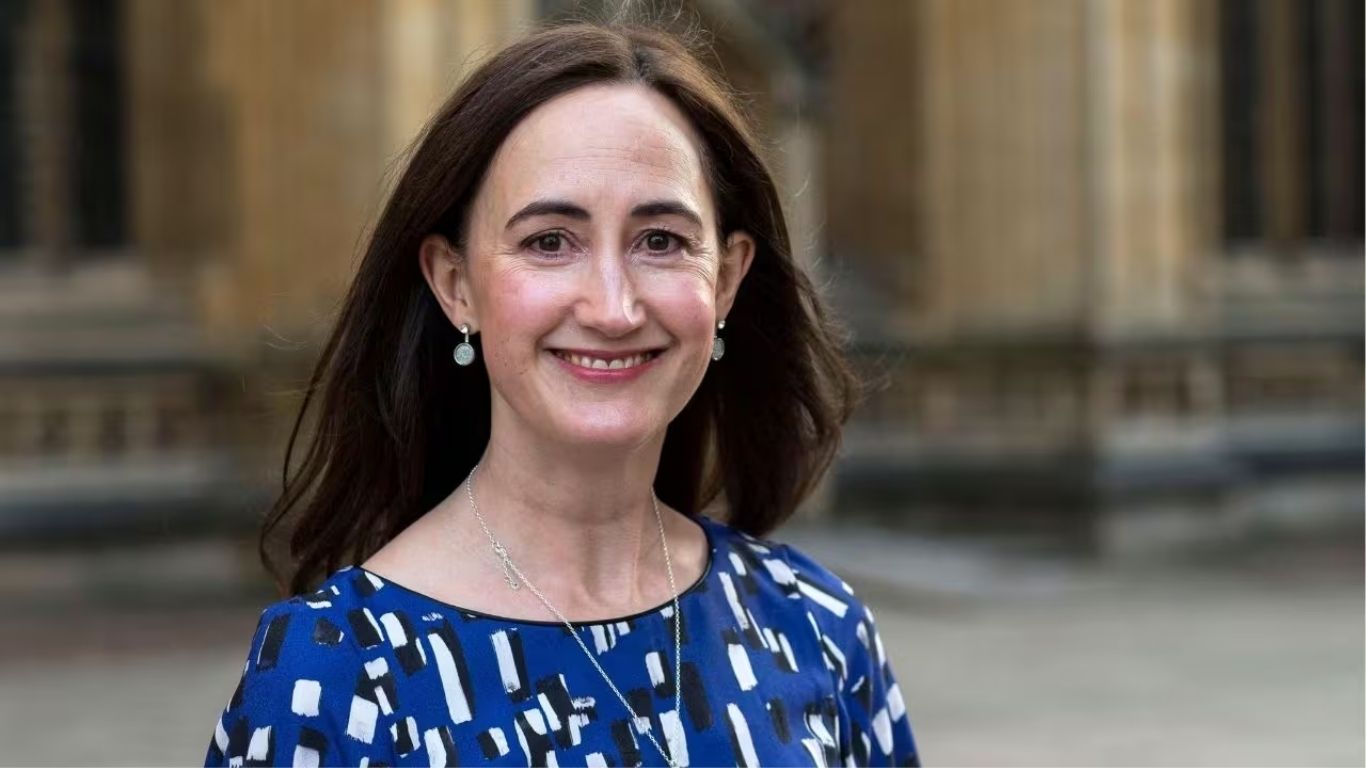
British author Madeleine Sophie Wickham, known globally as Sophie Kinsella, passed away on Wednesday at the age of 55 at her residence in Dorset, England. The announcement came through a heartfelt Instagram post from her family, marking the end of an extraordinary literary career that transformed commercial fiction and captivated readers worldwide.
From Credit Card Shock to Literary Phenomenon
The genesis of Kinsella’s most iconic creation emerged from an unexpected moment in 1999. Upon receiving a credit card bill that left her stunned, she experienced a moment of realization that would shape her future works. Her initial reaction—suspecting fraud rather than acknowledging her own spending habits—planted the seed for what would become one of the most successful book series of the 21st murder-at-harvard-and-a-half-century-of-silence-by-becky-cooper/”>century. Recognizing the comedic potential in this very human struggle, she decided to transform her personal experience into fiction.
“My first thought was, ‘I don’t remember buying this or that, therefore I must have been defrauded,'” she later reflected to The Times Colonist. “I suddenly saw the potential of shopping as a story to write about.”
The strategic decision to adopt a pen name proved crucial to her success strategy. By combining her middle name with her mother’s maiden name, Kinsella created a professional boundary that protected her privacy. As she explained to The Toronto Star in 2014, “I thought, if it’s a complete flop then it will have nothing whatsoever to do with me.” This calculated risk would ultimately define her legacy.
The Shopaholic Sensation
The release of “The japanese-secret-to-a-long-and-happy-life-by-hector-garcia/”>Secret Dreamworld of a Shopaholic” in 2000—published as “Confessions of a Shopaholic” in the United States—introduced the world to Rebecca Bloomwood, a financial journalist whose uncontrollable appetite for shopping became the heart of an enormously successful franchise. What began as a single novel evolved into a nine-book series that sold tens of millions of copies and was translated into dozens of languages, making Wickham a household name in households across the globe.
The series transcended its initial premise as light, entertaining fiction. Rather than offering escapist fantasy, the Shopaholic novels provided a sophisticated commentary on contemporary consumerism through the lens of young women navigating modern life. Rebecca’s character arc reflected real economic shifts: beginning as a carefree consumer riding waves of easy credit, she eventually confronted the harsh realities of the 2008 financial crisis in “Mini Shopaholic” (2011), where she must balance her love of shopping with the practical demands of budgeting for a modest party.
Defending Entertainment
Wickham’s work earned considerable success but not without criticism from literary gatekeepers. Her novels became part of the “chick lit” genre—a classification that the author initially embraced pragmatically. “It’s kind of an easy way to explain what the books are about,” she told The Ottawa Citizen in 2003. “People understand what you mean. It’s not highbrow literature, it’s not worthy, and it’s not a lot of things, but it’s fun and it entertains people and I’m fine with that.”
Her perspective on this label evolved throughout her career. By 2023, she had refined her position, telling The Straits Times: “Saying that I’m writing for women is wrong. I’m writing for anybody with a sense of humor. The term I’ve always preferred is ‘romantic comedy.’ I once saw my books labeled ‘wit lit’ in a bookstore and thought that was brilliant.”
Her primary artistic goal remained consistent throughout her prolific career. “My first aim is to make people laugh,” she explained to The Boston Herald in 2004. The genuine connection with her audience was evident in her observations: “People always come up to me with a huge beam on their face. They feel like they know me and that they’re my best friend, and I feel like I know them, too. It’s like we share a common friend: my characters.”
A Career Beyond the Shopaholic
Before becoming Sophie Kinsella, Madeleine Sophie Townley, born December 12, 1969, in London to teachers David Townley and Patricia (Kinsella) Townley, pursued an unexpected path. After graduating from the University of Oxford with a degree in philosophy, politics, and economics (with a brief detour into music), she worked as a financial journalist covering the pension industry—a position that would later inform her most famous character.
Her literary ambitions began in her free time, initially under her own name. “The Tennis Party” (1995) marked her official debut, followed by several novels including “A Desirable Residence,” “Swimming Pool Sunday,” “The Gatecrasher,” and “Sleeping Arrangements.” These earlier works, published throughout the 1990s and early 2000s, demonstrated a somewhat darker literary sensibility featuring characters in their 30s and 40s. However, it was the pivot to Sophie Kinsella that would cement her place in publishing history.
Creative Adaptations and Expanding Horizons
The commercial success of her novels extended to the screen. The 2009 film adaptation of “Confessions of a Shopaholic,” starring Isla Fisher, brought Rebecca Bloomwood to cinematic audiences. Additionally, her 2003 novel “Can You Keep a Secret?” was adapted into a 2019 film featuring Alexandra Daddario, proving that her storytelling transcended the page.
In 2015, Wickham ventured into young adult literature with “Finding Audrey,” demonstrating her versatility as a writer. By late 2023, she published “The Burnout,” a romantic comedy exploring the lives of two exhausted office workers who escape to a British resort. During her illness, this novel provided what she described as emotional sustenance during darker moments.
The Power of Relatability
A defining characteristic of Kinsella’s appeal lay in her refusal to write from the boardroom perspective that dominated popular fiction about women. “When I was younger, the books that were out there for women in the fun read category had all these heroines in shoulder pads at the helm of major corporations jetting around the world,” she explained. “I just couldn’t write about boardrooms in Acapulco. I had to be more real about life and write about a young woman in a flat in Fulham, London, with an overdraft.”
Despite aging over her career, her central characters remained consistently in their 20s—a phenomenon she attributed not to disconnection, but to internal experience. “It’s how you feel inside that matters, and I still feel about 27,” she told the Manchester Evening News in 2019. This youthful perspective allowed her to capture the universal anxieties and excitements of early adulthood across three decades of publishing.
A Final Testament
In an NPR interview from 2019, Kinsella articulated her philosophy about the life stage she chronicled: “I just think there’s something exciting about the time of life where you’re on the lookout for opportunities in all directions. You’re looking at your career. You’re looking at finding someone to love. Everything is ahead of you. And for me, the wide, open horizon is so exciting. There is something exhilarating about meeting a stranger in a coffee shop and thinking, where’s this going to go?”
This perspective informed her final work, “What Does It Feel Like?” published in October 2024. Diagnosed with glioblastoma in 2022 and publicly announcing her condition in April 2024, Wickham poured her personal struggle with brain cancer into this novel. The protagonist, Eve—a novelist and mother of five—awakens in a hospital after tumor removal and must recalibrate her understanding of what truly matters. The author drew from her own experiences to craft a narrative exploring gratitude, fortune, and life’s unexpected turns.
“The title guided me,” she told The New York Times in October 2024. “The irony is that I’ve had this incredibly fortunate life. I’ve had an ability to write and I’ve been able to have children and I met the love of my life at college and it’s all fallen into place so brilliantly until, boom, the hammer blow of fate. I could see that would be the narrative.”
Legacy and Survivors
Wickham is survived by her husband, Henry Wickham, and their five children: Freddy, Hugo, Oscar, Rex, and Sybella. Her family’s Instagram announcement reflected the grace with which she faced her final illness: “Despite her illness, which she bore with unimaginable courage, Sophie counted herself truly blessed—to have such wonderful family and friends, and to have had the extraordinary success of her writing career. She took nothing for granted and was forever grateful for the love she received.”
Sophie Kinsella’s contribution to literature extends far beyond the commercial success of her novels. She demonstrated that entertainment and literary merit need not be mutually exclusive, that stories about ordinary women facing everyday challenges deserve serious attention, and that humor itself is a profound tool for human connection. In an industry often divided between high art and commercial fiction, she proved that readers hunger for intelligent, funny stories that reflect their lived experiences—and they will show up in the millions to celebrate an author who provides exactly that.