
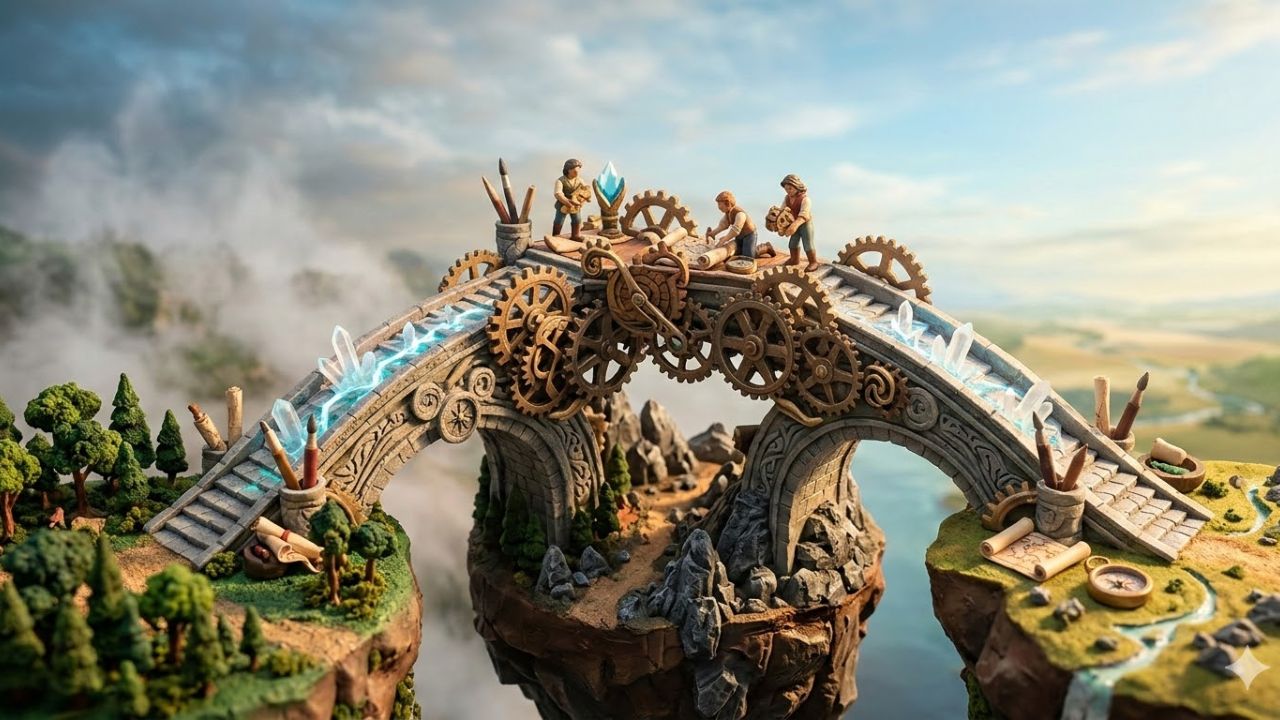
The literary landscape is filled with ambitious trilogies that lost momentum in their middle chapter—a problem widely known as Second Book Syndrome. For writers who set out to Write a Trilogy, this issue often appears when the second installment becomes little more than a narrative bridge between the excitement of the opening book and the resolution promised in the finale. Instead of pushing the story forward, the middle volume can feel like filler, leaving readers disengaged and the overall narrative weakened. In many cases, the writer unintentionally becomes a victim of Second Book Syndrome, where the story stalls and repeats familiar beats rather than expanding the world and deepening the stakes. Avoiding this fate requires careful narrative planning. Authors attempting to Write a Trilogy must sustain the creative energy of the first book while managing the structural demands of a three-part arc. When this balance collapses, the trilogy’s architecture begins to suffer. The story stops evolving and instead drifts into repetitive cycles that fail to build meaningful momentum. Understanding how Second Book Syndrome works—and why writers so often fall victim to it—is therefore essential. With the right structural approach and creative discipline, the middle installment can transform from a weak bridge into a powerful, story-defining chapter that strengthens the entire trilogy.
The Taxonomy of Narrative Stagnation
To address the challenges of the middle installment, one must first categorize the failure states that define Second Book Syndrome. At its core, the syndrome is a diagnostic of “wheel spinning,” a state where the author creates artificial complications to occupy page time until the series-wide climax can be executed in the final volume. This results in an anemic plot that lacks its own identity, leaving readers with the impression that no meaningful progress has occurred despite the consumption of significant narrative material.
The psychological underpinnings of this stagnation often trace back to the “Sophomore Slump,” a period where the writer faces escalated external pressures. Unlike a debut novel, which may have been drafted over years without the weight of expectation, a second book is often written under strict contract deadlines and the paralyzing fear of disappointing an established audience. This shift in the creative environment can lead to conservative storytelling choices, such as repeating the character arcs or plot beats of the first book, which ultimately drains the narrative of its essential urgency.
| Diagnostic Category | Symptoms in the Narrative | Impact on Structural Integrity |
| Narrative Plateau | A lack of forward motion in the overarching series conflict; repetitive “try-fail” cycles that do not escalate. | The story loses its perceived necessity, appearing as a “buffer” between major events. |
| Character Entropy | Protagonists fail to face new internal challenges; growth from Book 1 is “reset” to justify a new arc. | Readers lose emotional investment as the character appears to have learned nothing from previous experiences. |
| Architectural Aimlessness | The book lacks its own internal Three-Act Structure, failing to resolve a specific, installment-level conflict. | The reading experience is unsatisfying, as there is no catharsis at the end of the volume. |
| Stake Stagnation | Conflicts are “sideways” rather than “upward”; the magnitude of the problem remains static throughout the book. | The sense of danger evaporates, making the eventual series climax feel unearned. |
The etiology of these symptoms is frequently rooted in a lack of comprehensive series planning. When a trilogy is approached as three separate novels rather than a single, unified narrative arc, the middle book often inherits the “Act II” problem of a standalone story, but magnified over several hundred pages. This results in what industry experts describe as “Act II Part A” becoming a sequence of purely reactionary beats, lacking the proactive energy required to sustain a long-form narrative.
Geometric Modeling of Trilogy Architecture
A primary solution to narrative stagnation is the adoption of the “Triangle Model” of series expansion. In this architectural framework, a trilogy is not viewed as three uniform blocks, but as a structure that expands outward in every direction—character depth, world-building complexity, and the magnitude of the stakes—with each installment.
In this model, the first book serves as the narrowest point of the triangle, offering a focused, intimate introduction to the world through a single, immediate conflict. The middle installment, then, must be designed to expand the “shape” of the story. If Book 2 merely connects two large “rectangles” of plot, it feels unnecessary; however, if it irrevocably shifts the status quo through new alliances, broken relationships, and changed character beliefs, it becomes an expansive transition into the final volume. This transition is not merely about adding more information, but about shifting the relevance of the existing information, forcing the protagonist and the reader to see the world from a broader, more dangerous perspective.
The “Evolution of Stakes” is a critical component of this expansion. Narrative momentum is maintained when the victories of the first book create new, more complex consequences for the second. For example, if a protagonist overthrows a local tyrant in the first volume, the second volume should not simply introduce another local tyrant; instead, the vacuum of power or the attention of a higher authority should become the new conflict. This creates a natural progression where the characters stand to lose more with each successive victory, ensuring the narrative remains “upwardly mobile” in its tension.
Structural Mapping: The Three-Act Trilogy
To effectively mitigate Second Book Syndrome, the narrative architect must map the internal structure of each book to the overarching beats of the entire series. Industry standards suggest a tiered approach where the six primary plot points of the Three-Act Structure are distributed across the three volumes of the trilogy.
| Trilogy Phase | Corresponding Act | Key Plot Points Included | Structural Role of the Installment |
| Book One | Act I | The Hook; The First Plot Point. | Establishes the world and character; introduces the central “False Belief”. |
| Book Two | Act II | The Series Midpoint; The Third Plot Point. | Deepens character wounds; features the “Antagonist’s Counterstroke”. |
| Book Three | Act III | The Series Climax; The Resolution. | Converges all plot threads; resolves the thematic argument of the series. |
This tiered structure ensures that the middle book carries the heaviest emotional and structural weight. By containing both the Series Midpoint—a central turning point that redefines the conflict—and the Third Plot Point—a “Dark Night of the Soul” or moment of despair—the second book becomes the engine of the entire trilogy. However, the author must simultaneously maintain an internal Three-Act Structure within the second book itself. This ensures that the installment provides a satisfying beginning, middle, and end, resolving a specific, book-level problem while the larger series conflict remains in flux.
A common failing occurs when an author treats the second book as “rising action” in its entirety. As the analysis indicates, “rising action” should be a source of excitement and building tension, yet in many early drafts, this tension peters out because there are no internal milestones of resolution. To counteract this, each installment should feature “mini-arcs” or subplots that reach a definitive conclusion. These mini-arcs allow the protagonist to achieve a tangible victory or suffer a permanent loss, providing the reader with a sense of progress even if the “Great Battle” of the third book is still on the horizon.

The Series Midpoint as a Catalyst for Change
The most critical moment for preventing stagnation in a middle installment is the “Series Midpoint.” Occurring mathematically near the center of the trilogy, this beat serves as a “doorway of no return,” shifting the story’s energy from reaction to proaction. In the first half of the series, the protagonist is typically reactionary, responding to the antagonist’s moves because they lack the tools or self-knowledge to do otherwise. The midpoint provides a “significant shift in perspective,” often through a major revelation or a “Mirror Moment” where the character is forced to see themselves and the conflict clearly for the first time.
The Series Midpoint must be more than just a plot twist; it must be a “personal catalyst” for the character. Symbolically, it represents death and rebirth—the life the character knew is over, and they must adopt a new understanding of the world to survive the second half of the series. This is frequently achieved by revealing a “new extent to the antagonist’s power” or a “watershed moment of vulnerability” in a key relationship. By the end of this scene, the protagonist can no longer “un-see” the truth, and their subsequent actions must be intentional and proactive.
The implications of a strong midpoint are profound for the narrative’s pacing. It prevents the “muddling middle” by providing a fresh surge of energy that carries the story into the high-stakes despair of the third act. Without this pivot, the second book often feels like a series of increasingly desperate but ultimately identical reactions, leading to the reader perception of “aimless wandering”.
Antagonist Management and the “Empire Strikes Back” Effect
In many successful trilogies, the middle installment is defined by the “Antagonist’s Counterstroke”. While the first book often concludes with a triumph for the heroes, the second book should show the antagonistic force regrouping and striking back with devastating efficiency. This is often compared to The Empire Strikes Back, where the heroes face “setback after setback,” culminating in a major defeat that leaves the characters permanently altered—either physically or emotionally.
This counterstroke serves several structural purposes. It raises the stakes by proving that the villain is a credible threat who can adapt to the hero’s tactics. It also creates a sense of “angst and action” that acts as “literary crack,” hooking the reader’s interest for the final volume. Furthermore, it allows the author to advance the antagonist’s goals without revealing their entire plan, maintaining a sense of mystery and suspense as the characters move toward the series-ending confrontation.
| Antagonist Strategy | Implementation in Book 2 | Outcome for the Series Arc |
| Adaptation of Tactics | The villain responds to the hero’s victory in Book 1 by attacking a new vulnerability. | The conflict feels dynamic and the antagonist appears intelligent and dangerous. |
| Personalized Targeting | The antagonist focuses on the protagonist’s “Public Enemy #1” status, putting their allies at risk. | Increases emotional stakes and forces the hero to make difficult moral compromises. |
| Secret Revelation | An ally is revealed as a spy, or a new layer of the villain’s identity is uncovered. | Shatters the hero’s worldview, leading to the necessary “Mirror Moment”. |
| Permanent Loss | A major supporting character is killed, or the hero suffers a permanent injury. | Establishes that the conflict has “lasting consequences” and removes the “safety net” for the finale. |
Effective antagonist management also involves ensuring that the “overarching BIG conflict” remains present and felt, even if the villain does not appear in the flesh. The use of “minions,” “antagonistic forces” (such as a ticking clock or a hostile environment), and the corrupting influence of the conflict itself can maintain tension while keeping the final showdown “in reach” for the third book.
Character Continuity versus Narrative Stagnation
A central tension in series writing is the balance between character consistency and the need for meaningful evolution. If a character remains static, the story stagnates; if they change too abruptly or without cause, the reader’s “suspension of disbelief” is shattered. To avoid Second Book Syndrome, the author must treat the character’s internal journey as a “transformation across all three books,” with the middle installment prodding new “wounds” that were not addressed in the debut.
The “Same But Different” rule is paramount here. Readers return to a sequel because they enjoyed the original characters, but they want to see those characters in a new light. This is often achieved by “stretching” the main character—forcing them to confront the “false belief” they carried into the story or a new flaw that has emerged as a result of their recent victories. Introducing “fresh blood” in the form of new supporting characters can also revitalize the protagonist’s arc by forcing them to interact with different perspectives and temperaments.
In character-driven sequels, the midpoint is often the moment where the protagonist “looks at themselves” and wonders what kind of person they are becoming. This “Moment of Truth” allows the character to grasp the story’s thematic heart in a way that has previously eluded them, providing the internal fuel necessary to carry them through the coming trials. Conversely, if an author “undoes” a character’s previous growth or fabricates “ridiculous drama” to occupy time, the character becomes “whiney” or “unlikable,” leading to significant reader dissatisfaction.
Genre-Specific Mitigation: Romance and Fantasy
While the structural principles of the trilogy are universal, their application varies significantly across genres. In the fantasy genre, the focus is often on the “Epic Escalation” of plot and the “Expansion of the World”. Fantasy sequels are expected to “one-up” their predecessors by introducing more dangerous settings, complex magic systems, and “mind-blowing” twists that were foreshadowed in the initial volume.
In contrast, a romance-centric trilogy must navigate the “Emotional Deepening” of the relationship. The second book is where the relationship is “tested in ways they have not yet begun to imagine,” often leading to a “Dark Night of the Soul” for the couple. Using established frameworks like “Romancing the Beat,” authors can map the romantic arc across three books, ensuring that the second installment focuses on “new obstacles and intimacy” while the first book establishes the “meet cute” and the final book provides the “Happily Ever After”.
| Genre Category | Structural Priority for Book 2 | Strategic Approach to SBS |
| Epic Fantasy | World Expansion; Escalation of Stakes. | Introduce “fresh blood”; reveal a deeper layer of the magical system or political conflict. |
| Romantic Fantasy | Emotional Testing; Surfacing Internal Wounds. | Use external challenges to separate the couple; force them to resolve long-standing insecurities. |
| Mystery/Thriller | Escalation of Complexity; The Side Mission. | Introduce a “definitive conclusion” for a smaller case while the larger conspiracy remains active. |
| Contemporary Fiction | Thematic Exploration; Moral Gray Areas. | Focus on the “inner struggle” and the character’s reaction to the consequences of their previous choices. |
For romance, the second book often ends with a “breakup, major rift, or being torn apart by external conflict,” providing the necessary “longing and reconnection” beats for the third volume. The challenge for the romance writer is ensuring these conflicts feel organic to the characters’ personalities rather than forced for the sake of drama.
The Information Dump: Managing Backstory and Continuity
A common technical failure in middle installments is the “Information Dump”—long passages of summary or dialogue intended to catch the reader up on the events of the previous book. As research indicates, the most effective way to handle continuity is to “wipe the slate clean” and treat the events of the first book as any other character backstory. Information should only be revealed when it becomes “pertinent context” for the current scene, and a single sentence is often sufficient to remind the reader of the relevant facts.
The opening of a sequel must still function as a “Hook.” It should not simply be a continuation of the final scene from the last book; instead, it must reframe the characters to show the reader “how the character has changed”. By answering the most “pressing question” from the previous volume early on, the author can anchor the reader’s interest while simultaneously moving the narrative into new territory.
Furthermore, maintaining the “timeline and dates” accurately across books is vital. Errors in continuity or world-building can break the reader’s immersion and lead to the perception that the author has “forgotten the original themes and morals”. Rigorous fact-checking of the debut during the drafting of the sequel is an essential, if unglamorous, part of the process.
The Psychological Landscape of the “Sophomore Slump”
Writing a sequel is often more difficult than writing a debut because the author is no longer working in a vacuum. The “weight of expectation” from agents, editors, and readers can lead to a “paralyzing thought” that every sentence must be perfect. This is compounded by the “time crunch” of publishing schedules, which often require a sequel within a year of the debut’s release.
To navigate these hurdles, industry experts emphasize the importance of “controlled failure.” A first draft is a “doubt-ridden roller coaster,” and the only way to reach the finish line is to be “willing to write badly” and resist the urge to delete and restart. Authors like V.E. Schwab have noted that even after twenty books, the “self-criticism gets really loud” and the only way to persevere is to “cut tasks up into small chunks” and focus on creating something “you are proud of” rather than something “perfect”.
| Author Challenge | Practical Mitigation Strategy | Psychological Impact |
| Imposter Syndrome | Counter self-doubt by reminding yourself of previous successes. | Reduces the risk of “writer’s block” and stagnant production. |
| Deadline Pressure | Find “pockets of time” throughout the day; treat writing as a professional task. | Ensures the manuscript moves forward despite promotional requirements. |
| Perfectionism | Accept that “first drafts are for the writer”; release attachment to the final outcome. | Prevents “paralysis” and allow the creative flow of the “controlled fall”. |
| Project Juggling | Learn to switch between editing one book and drafting another. | Develops the “professional skin” needed for a long-term writing career. |
Releasing “attachment to outcomes” is another vital psychological tool. When an author focuses on the “imagined response of future readers”—whether positive or negative—they lose the ability to stay present in the “task of actually writing”. By viewing the second book as something the author needs to do for their own thematic satisfaction, the pressure to “top” the first effort is mitigated.

Case Studies in Narrative Resilience: Mistborn and Broken Earth
Examining high-profile trilogies reveals how authors navigate these structural traps in practice. Brandon Sanderson’s Mistborn trilogy is often cited for the “Sanderson Avalanche”—a burst of revelations and action at the end of each volume that justifies the slower, more deliberate pacing of the middle section. While many readers find The Well of Ascension (Book 2) to be the “weakest” entry due to its political focus, the “payoff” at the end is so significant that it retroactively validates the preceding narrative.
In contrast, N.K. Jemisin’s Broken Earth trilogy utilizes a “Series Midpoint” that dramatically alters the audience’s understanding of the world. By revealing that “everyone on Earth is going to die” and that the power source being tapped is tied to orbital mechanics, Jemisin shifts the narrative from personal survival to a global restoration effort. Both Sanderson and Jemisin utilize “knowledge retention” as a key plot device, where a specific caste (Terris Keepers in Mistborn, Lorists in Broken Earth) holds the banned history necessary to save the planet in the final volume.
These examples demonstrate that Second Book Syndrome is not an inevitability, but a structural hurdle that can be overcome through “epic escalation” and “mind-blowing moments” that have been foreshadowed since the first page of the series. The key is ensuring that the “dots all connect” such that the overarching story is effective while each book remains a “solid story that stands alone structurally”.
Practical Strategic Recommendations for Trilogy Construction
To successfully draft a middle installment that avoids the pitfalls of stagnation, the narrative strategist must adhere to a set of rigorous design principles.
First, the author should “Focus on the End.” Knowing where the character needs to be for the final confrontation in Book 3 allows the author to work backward and determine what must be accomplished in Book 2. This prevents the feeling of “aimless wandering” by providing each scene with a clear, series-oriented purpose.
Second, the author must “Stretch the Main Character.” The protagonist overcame an obstacle in Book 1, but they are not yet fully formed. The second book should push them further, forcing them to confront the “Truth” that stands between them and the antagonist. This evolution must be “Same But Different”—maintaining the core elements that readers love while presenting them from a new, more mature angle.
Third, the author should “Establish an Installment-Level Conflict.” To avoid the “bridge” problem, Book 2 must have its own unique plot that reaches a definitive conclusion. This keeps the character active and provides the reader with a sense of catharsis, even as the larger war rages on.
Finally, the author must “Embrace the Controlled Fall.” The first draft of a second book will likely feel “broken” at times, especially under the pressure of professional deadlines. By focusing on “shovelling mode” rather than “perfectionism,” and by viewing the work as a “challenge to solve” rather than a “syndrome” to be feared, the author can maintain the momentum necessary to complete a dynamic and resilient trilogy.
In summation, Second Book Syndrome is the result of architectural neglect—a failure to treat the middle installment as a vital, expanding phase of a unified work. By utilizing the Triangle Model, mapping the internal structure to the series-wide arc, and leveraging the power of the Series Midpoint and the Antagonist’s Counterstroke, authors can create sequels that not only sustain interest but actively “one-up” their predecessors in complexity, emotion, and impact. The professional novelist who masters these structural and psychological techniques will produce a trilogy that stands as a singular, cohesive monument to storytelling excellence.