


When you picture a firefly, the image that usually comes to mind is one of serenity — tiny glowing insects twinkling across a warm summer night. Their gentle radiance evokes nostalgia and wonder. But behind those shimmering signals lies a dramatic world of life, death, and deception. For male fireflies, what begins as a hopeful search for love can end in a predatory trap — sometimes lit by the very light they once used to attract mates. In this deep dive, we’ll explore how fireflies evolved, how they produce their distinctive light, the fascinating world of courtship between males and females, and the darker, more deceptive side of their luminous dance.
Ancient Origins of a Glowing Legacy
Fireflies, also known as lightning bugs, have been illuminating the Earth’s nights for over 100 million years. Fossil evidence suggests they appeared alongside early flowering plants, long before humans ever gazed at their glow. These bioluminescent beetles belong to the family Lampyridae, which includes about 2,000 known species around the world.
From tropical rainforests and marshlands to dry grasslands and deserts, fireflies have adapted to a remarkable range of habitats. Their widespread distribution proves just how successful their unique ability — to produce light — has been for survival and communication.
The Science Behind the Light
The firefly’s glow isn’t just for show. It’s the product of a biochemical reaction fueled by a specialized enzyme called luciferase, a molecule known as luciferin, and oxygen. When these components interact in the insect’s light-emitting organs, the result is a cold, efficient luminescence that wastes almost no energy as heat — a feat human engineers still struggle to replicate.
This process, known as bioluminescence, serves more than one purpose. For developing fireflies and larvae, the glow is thought to act as a defensive signal, warning potential predators that the insect is toxic or distasteful. Many species produce lucibufagins, bitter compounds that make them unpalatable and even poisonous to birds and frogs. So, in evolutionary terms, glowing acts both as a warning and a deterrent.
Even firefly larvae — sometimes called glowworms — emit light. This talent follows them through various stages of life, becoming a vital communication and survival tool.
Life Before Light: The Ferocious Larvae
Before fireflies become the gentle, flickering creatures we recognize, they spend the vast majority of their lives as larvae. And during this stage, they’re anything but gentle.
Firefly larvae are predatory and venomous, hunting snails, slugs, and other soft-bodied invertebrates. They use venom to paralyze prey, then release digestive enzymes to liquefy their victims before sucking them dry. It’s a ruthless existence, but this allows the youthful fireflies to build up critical stores of energy — reserves they’ll rely on later when they emerge as adults.
Adult fireflies, surprisingly, live for only a few weeks. Many of them do not even feed, dedicating all their time and energy toward one singular purpose: mating. Their adult light shows, then, are less about survival and more about reproduction — a final, glowing effort to pass on their genes before fading into darkness.
Lighting the Way to Love
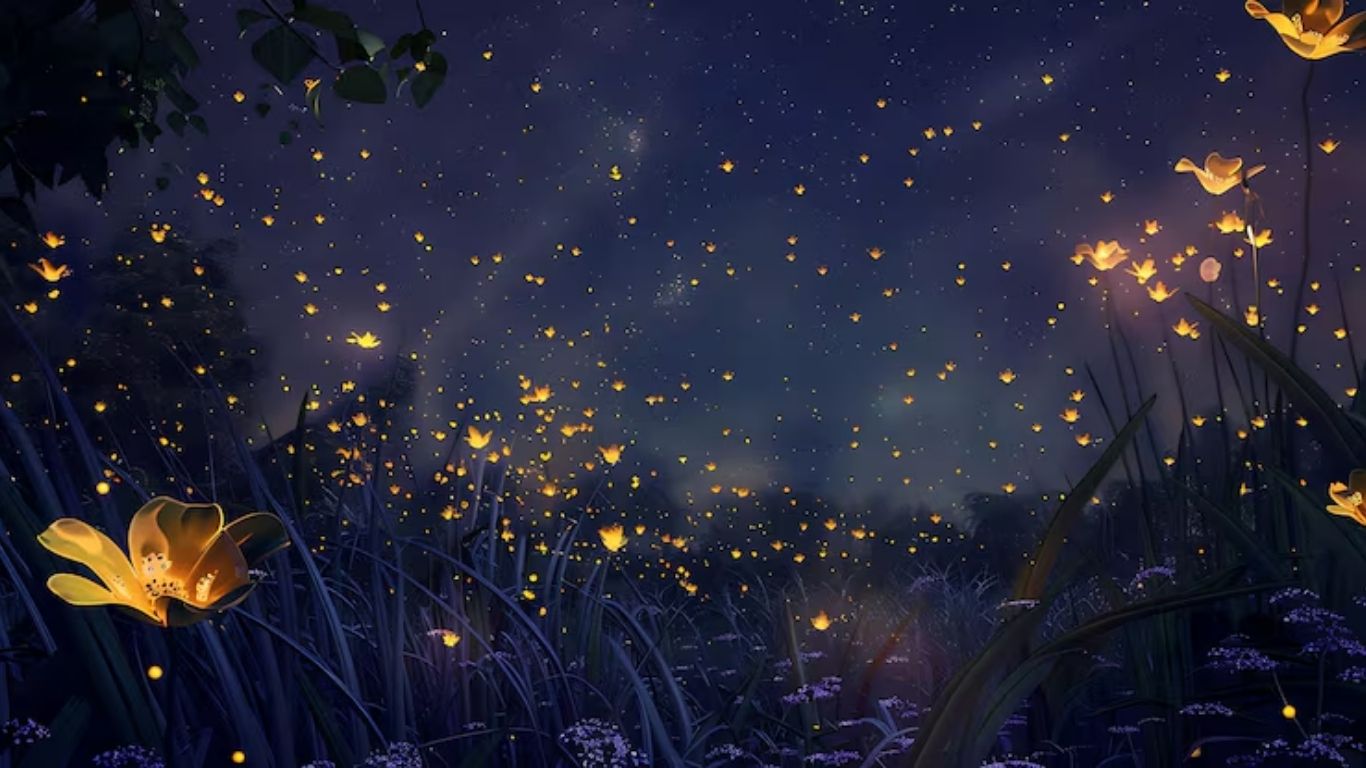
When a warm evening sets in, the skies above meadows and forests sparkle to life. This is when male fireflies begin to flash rhythmically in flight, advertising their presence to females. Each species has a distinct flashing pattern, almost like a living code.
Some blink in quick bursts. Others hold a steady glow. Patterns also vary in color, from yellow and red to green or even blue, all determined by subtle changes in the luciferase enzyme’s structure.
Female fireflies usually remain perched on vegetation, watching the display. When a male’s flashes match her species and meet her timing or frequency preferences, she flashes back in response — a glowing invitation. What follows is a delicate conversation in light, where successful pairs eventually meet, sometimes remaining joined for hours as they mate.
Daylight Lovers: The “Dark” Fireflies
Not all fireflies participate in this luminous love story. Some species, known as “dark fireflies,” are active during the day and rely instead on pheromones — chemical signals — for mating. Without the need for bioluminescence, they’ve lost their ability to produce light.
This evolutionary split in communication methods shows how adaptable fireflies are. Even though their environments and behaviors differ, the drive to attract a mate continues to shape their evolution.
Synchrony in Motion: Nature’s Light Orchestra
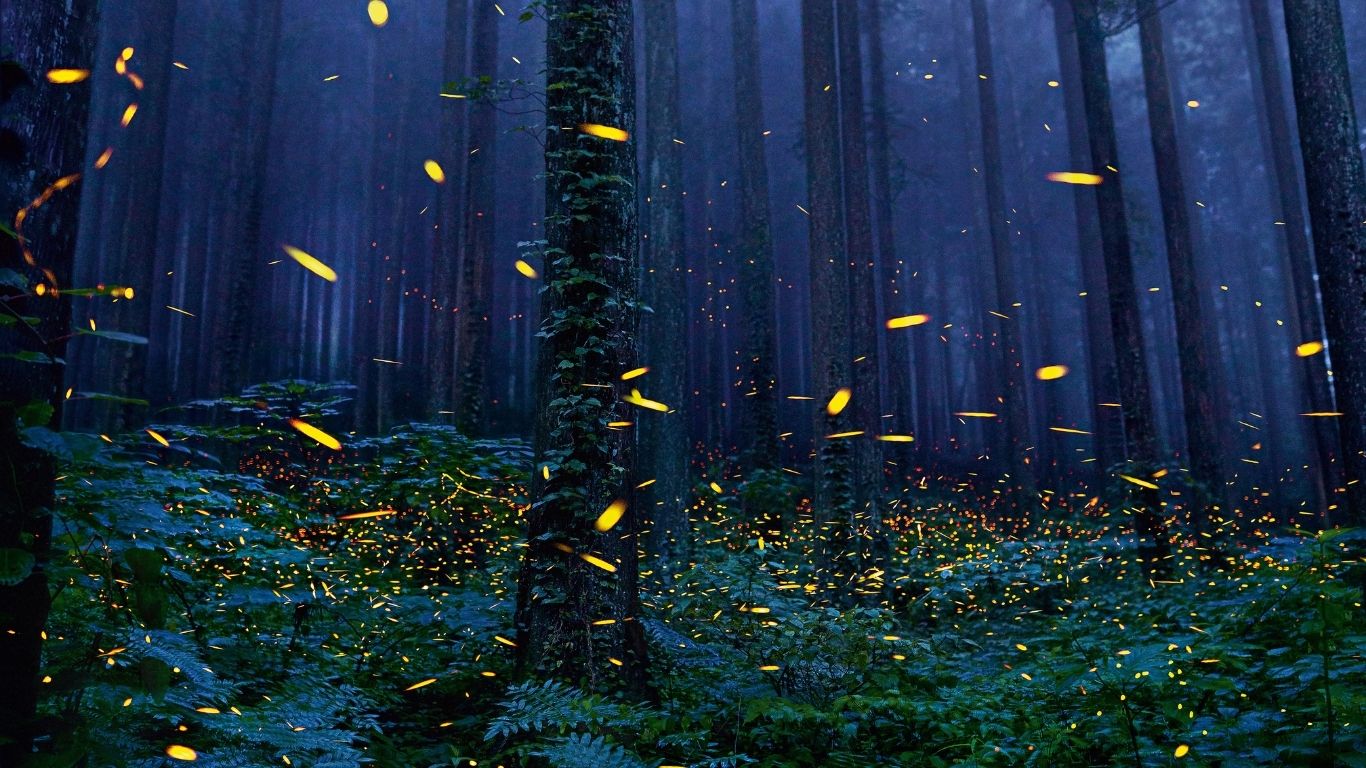
In certain parts of the world, fireflies put on synchronized light shows that can leave even seasoned scientists awestruck. In these species, males flash in unison, creating waves of rhythmically pulsing light through the forest.
This mass synchronization isn’t random. It’s thought to reduce visual clutter for females, making it easier to identify and select mates. At the same time, it creates one of nature’s most breathtaking spectacles — entire trees pulsating like living lanterns under the night sky.
The Subtle Preferences of Female Fireflies
Female fireflies aren’t passive spectators. They are quite choosy when deciding which male flicker earns their attention. For instance, in cattail flash-train fireflies, females prefer males who flash rapidly in succession. In contrast, ignited firefly females seem to favor males with slower, longer flashes.
These preferences reflect sexual selection at work. Brighter, faster, or better-timed flashes may signal stronger genetics or higher stamina — qualities any female would want in the father of her offspring. This interplay between light and love drives diversification across firefly species.
The Femme Fatales: Deadly Deception
But not every glow hides romance. In a dark twist of evolution, one group of female fireflies from the genus Photuris are infamous predators known as “femme fatales.”
These dangerous females mimic the flashing patterns of other firefly species, particularly the signals of receptive females. Unsuspecting males—drawn by what they believe is a potential mate—fly closer, eager for courtship. But instead of embracing, they find themselves in the jaws of a predator.
The femme fatales kill and eat their would-be suitors, often consuming species from a completely different genus. Their deceit serves a dual purpose: in addition to gaining nutrition, they also absorb the victim’s defensive toxins (lucibufagins), which they cannot produce themselves. These stolen chemicals make the femme fatales toxic to predators, turning another’s defenses into their own.
The Male’s Counterstrategy
Yet, nature rarely leaves one side unarmed. Male fireflies, aware of potential deception, have developed defensive behaviors. Observations show that males often approach cautiously, pausing or even dropping to the ground mid-flight to avoid attacks when they suspect danger.
Studies reveal that less than 10% of the deceptive females’ hunting attempts succeed. The rest often end with the males narrowly escaping—proof that, even in the world of insects, evolution keeps the arms race alive.
Other Masters of Deception
Fireflies aren’t the only tricksters using light to their advantage. Some predators have learned to exploit firefly signals in eerie ways.
In China, certain species of orb-weaver spiders have been observed trapping male fireflies in their webs but keeping them alive. The imprisoned males continue to flash, mimicking female patterns, and lure other unsuspecting males straight into the web. The spiders, it seems, have learned how to weaponize firefly courtship — turning love songs into death traps.
This chilling adaptation shows how bioluminescence, originally a signal of attraction and survival, can also become a tool of manipulation and predation.
Light, Love, and the Evolutionary Game
The complex behavior of fireflies showcases one of evolution’s most remarkable balancing acts. Their light embodies not just beauty but strategic communication honed over millions of years. Every flicker carries layers of meaning — from attracting mates to warding off predators, to deceiving enemies or prey.
The story of the firefly demonstrates that what appears gentle and innocent may, under nature’s laws, conceal cutthroat survival strategies. The same luminescent tool that helps fireflies reproduce also exposes them to danger, turning love into a risky gamble.
The Human Connection: Lessons from the Firefly
Humans have long been captivated by fireflies’ glow. Across cultures, they have symbolized the soul, renewal, or fleeting beauty. In Japan, fireflies (called hotaru) are linked to the spirits of those who have passed. In Western poetry, they often represent wonder, mystery, and the delicate balance of life.
Yet beyond symbolism, fireflies also contribute to science and technology. The luciferase enzyme they produce is widely used in biomedical research, especially in detecting cellular activity, cancer markers, or bacterial contamination. What once lit up summer nights now illuminates laboratories across the world.
The Fragile Future of Fireflies
Despite their resilience, firefly populations are declining globally. The main culprits are habitat loss, light pollution, and pesticides. Artificial lighting in cities disorients fireflies and disrupts their mating signals, making it difficult for them to find one another.
Conservationists advocate for light-free zones, native vegetation restoration, and responsible pesticide use to protect these luminous beetles. Simple actions — like turning off unnecessary outdoor lights — can make a major difference in keeping their glow alive for future generations.